Archive for the ‘Uncategorized’ category

Where the White People Hang Out

February 17, 2012

It started with an argument between me and my wife. The argument wasn’t too strident, but it was enough for her to accuse me have having a “tone” in my voice. I didn’t have a tone!

The subject related to one I blogged about following Super Bowl Sunday: My sentimentality for Normal Heights, our old neighborhood. In particular, I miss the main street called Adams Avenue, which manages to be a small-town main street while also being a hip destination.

My comments became a source of controversy when I said I didn’t believe our new main street, El Cajon Blvd, had the same feel or vitality. It’s a long jumble of low-rent establishments whose useful businesses are too far away.

“El Cajon is vital,” said my wife, “it just doesn’t appeal to people like us.”

So who are we? I’m not sure just what my wife was getting at, but it occurred to me that we are white.

Southern California is the kind of place where race can seem to disappear. There is a lot of interracial intercourse (in every sense of the word) and there are so many mixed marriages that a lot of people are, well, just brown.

But we still think about race. And when I think about Normal Heights and nearby Kensington, I also think about Hillcrest, University Heights, North Park and South Park. Most people will agree these San Diego neighborhoods are quite fashionable and trendy. That means they are the kinds of places where white people like to hang out.

These places are not exclusively white, of course. But the preponderance of white people you find in their bars, restaurants and other gathering spots is remarkable in the racially mixed inner city.

White culture has been the subject of some serious and not-so-serious discussions in the press and on-line. The former is seen in this article, written in the New Yorker by Kalefa Sannah. The latter is seen in the website “Stuff White People Like,” created by Canadian comic Christian Lander.

According to Lander, white people like coffee, bike shops, Barack Obama, The New Yorker Magazine and recycling. OK… I know he’s talking about white people who are members of the liberal/secular crowd, but San Diego is coastal California, which is full of ’em.

And do they have bike shops in Normal Heights? At least two on Adams Avenue. Coffee shops? You betcha!

My new main street, El Cajon Boulevard, does have at least one trendy beachhead called the Living Room Cafe. I often have to explain to white acquaintances where I live, and when I tell them I’m not far from the Living Room, their eyes light up and they say, “Oh sure. I love that place!”

Modern Americans claim to love racial and cultural diversity. But in reality, the cultures don’t mix as well as we would like to believe. Humans are tribal. Our tribal identities don’t rely on race as much as they used to, but we will always find some way to define ourselves as different from (a.k.a. better than) others. Sadly, race is still a vehicle for that, even when we don’t quite realize it.

We urban dwellers are still a long way from being racially integrated. And next time you go out to a trendy, fashionable new bar or restaurant, take a look around. My guess is you’ll see a lot of white people.

It’s the NEWS… Bitch!

February 16, 2012

Training. It’s something you have to endure sometimes if you’re a member of the professional classes and your employer has a training budget. I’ve worked in my business for more than 20 years, yet I had to be trained last week.

I work in public radio and I have taken over a job that involves reading the news in the morning. Sounds like a simple thing, and it is. But I’ve never been very good at it. I fumble words and I talk too slow and “quirky”

Quirky?? That’s what I’ve been told by the person, Marilyn Pittman, who was hired to provide training to me at the NPR affiliate station in San Diego, where I work. She thought my delivery was quirky and conversational.

So she said to me,

“It’s the NEWS… bitch!”

That might make Marilyn sound like a bitch, herself. But she’s not. She’s profane, but good-hearted. Still, she meant it.

It’s the news. It’s not a conversation. It’s not a singing telegram. It’s not a warm greeting. IT’S THE FUCKING NEWS!! So just give it to me!

That means you’re supposed to sound authoritative, energetic and up-to-date. I used to host a call-in talk show, and I tried to be warm and funny and conversational. Maybe that was a bad influence.

Performing on the radio isn’t acting. You don’t tell yourself you’re going to be a gay teenager one day and a 80-year-old Chinese guy the next day. You are yourself. But you bring a different tenor to different stories and to the different roles you play on the radio. Now I’ve been assigned the role of authoritative Tom.

Public radio performance style is not typically authoritative. A public radio guy told me, long ago, you should read copy as if you’re talking to a mouse in the corner of the room. But more recent advice seems to suggest I should imagine standing in the bed of a pickup, talking to a crowd of people.

I don’t know if I’m the authoritative type. But I will be.

Because, it’s the news… bitch.

When You’re Bored with the Super Bowl are you Bored with Life?

February 9, 2012

Super Bowl Sunday came and went and I never turned on my TV. I have said that I will watch the Super Bowl only if I have absolutely nothing better to do. Sunday, I had nothing else to do and I still didn’t watch it.

It wasn’t because I didn’t like either of the teams. I just think the Super Bowl is boring. It’s the same old routine every year.

The hype is exhausting. Some people think it’s worth watching it for the commercials, but the commercials aren’t that good. Again, more hype.

Every year, they trot out some well-worn pop star who does an act at half-time and sings songs you’ve already heard more often than you want to. Anthropologists have surely tried to explain why the Super Bowl is a cultural touchstone. But it’s just another football game that comes so late in the season you’ve got to sick of football by then.

Sunday I decided to find something to do by taking a walk in Normal Heights, my old neighborhood. The rows of small bungalows and the main street, Adams Avenue, warm and quiet my heart as I think of the hundreds of fond memories they hold for me. Normal Heights has become my old home town. And as I was driving home I noticed a parking space outside The Ould Sod, an Irish Bar on Adams Ave.

I walked in and they were (of course) watching the Super Bowl. The owner, Mick Ward, bought me a beer and we chatted while bar flies yelled at the TV screens. It was a very Boston crowd, so they favored New England.

Putting the Super Bowl in that place made it different. The event felt right as the TV sound was turned down and I just heard the voices of the people inside the bar. Next year I’ll watch the Super Bowl there again, unless I find something better to do.

Note to Santa Returned to Sender

February 5, 2012

There was nothing wrong with the address. The handwriting was perfectly fine. It was a letter sent to Santa Claus at the North Pole. But my son’s thank-you note to Santa was labeled “Return to Sender.”

Since getting the letter back, I’ve wondered what could have gone wrong. Maybe Santa is in the Bahamas by this time of year and he isn’t taking or forwarding any mail. Maybe they have a lot of new, inexperienced staff at the post office.

But I fear the U.S. Postal Service has lost faith in Santa Claus. Any remake of Miracle on 34th Street will need to show the post office returning all letters from children requesting gifts. We’ll clip this letter back on our mailbox with a note that says, Try again. So we’ll see. Maybe next time we’ll have to use UPS.

The

Confessions

February 5, 2012

The church pews at St. Didacus were half-filled with parents and with seven and eight-year-olds who waited as three priests sat at the front and took confessions. The church now calls it reconciliation. But it’s first confession.

St. Didacus Church in San Diego

My daughter waited her turn as the little kids spoke softly to the priests who leaned forward to hear them confess. To what they confessed, I don’t know. How many sins can a seven-year-old kid possibly admit to? The church played some background music so we couldn’t hear what was being said. The view of the ritual was powerful.

I had my Catholic confirmation within the past year, and I did confess once. I wasn’t able to make it to the appointment that had been set for RCIA students to do their confessions. I mentioned this to Father Mike, expecting we’d make another appointment, and he said, “Well, can we do it now?”

I said OK but I wasn’t prepared and I didn’t know what to tell him. Was I supposed to scour my life and remember things I’d done to hurt people that I was ashamed of? I wish I had, because my confession was a vague, stumbling admission of not being sufficiently generous to my fellow humans… or something like that.

Being a journalist, I imagined the priest was expecting he would get SOME decent news. Instead, I sent him a boring press release. After more than 50 years on earth, he must have wondered, can’t you come up with a better sin than that?

Shame and admission of guilt are rare things in our public life, and I blame the legal system. Admit you did something to harm someone, and you’ll just get sued. God forbid you should do it when actually accused of a crime.

But I remember once covering the courts as a reporter when I heard a young man at a sentencing hearing admit that he had murdered someone. He earlier confessed to police. At the end of his statement in court, he choked on his words and told the judge he was so sorry. Today, 20 years later, the memory still brings tears to my eyes.

In the Clint Eastwood movie “El Camino” a veteran of the Korean War (played by Eastwood) sees his death coming and, out of respect for his late wife, goes to confession in the church. But what he tells the priest is not much. He saves his real confession for a Laotian neighbor kid he has befriended, telling him of the things he did during the war.

Here’s a joke:

Two kids, one Catholic and one Jewish, are arguing. The Catholic kid says, “Our priest knows a lot more than your rabbi!” The Jewish kid says, “Of course he does. You tell him everything.”

Most real American Catholics don’t go to confession. They may go to church but they think confession is a quaint custom, which they had to do once when being confirmed but they won’t do it again. So maybe the priest doesn’t really know THAT much.

But keeping secret a shame that we are able to admit to ourselves can make a hard life. Confession, and reconciliation, will happen somehow.

Chinese New Year

January 30, 2012

I walk a mile from home to grocery shop, and my destination is an acre of parking lot at College Ave and El Cajon Blvd that’s lined with a strip mall that’s anchored by a Von’s grocery store.

The approach takes me past things I’ve seen over and over: A boxing gym that’s sometimes full and sometimes empty. A pawnbroker with a long white beard who stands outside his shop and watches cars pass on the boulevard. A storefront church and a fashionable coffee shop called the Living Room.

I cross College Ave, which is always stuffed with traffic, and I start to wind my way around the sandwich shop that blocks my view of the strip mall. But this time I hear something, and it’s not the white noise of a car stereo. It’s a drum.

It’s steady and live and distant. And as I come closer I hear the sound embellished with cymbals and bells. Then I see the dancers. They’re dressed up like dragons and they’re called lion dancers.

As they dance, they stand up then get back down on all fours. They shake their heads and blink their eyes. They do pantomimes of eating heads of lettuce, falling asleep and becoming agitated.

Then I realize it’s the Chinese New Year. Is it the year of the rat or something? I’ll have to look it up on Wikipedia. I’m so ignorant I’m lucky I knew it had something to do with a new year.

But I like the lion dancers. They are like big cartoon characters. Best I could tell… a man filled the hind quarters and a boy took the front. It was the best thing I’d ever seen in the parking lot of a grocery store.

Chickens

January 22, 2012

I have lived my entire life in towns and cities. That means the animals I’ve come across have been either pets or wild animals that adapt to urban landscapes. Food has come from a grocery store and I’ve never owned livestock.

Buff Orpington

That changed when I got chickens. It was my wife’s idea, and she thoroughly investigated the topic as she always does, reading books, finding urban chicken websites and looking up the city code to minimize the mysteries and know the legalities of keeping chickens. Now we have six: two Bantam Cochins, two Buff Orpingtons and two Marans.

The Cochins came first. Normal Cochins are huge hens that are Chinese in origin. But the Bantam Cochins are so small they first seem like they may be a whole different bird. But the chicken behavior was unmistakable. They jerk their heads as they walk, they cluck softly and constantly scratch or peck the ground in search of food. I’ve decided the chicken personality is like that of a fussy old maid, who never smiles and seems to want nothing to do with you.

Bantam Cochins are beautiful birds. One of them has a gold color with soft brown markings, and they have feathers covering their feet that make it look like they are wearing slippers. Their short legs give them a waddling gate that adds to a comic aura.

Our other birds are more rangey and wild-looking. The Orpingtons are yellow. The Marans are black with white spots that give them a checkerboard look. But all of the chickens are much more wild and omnivorous than I ever expected.

If there is a dead bird or lizard in our yard, they will devour it. We’ve had to fence off a garden to prevent them from eating everything in it. Chickens bear a strong resemblance to pigs in their way of eating anything available in their quest to survive. If they were forced to live in the wild I have a feeling they’d do just fine.

The urban chicken thing is a trend to which we’ve fallen victim. Urban chickens have spawned hundreds of books and websites. And they’ve made me wonder if they are supposed to be pets or livestock. My family has given our chickens names. But I can only remember half of them and I think that’s because chickens aren’t meant to be pets.

They are not affectionate. It clearly never occurs to any of them that the humans that live in the house may be members of their flock. They shit all over the place, unlike cats and dogs who regulate their elimination so well we can actually invite them into our homes. When you own chickens it’s easy to imagine wringing their necks and eating them when their laying days are done. It just seems to make sense.

There’s a move afoot in San Diego to make it easier to keep chickens in the city. Now, you have to keep the birds at least 50 feet from any residence. One proposal would make it okay, if your chicken coup is at least 15 feet from a property line.

Having fresh eggs is a pleasure. I’m not sure why, but the eggs from our chickens have a richer taste and appear to have darker yolks than the supermarket variety. So far we’ve been able to shield our chickens from predators, though we have seen a fox and a hawk in the backyard in unsuccessful attempts to turn our birds into lunch.

So if you’re thinking of keeping chickens I’d encourage it. But don’t expect them to be neat.

Still No Black Bread

January 9, 2012

Not long ago, I blogged about my disappointment over the removal of Finax Swedish Rye Bread from the store shelves of IKEA. (“Curse IKEA,” Sept. 26, 2011) And I got quite a few comments on that post. In fact, more commented on that than on anything else I’ve written.

Shortly after Christmas I got this comment from rosasputnik:

It’s back… under the IKEA brand. I just bought 6 boxes at IKEA Round Rock, TX! YAY!!! (Date: Dec. 29th)

I’m glad for her. But my local IKEA in San Diego has given me no such good news. The glad tiding from Texas sound consistent with the basic story I’ve heard. The store tells me they are eliminating non-brand items from their grocery section, but they will soon provide Swedish black bread under the IKEA label.

Unfortunately, the last time I visited the retailing giant I still could find no black bread, NOR could I find the Swedish sausage I’d been accustomed to buying there. Same story… “We are getting rid of non-brand stuff but we’ll replace that sausage and bread you like with something even better and we’ll do it so fast it’ll make your head spin!”

I have come to not believe this story and I’m starting to fear a larger conspiracy. In fact, rosasputnik may not be a real person but a corporate plant, spreading disinformation. Does Round Rock, Texas even actually exist??

I hope to be proved wrong but we’ll see. If grocery products are not restored, I may never assemble another IKEA armoire.

Being Alone Together

January 2, 2012

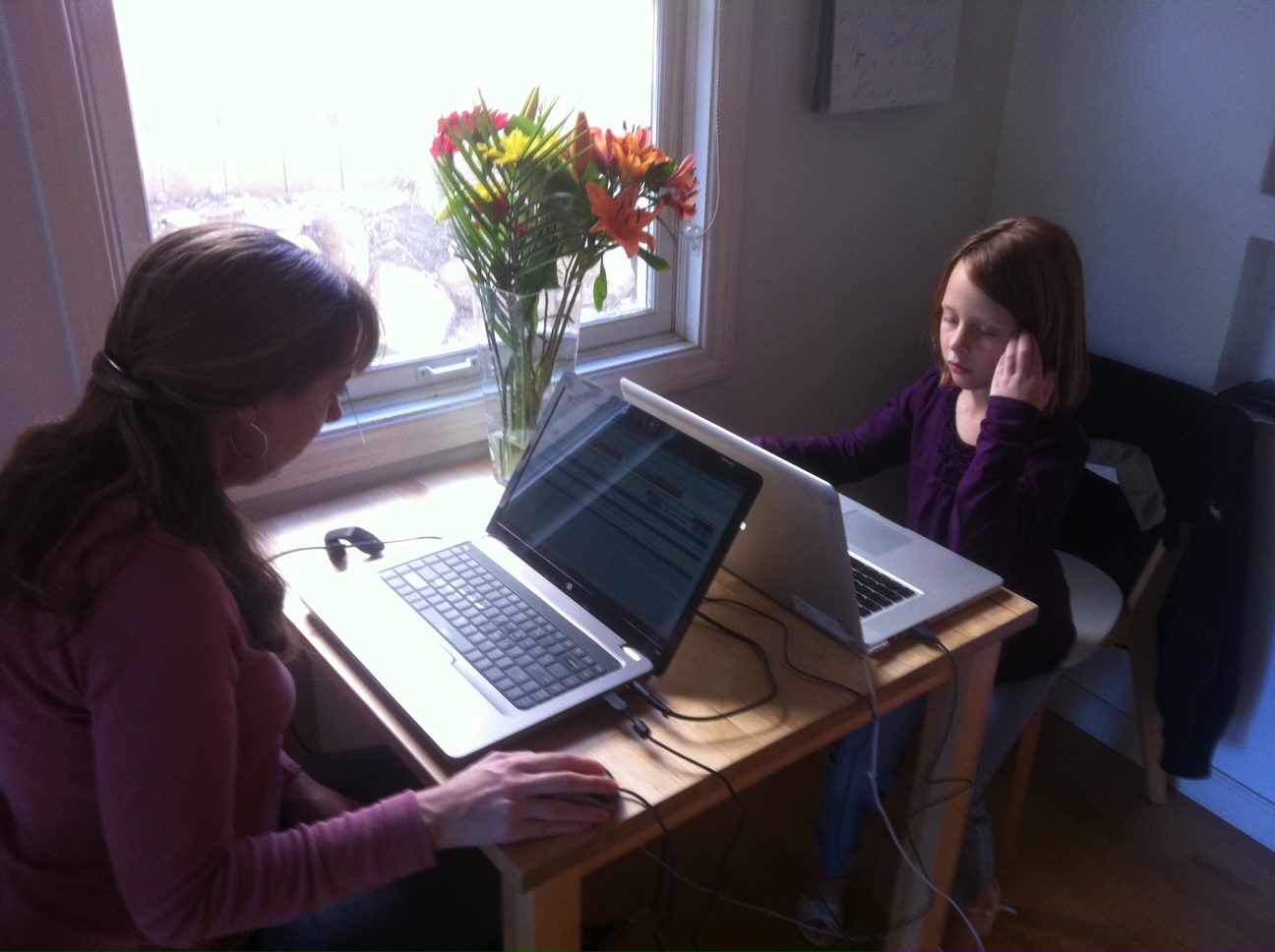
Whenever I spend time with this blog, I keep the company of my computer and of others who are bound to their computers. This means I do my best to ignore the living, breathing people in my household.

It makes me think of a story my sister-in-law once told of an academic family she knew. On a typical evening, dad would stare at his computer, mom did the same while their child texted on a cell phone. She said they spent their time being alone, together.

Technology has driven us indoors. Think of the TV and the car (you are inside the automobile). Technology has also turned communal life to individual life. We’ve seen this as the bus and streetcar have given way to the single-passenger car. We’ve seen it as movie theaters have given way to TV, and even more as the TV gives way to the computer.

We’ve been pretty tough on the boob tube. But at least a TV is not an entirely anti-social device. Friends or family can watch a show in their family room, respond to it together and chat about it during commercial breaks.

I knew a couple in Minnesota who filled out some survey about their marriage. One question asked how much time they spent doing social activities together. They figured television qualified, while reading books and doing homework (they were grad students) did not. No comment on Internet use. Their story predated that era.

But here’s my take: Browsing the web? Using Facebook? Definitely not social. It’s just you and your computer in a long embrace.

Child development types today no longer talk about “TV time” when referring to the things you should get your kids to avoid. Now, it’s screen time. Television, computers, cell phones… they’re all video toys.

There are people who say plugging into your computer isn’t so bad. People who play video games claim they’re intellectually stimulating. Maybe my blog is a social activity on some level.

But there is something in my gut that makes me happier to see my children reading a book than playing with an electronic screen. I’m even happier to see them getting outdoors, playing with each other, exercising their bodies and their imaginations.

Yea, I know. You’ve heard all this before. I’m not trying to abolish the household screen. I just want to make sure we treat it a little like strong drink, which you don’t want to get too much of.

I’ll apply the rule to myself and bring an end to this blog post.

Debate Over the Iowa Oeuvre

December 30, 2011

The Iowa Caucuses are coming up next week and that means from now until then the country will be wondering what Iowans think and what, exactly, Iowans are. These are subjects I have opinions about, and two other people’s opinions, published in the Atlantic magazine, have created a very interesting and high-profile debate. 

One opinion is written by a University of Iowa professor named Stephen Bloom, and it’s called Observations from 20 Years of Iowa Life.

The other is written by a senior producer and morning host for Iowa Public Radio named Bernard Sherman. It is a response to Bloom called A Look to Iowa’s Future, not its Past. 

Bloom’s critical essay is not the kind of thing the chamber of commerce or the tourist board wants to hear. In fact, the president of the University of Iowa wrote another response, headlined Stephen Bloom Does Not Speak for the UniversityBloom obviously pissed a few people off.

Bloom described the state as politically split, with the eastern half Democratic and the western half Republican. To be specific, he calls the east “solidly” Democratic and the west “rabidly” Republican, making it pretty clear where his political sympathies lie.

Bloom is a 20-year resident of the state and claims to be “a third of the way toward becoming an adopted Iowan.” But he often describes the state in way you’d expect to hear from people whose Iowa knowledge is based on stereotypes. He says it’s common for Iowans to take a date to a tractor pull. He seems alarmed by the fact that people talk so openly about religion and about going to church. Iowans may or may not be bound to the church. But it’s Bloom’s perception and he doesn’t seem to mean it as a compliment.

He claims when he walks his pet Labrador Retriever he’s often approached by people who ask him how she hunts and when he’s next going to take “his bitch” back in the field. It’s true that a lot of Iowans like to hunt but, remember, this guy teaches at the University so he lives in Iowa City, which is a lot more like Berkeley than Fresno. I seriously doubt he’s surrounded by gun-toting rustics in a place like that.

Most remarkable to me, Bloom refers to Barack Obama’s very controversial comment about small towns in the middle of the country. Obama talked of rural Americans suffering economic hardship and said, “It’s not surprising then that they get bitter, they cling to guns or religion or antipathy to people who aren’t like them or anti-immigrant sentiment.”

Obama struggled for weeks to pull his foot out of his mouth, after that comment, as people saw him as an educated snob. Bloom, on the other hand, says in his essay that Obama hit it right on the mark, and his words apply very well to Iowans. Bloom also goes on at length describing how the Iowa economy is shrinking, dying or stuck in the doldrums.

I have lived in the West and the Midwest but when asked where I’m from, I tell people I’m from Iowa. I only lived there for about 13 years, total, but they were formative years. I went to Jr. High and High School there. My first job in public radio was in Iowa City, and I still have family connections and many acquaintances in Iowa.  

I know well the clichés that people outside the state rely on when they think about Iowa, and I experienced the defensiveness Iowans share when other people put them down. The best thing I could say for Stephen Bloom’s article is it was honest, and he must have known that sharing his views honestly would bring him some grief.

Fact is, some Iowa stereotypes are pretty close to the truth and others are way off base. Bernard Sherman’s response to Bloom does a good job of setting the record straight on some points. Yes, his essay is defensive, but it’s a good and reasonable defense.

Sherman’s article is laced with demographic data and links to other articles. While Bloom portrays Iowa as a state on the economic decline, Sherman points out the state’s unemployment rate is seven percent, less than the national average and a hell of a lot less than my new home state’s (California’s) jobless rate of about 12 percent.

Sherman responds to Bloom’s description of Iowa as a rural state full of hunters by pointing out that Iowa is quickly becoming urban. Mind you, Des Moines, Iowa City and Cedar Rapids are a lot smaller than urban areas in the East and the West. But they are urban.

Sherman writes, “Just 6.3 percent of Iowans are ‘farm operators,’ and in the last decade Iowa’s metropolitan population grew by 9.1 percent while its rural population decreased by 7.4 percent.”

While Bloom talks about taking a date to a tractor pull, Sherman notes that Iowa is home to seven professional orchestras; orchestras whose members are paid to perform.

“I count seven in a state of 3,000,000, one per every 435,000 citizens,” he writes. “That is several times the national average.”

Read the essays yourself and come to your own conclusions.

As an Iowa expatriate, I am also defensive of the state. No, it is not flat and homely. It is green, rolling and lined with elegant river valleys. No, it is not full of poorly educated, backward bumpkins. The educational system is strong and the politics of the state are very diverse. Even Bloom acknowledges the latter point.

But I do have to answer the question, “If Iowa is so great why did you leave?” I left because the small population offered limited job opportunities. I left because… even though Iowa is pretty and has a good quality of life, it’s a bit dull when compared to bigger population centers.

People have complained for years that Iowa should not be the first state in the nation to have a presidential caucus/primary. We’ve heard the arguments. It’s too rural, too white, etc. If you look at its track record, it’s done a good job of choosing Democratic presidents but a lousy job of choosing Republicans.

Maybe Bloom did have a point when he talked about the Iowa GOP being “rabid,” given how far outside the political mainstream Iowa’s evangelical Republicans are.

But Iowa is changing. If anything, I lament the loss of the rural and small-town culture. It’s something I grew up with and something that’s becoming more and more rare in every American state. I’m guessing that 50 years from now, Iowa will still be there. It’s cities will have grown and become more diverse.

But what about the farm? Will they all be owned by corporations? Will Iowans no longer want to hunt and attend tractor pulls? That would be a sad loss to all of us.