Archive for the ‘Uncategorized’ category

Never Mind

August 5, 2012

Sorry. Spoke too soon.

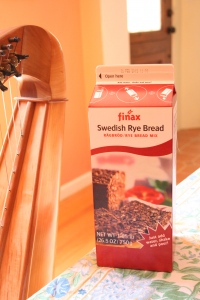
IKEA actually has replaced the Swedish rye bread I used to buy, so I can’t be pissed off anymore. And I have to take back all I said about IKEA not caring about providing whole-grain black bread (See previous post).

Their brand product is seen in the photo provided. I don’t yet know how Brödmix Flerkorn tastes, so it may still be inferior to the old stuff. But at least I’ve got hope.

By the way… black bread tastes great with mayo and vine-ripe tomatoes, so this is a good season to try it.

More later.

I Say Again… Curse IKEA!

August 4, 2012

I have been writing this blog for going on three years, and no blog post I’ve written has gotten more attention among readers than my denunciation of IKEA for no longer selling their black bread mix. I once made special trips to the Swedish retailer to buy a carton of dry makings for Finax Swedish Rye Bread.

You used to be able to buy this stuff.

Just add water, let it rise and then bake for an hour and you have fresh, whole-grain rye bread just like I ate as a teenage exchange student in Hamburg, Germany.

I guess it occurred to me to wonder about this again, since I just returned from a trip to Europe in which I visited Hamburg and was able to taste that rich and wonderful food. I also recall IKEA employees having told me the Finax product was being discontinued because they wanted all their food to be IKEA products.

This came with the suggestion they would replace it with something much the same and just as good, only difference is it would carry the IKEA brand.

But my recent trip to the IKEA on Friars Road in San Diego showed me there was no black bread mix. It had not been replaced.

I will complain to management, though I expect it will do no more good than the last time I raised the subject with them. The very least they could do is tell me where else I can buy it.

This product was a gem among the stacks of cheap furniture they sell at the place. It was something you couldn’t find anywhere else. Maybe it still is, which means they probably won’t tell me another place I can buy it.

Europe in Rearview.

July 29, 2012

GERMANY

It had been 35 years since I came here as a high school kid with very little knowledge of life but a strong passion for getting out of the small town in Iowa where I lived. This month I went back to Hamburg, Germany to see the family I stayed with, and with whom I’ve kept in touch with ever since.

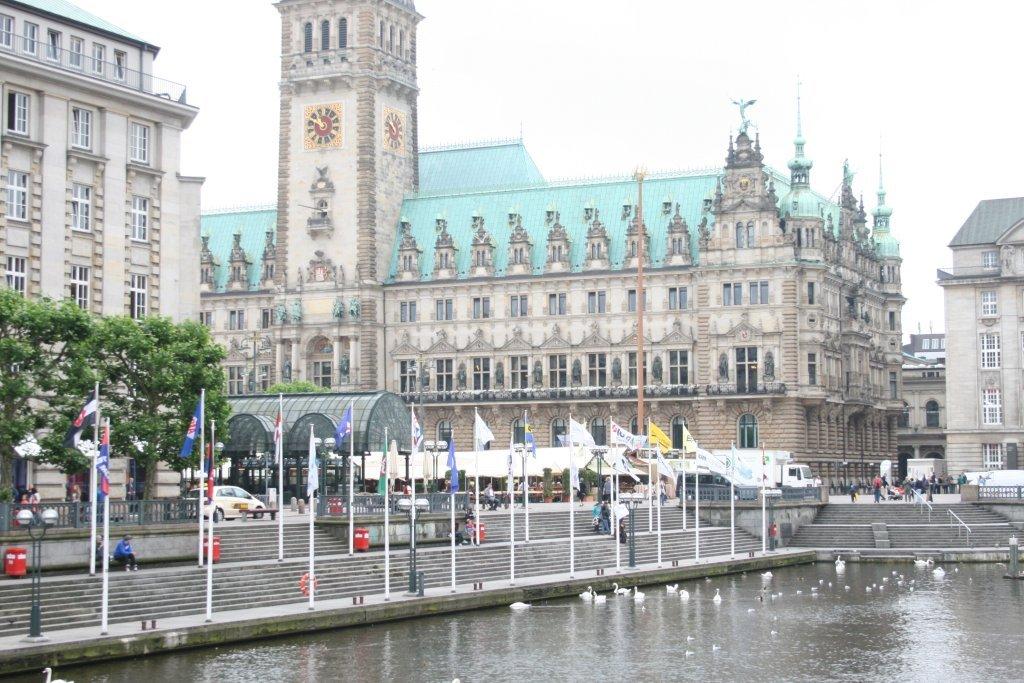
Hamburg Rathaus

Northern Germany in mid-summer stays light until 11 p.m. The landscape is flat and the people are not friendly. Kind? Generous? That’s true of lots of them. But most of the people of Hamburg don’t meet your eyes when you see them on the street and, even when they do, there is no nod of acknowledgement.

Even in the former village, now suburb, of Pinneberg, where I stayed, I got very few “Guten Tags” as I strolled along the streets.

My German family is mostly intact. Dietrich, the father, has passed away though mother Vera remains healthy at the age of 75. My American family of four stayed at the home of Sabine, the eldest daughter, who lives in Pinneberg with her good-natured husband, Knut. It’s Sabine’s third marriage. Sabine is strong-willed but pleasant and I’m not sure why she’s had bad luck in marriage. Maybe her other husbands were less good-natured.

Lutz, Vera’s son, is laid-back and handsome and speaks with an American accent, learned in Vienna, Virginia while an exchange student there. Carola, another daughter, lives in Bremen. Her, I didn’t see.

In fact I was told my visit was one of the few times any of Dietrich and Vera’s offspring actually got together. Despite living in close proximity, they are not close. I thought my distant and tenuous relationship with my brother was a familial negligence and I’m a little ashamed of it. But I guess it’s more common among siblings than I thought.

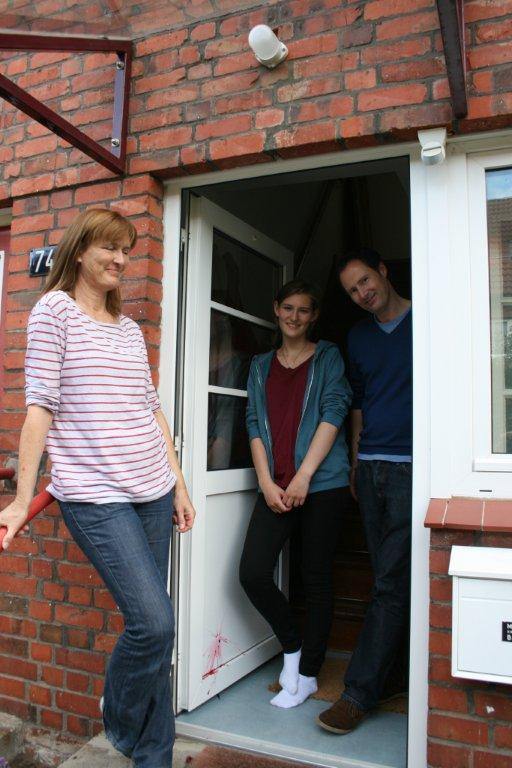
Katje, Ula and Lutz stand in the doorway of their row home, originally built in 1939 for workers who were faithful to the Nazi Party.

Hamburg is a city of graceful, sober architecture, nearly all of it rebuilt after being flattened in the bombing of WW II. The last time I came here was 16 years ago, and I was shocked by the amount of graffiti, something almost entirely unseen when I first saw the city. This summer, I was still struck by the lack of attention to cleaning it up. You’d expect that of the Germans, after all.

Graffiti aside, I expected to see more changes in Hamburg. Much has happened in Germany since I lived in a country, divided into east and west, back in 1978. Yet Hamburg was pretty much the same place. There was evidence of a slow slide into an Americanized way of life: More urban sprawl and more use of the car. On the other hand, the great racial diversity you see in American cities and places like London and Paris was absent.

Even my old neighborhood of Barmbek, which I was told had gotten poorer and therefore a likely magnet for immigrants, looked surprisingly white. And despite the closure of Barmbek’s old department store, Herti, which has turned into a dirty, beat-up shell at the end of the district’s main street, the local shops looked busy and solidly leased. The apartment building I lived in at Rübenkamp 12A was in fine shape and newly renovated.

I spoke with Knut about the nature of immigration to Germany, and why I didn’t see more of it. He argued Germany was not an immigrant nation. That sounded strange to my ears, being an American. I take his point that not every country sees itself as a likely, if sometimes reluctant, receptacle for refugees. But in a country where the birth rate is nearly as low as one child per women, I don’t understand how Germany cannot see immigration as the only future they are bound to have.

One harsh realization of my trip to Hamburg is that my German sucks. OK… it’s not that bad, and if I had to use it I’d do well enough. But the fluent use of English in northern Europe has seen a dramatic increase. The people there seem to effortlessly shift to English whenever they’re in a gathering with one or more non-German speakers. Even when you speak German pretty well, you’re not expected to use it and if you stumble just a bit, your conversation partner immediately shifts to English.

In France, I’m told, you’re expected to speak French, regardless of how well the natives know your language. I would have preferred a little more of that in Germany. I just want a little practice. That’s all!

Life on the streets of Lubeck.

The highlight of the trip came outside of Hamburg, when we took the train to Lűbeck, which is about 40 miles away. It’s an old Hanseatic city whose old town is beautifully preserved. Four-story facades of buildings with terraced outlines face narrow streets that are mostly closed off to car traffic. The main church is a soaring Gothic thing that has the tallest nave of any brick church in Europe.

In Lűbeck we noticed something we’d also seen in Hamburg: Lovelocks. Lovers scratch their names into a lock, fasten it to a bridge and throw the key in the river. They promise that if they break up they have to dive into the river to retrieve the key. Very romantic.

Before we left Hamburg we had a dinner party at Sabine’s house attended by her daughter Michal and her betrothed, Sebastian. Sebastian is a guy who’s a business consultant who is the very opposite of a North German stereotype; warm, talkative and funny. He told me he once worked in the U.S., where he told a guy he was from Hamburg. The guy asked if that was near Cheeseburg. For dinner we ate hamburgers made by Knut that included eggs and breadcrumbs (Knutburgers).

The next day we left the Hamburg airport for Dublin.

IRELAND

Taking kids on a European vacation in the summer has its downside. You pay a premium for airline tickets in order to drag an 8 and 12-year-old to a place they don’t care that much about. Castles? Old churches? Medieval history? Am I supposed to find this exciting? Frankly, I think my kids would rather go to a San Diego waterpark than go to Europe.

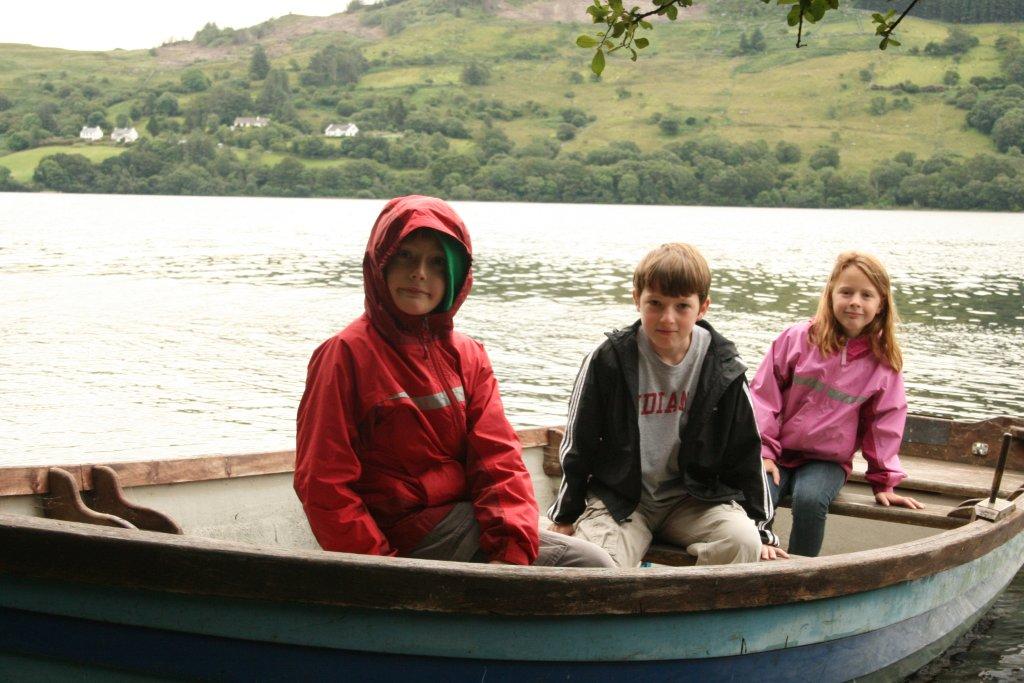
Lough Corrib on the east edge of Connemara, County Galway.

But here we were in Ireland. This, by the way, is not the “crossroads of Europe” kind of place where you would find a lot of historic sites. We saw that three years ago when we visited Norman France. But Ireland is sparsely populated. It’s poor. And whatever historic resources they had were not appreciated by the British overlords, and were not well-preserved.

Ireland lives in the American imagination as a place of great poverty and a great source of immigrants, who made it good in politics and labor organizing… not to mention pretty much everything else. Ten years ago, we talked about the Celtic Tiger and its economic transformation of Ireland, which recently had the highest per-capita income of any country in Europe.

But the tiger was a housecat. The interest rates, speculation and corporate subsidies that fueled Irish wealth were a house of cards that came crashing down. Now, Ireland is poor again. But still… you visit Ireland because it’s America’s cousin and you need to show some family respect. You also go for the scenery, the people and the music.

We stayed in County Galway, on the edge of Connemara. The mountains and lakes of Connemara are more beautiful than you can imagine. The mountains rise steeply in infinite shades of green, standing before you in arrogant splendor. This landscape is poetry, though poetry could never touch it. If the sky is thick with clouds you wait for the burst of sun rays that single out one mountain in a glowing display.

We stayed in a three-story house out in the middle of nowhere… meaning it was about five miles from a wide spot in the road called Cornemona, and about 20 miles from a little village called Cong, where John Ford filmed “The Quiet Man.” We were paid a visit from San Diego friends Mick and Kathy Ward, who were amazed we were able to find a place so isolated. The Wards are Irish, but moved to San Diego to open a bar called The Ould Sod. They were staying in Galway City, visiting friends they met in San Diego who are also Irish. Hope that all makes sense.

Galway is a center of Irish traditional music. Walk down Shop Street in Galway City and you’ll hear musicians playing for coins and sounding amazing. The Irish people love to talk. I know you know that already. But say two words to a typical Irishman and you’ve immediately got a half-hour conversation.

You also go to Ireland for the silence. Our rental house was a short walk from the shores of  Lough Corrib. We had the use of a rowboat, and one night my son Nicholas and I rowed to a small island. For a while a chainsaw howled in the distance as I sat on a rock by the water, but then it stopped. There was no wind; only the gentlest sound of lapping water and the occasional “baah” of a sheep as we sat in the endless summer twilight. The sound was spectacular.

We soon left the country by flying out of Dublin, and had a chance to see a little of the city the evening. I’d been to Dublin once before and it was pretty much the same as I remembered… a gritty, crowded place without much charm. Ireland is not known for its cities.

I’ve since spoken with several people in San Diego, who inquired into our travels then said, “I’ve never been to Europe.” So why do WE keep going? It’s a long trip to a place whose claim on to American culture grows smaller with each year. But my wife likes the place. So we’ll probably see it again.

Forever Young

July 7, 2012

San Diego is a tourist destination and a convention town, and next week the mother of all conventions arrives. It’s Comic-Con and it will fill the convention center with film makers, graphic artists, collectors and everyone else who has a stake in the sprawling comic book industry.

It will also attract lots of hangers-on who dress up like Spider-Man and Wonderwoman, not to mention the many other fictional superheros of which I’ve never heard. The thing I find interesting is these will be adults, dressing up like superheros.

Adults didn’t used to do that. When I was a little kid the very thought of my mom and dad suiting up like the Fantastic Four would have been bizarre. Having a fantasy life was not unheard of, but we all understood that adults didn’t act like kids.

I’m constantly reminded of our extended adolescence. “College is the new high school,” a med-school student told me at a gathering. A neighbor, who rents rooms to college-age students, told me he prefers foreign students because American kids are immature and problematic.

A themed review of books in the New Yorker told of books with titles like The Price of Privilege, The Narcissism Epidemic, and A Nation of Wimps.

A caveat. Kids should be allowed to be kids and the delay of adulthood has been going ever since we started expecting kids to go to high school. But the bonds that once constrained childhood to the teens and below have been torn asunder.

So many of the truths I grew up with now seem to be part of the problem. I once thought, like all right-thinking people, that child labor was a terrible thing. Was it? Farm kids used to help bring in the crop. Was that “child labor?”

Not long ago, I ate at an Italian restaurant where I saw a kid, maybe 12, helping to clear the tables. Was he one of the sons of the proprietor? Was I seeing the exploitation of child labor or a refreshing example of one American kid being shown what it means to grow up?

The reduction in birth rates in developed counties is linked to extended adolescence in more ways than one. As people put off adulthood they put off childbearing, often for good.

Having children now means the high price of putting them through college with no clear financial rewards to their parents. The thought of raising a spoiled kid, who feels entitled to leisure and material riches, must be off-putting as well.

So what do we do? The more I think about it the more I think the answers are simple to the point of being cliche. Teach kids to show respect and understand the value of work. Think about others, not yourself. Give more and expect less.

Above all, we parents (and grandparents) need to make less of a fuss about our kids and we need to expect more from them. By “more” I don’t mean insisting on them getting straight A’s and all that Tiger Mother crap. I mean we need to  treat our kids less like kids. That will show them more respect and give them a better chance to grow up.

I can’t claim to practice all I preach. But next week I’m taking my family to Germany to visit some old friends, most of whom have never met my kids, who are 12 and 8. When they show up at their doorstep, I hope my children will act their age, not something less.

Going Back to Ocean Beach

July 3, 2012

When I first moved to San Diego I was driving west on I-8 when I saw the freeway sign that said Beaches. It didn’t indicate a freeway exit but the place you reached if you just went straight ahead. It was your ultimate destination.

And if you really did continue straight on the 8 until you reached the edge of the continent, you were in Ocean Beach… or OB as it’s called around here.

I once heard a joke.What do you get when you take the J out of job? OB.

It is a haven for beach bums, with the emphasis on bum. But despite the common sight of homeless people, OB is my favorite beach neighborhood.

Its coast is not just a sandy landscape. OB has a long pier. It has tide pools and rocky cliffs that you can stroll atop to see the waves crash and swirl.

It has a downtown with restaurants and shops that do everything from selling surfboards and insurance to car repair. There’s a food co-op and a Catholic school.

The bums? Some of them are drunks. But the good news is the law here recently forbade drinking alcohol on the beach. That’s made the beach a much better place to take kids than it used to be in OB.

My first week in San Diego, I actually applied to rent a house on the beach in OB. But even though I applied wearing jeans, I think the button-down dress shirt put the landlord off. I got a call, saying they didn’t think the location would be a good one for me and my wife.

I suffered discrimination for being perceived square. Would it had helped if I had promised to grow dope?  Should I have sued them for unlawful denial of public accommodations? I may have actually won but they were probably right. OB is a better place to visit than to reside.

On the beach you see some college girls who look amazing. There are older beach chicks with tattoos that are faded and falling. There are also fat people in swim suits.  The Mexicans just go swimming in their clothes.

That day I first saw OB I saw a girl with a dog who was hanging out with a group of slackers with attitude. She wore a T-shirt that said, “Don’t ask me for shit!”

I don’t anything of OB, other than to stay what it is.

The Failed State Next Door

June 28, 2012

The USA can feel like a safe bastion with oceans on either side that’s far from basket-case nations filled with terror and war. But if you read anything about Mexico this year, read Williams Finnegan’s story in the New Yorker called The Kingpins.

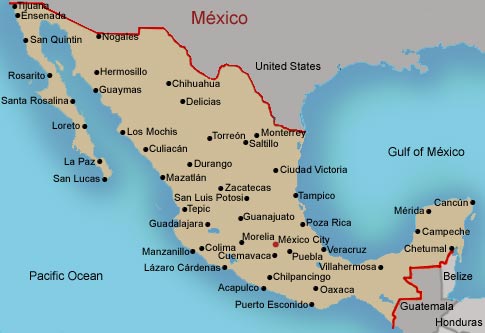
His story is very powerful and very sad as it focuses on what’s happening to the Mexican city of Guadalajara. But it’s not just there, it’s all over Mexico that violent criminal militias are turning the place into a frightening, lawless country.

Stories of dozens of dismembered or beheaded corpses being dumped in piles to send messages of terror are happening in Guadalajara, Monterrey, Puerta Vallarta, and so on. Tijuana is only 20 miles from my front door but I haven’t been there in years. You can imagine why.

The article talks about how authorities cannot be trusted to tell anything but lies and half lies. Every seeming truth is merely a pantalla, a screen to hide the real agenda of people in the employ of warlords who profit from drugs, kidnapping, and above all terror.

The USA has spent its time worrying about events and governments thousands of miles away in the Middle East and Central Asia. But I wonder when the focus of our armed foreign policy will be the failed state to the south, where authority and government are empty shells and large crime syndicates are just as powerful and destabilizing as the Taliban.

The saddest comment may have been one from a man who spoke of how peace may only come when El Chapo, the leader of the Sinaloa Cartel, can take over the country.

After reading the article, I pray for Mexico and hope something will save it.

Living in the Light

June 27, 2012

I live east in the time zone and days aren’t very long even on the longest days of the year. The coast of California takes a sharp turn west as it heads north and I’m as far south as you can be. Reno is further west than LA and even LA is further west than San Diego. They must get a whole extra hour of daylight in San Francisco.

I have memories of late daylight in Minnesota and even later light in Ireland, where I once visited in the summer. I could hitchhike into a town, get there at ten at night and still have enough daylight to find a place to stay.

I remember a man who talked about the earliest recordings of hillbilly music, collected by an anthropologist who wandered the Appalachian hollers to coax the locals to play their instruments into his microphone. The man wondered about those musical rustics, to whom the time of day meant very little because you got up when the sun rose and went to bed when it disappeared below the horizon.

Light these days is dimmer and more diffuse because it comes from power plants at night. We crowd next to the lamps in our homes and they dare us to stay up way beyond the end of the sun’s daily circuit. I don’t find the night exciting. I like my sleep and I feel sorry for people who are denied their right to restful darkness.

I don’t like seeing businesses that say they are open 24 hours. Why can’t they knock off at a reasonable hour like everyone else and just let their staff go home? But maybe it’s meant to be a comfort to unhappy people who have to work the overnight shift; cops, freight train conductors, early morning TV producers. Maybe 24-hour shops aren’t being greedy. They just want to give company to the misery that others have to endure.

I remember the great blackout last September when the lights went out for 4 million people in Southern California. Night fell and my neighbor had a blackout block party and sharp shadows crossed my street, but they weren’t from the streetlight but from a near full moon. For once, I didn’t miss the light of the sun.

At this time of year I feel like it’s all downhill, like a 25-year-old who knows he will never grow more brain cells than he will lose. Just as age takes us slowly toward dementia, the diminishing light will continue daily until December when night falls by 5 p.m. But maybe I should just shut up and enjoy summer solstice.

All Tied up in Hemp

June 18, 2012

My work took me this week to a place north of San Diego where they make Dr. Bronner’s Magic Soap. It’s popular with the organic ingredients crowd, and one of the ingredients in it is hemp seed oil.

That is what caused the owner of the company to lock himself in a cage that was placed in front of the White House, where he was arrested by D.C. cops after they broke into his cage with a circular saw.

A little background.

Hemp is a fibrous plant that’s a close cousin of marijuana. Its fibers have been used for hundreds of years to make clothes, rope and ship sails. The owner of Dr. Bronner’s soap company told me the word “canvas” is derived from the word “cannabis.” I looked it up. He’s right.

He is David Bronner, a tall guy with a beard like Lenin who has a habit of snapping his fingers when he wants to emphasize a point he’s making. He’s a capitalist with a liberal political agenda. Buy a bottle of his soap and you’ll find it comes with lots of text that describes our spiritual unity.

Dr. Bronner Magic Soap is made with hemp seed oil, which you cannot produce in the U.S. because hemp is a cannabis plant that contains THC (the chemical that makes you high) therefore the oil has to be produced in and imported from Canada. Bronner thinks his cost of buying the oil would be 20 percent less if you could grow the stuff in the USA.

So his cause is part financial and part philosophical. Does he really need hemp seed oil to make his soap lathery and luxuriant? Maybe he does.

Bronner says you’d have to smoke an acre of  hemp to get high. But marijuana activism has gotten so tied up with hemp it’s hard to know whether the two can every be twain

I asked him if he was in favor of the legalization of marijuana, and he said yes… for recreational, medicinal and spiritual purposes. It’s possible that smoking dope will get you closer to God but the recreational aspect of the stuff is what makes the whole issue suspicious

As far as the government is concerned, hemp and dope are the same thing. So the industrial and cosmetic uses of hemp and its seed oil will have to take a back seat, thanks to the tiny fraction of THC that cannabis always comes with. You’d never know the stuff you use for making clothes and rope would be so demonic to gain a government prohibition, or so angelic that Dr. Bronner would risk jail to set it free.

June Gloom

June 11, 2012

The gateway to summer is a cool month that surprises me every year. In June, high temperatures here can be as low as 65 degrees. They talk about “June gloom,” but gloom is relative. In San Diego that might only mean we have overcast skies as often as not.

I remember living in the Midwest and talking to a person from Arizona about the weather. She told me she was getting used to Minnesota but, she said, “You remember that time, last year, when we didn’t see the sun for two months?”

I didn’t know what she was talking about. It just seemed like regular weather to me.

Summer in Southern California ultimately means an unbroken dome of blue sky and bright sunlight. Marine clouds along the coast are common, but if you get a couple miles inland even those disappear. The temperatures are moderate and in any other place this weather would be a Godsend. But here it becomes monotonous.

Here, from May to November, it just doesn’t rain. In summer I dream of rain. I think of the way it makes the streets gleam at night. I imagine the sound it makes on tin roofs. Overcast and rain make you reflective. Sunlight is emotionally shallow.

I have been in California long enough to know the world has changed since the last time I lived anywhere else.

Sometimes I look at San Diego and tell myself the place, where I used to live, wasn’t like this. Life was different and the people were different. That’s probably true. They were different.

But now, how do I know that it isn’t exactly the same there as it is here? These days they probably send text messages in Minnesota too. Maybe my past and the places I knew simply no longer exist.

Lately I was talking to a gifted journalist who was fired from San Diego’s daily newspaper, the Union Tribune. He was looking at opportunities in Minneapolis and I told him to consider the weather, but he pointed out the fact of global warming.

Minnesota has had a spate of very mild winters. The winters I remember were tough and frigid, with temperatures plunging below zero for days on end. The snow would crunch beneath your feet and the wind would cut right through you. Now, even the reliably brutal Minnesota winters are no longer reliable.

Places change and I have also changed. You see the world from inside your skin, and my skin is older. Now, all I really know is that it is June and the air is (again) surprisingly cool, and I hope that this year will be like the year before.

I’m pretty sure the summer will grow brighter and warmer as it gets longer, and I can’t hope for rain until it’s nearly Christmas. In the Midwest, the summer will be hot and humid and the lightening will crack as thunderstorms roll across the countryside.

I hope the place I used to live is still a different place. But not having been there in a while, how would I know?

Obama 4 Years Later

June 1, 2012

Four years ago I was excited by presidential candidate Barack Obama.

He was a stirring speaker. He was smart and had a clear intellectual bent. His views appealed to my political philosophy. He was a tough and tenacious campaigner. Above all, he was black.

The simple notion that a member of the race, that had been slaves in this country, could become it’s leader was reason to celebrate. I even read his book, for God’s sake!

But now Obama is a one-term incumbent running for reelection, and the idea that he was a politician that could transcend politics and bring us all together turns out to be as naive as I suspected it was. Today, Barack Obama is in a hard reelection campaign. He’s facing a challenger a lot like he was four years ago, in a situation not unlike the one that brought down the Republican Party of George W. Bush.

The “situation” is an economy that the ruling party doesn’t want to claim. We may be having a recovery (repeat, maybe) but it’s lame. The challenger is Mitt Romney, who knows how to fuzz his views to grab the political middle. He is also smart and tough and has a record of accomplishment that causes people to think it wouldn’t be a disaster if he won.

Another thing he has in common with Obama is he’s a member of minority (the Mormons) that people of the past might have considered unelectable. But now that we’ve elected an African-American to the top job, why not a Mormon?

The reason I thought Obama could unite people lay in his history. Here was a man whose father was African, but he grew up in the USA. Here’s was a man who was black, but whose family was white. (Read Dreams From My Father and you’ll know what I mean). He knew what it took to live between cultures and make it work.

This is why his inauguration included not only civil rights figures but also an evangelical preacher who delivered the invocation. Obama was a liberal but his ties to the black community meant he was comfortable with their social conservatism.

That changed this year when he changed his mind on gay marriage from con to pro. It was a calculated move. He knew the black vote wouldn’t abandon him on that single issue. Meanwhile, he was looking at all that campaign money in West LA that he wasn’t going to get unless he had a change of heart.

This was similar to Romney changing his mind on abortion (to the “anti” side) in order to win the GOP nomination. Like I said… they have a few things in common.

So today — 4 years later — Barack Obama has lost the freshness and novelty, and he’s become another liberal Democrat towing the party line. But there are some facts in his favor.

Obama has achieved financial system reform and health care reform. In foreign affairs, his restraint in the Middle East has saved us billions and it’s allowed the Arab street to take the leadership role in Libya and Egypt. He ordered the raid that killed Osama bin Laden, bringing Americans the justice they craved. Afghanistan? Well, never mind.

Elections are unpredictable. Obama, so far, has the financial support of most campaign donations from the military. That’s not what you’d expect, and there will surely be more surprises to come.

Even so, I would be VERY surprised if Obama wins Virginia, Indiana and North Carolina, like he did last time around. This election will be close, and our first black president could be a one-term president. That has happened to plenty of past presidents, both good and bad.

By the way, if you’re wondering what this year’s election might be like, take a look at this article from NPR.org. I’ll give you the short story: Certain experts say it’ll be an incumbent vs. challenger race similar to either FDR vs. Alf Landon in 1936, Carter vs. Reagan in 1980, or Kerry vs. G.W. Bush in 2004. Take your pick.