Archive for the ‘Uncategorized’ category

Why I Curse the Compass Card

February 5, 2015

Taking the bus should be easy. But it’s not in San Diego.

I’m not complaining about there not being enough buses, so if you miss your bus you have to wait 20 minutes for the next one. I’m not talking about the buses getting stuck in traffic and running late.  Just paying for a trip is a huge pain.

If you want to take the bus you have to dig for change.

Not much point using Compass Card unless you use it every day.

Doesn’t pay to have this card unless it has stored value.

But even that only works if you have exactly two dollars and 25 cents for a one-way ticket. I’m sure a scientific survey would reveal that absolutely nobody has exactly $2.25 in their pocket or purse.

The Metropolitan Transit System (MTS) needs to find a way to make it easy to use their products. They need to make stored value a function of the Compass Card. It’s like when you use a Starbuck’s Card. You get 20 bucks on a Starbuck’s Card. Every time you use it, it deducts the cost of your beverage from the card and leaves you with the balance.

That’s stored value.

It’s only worthwhile to buy a Compass Card if you are willing to pay $72 a month for use of bus and trolley. And that is only worthwhile if you commute to work on public transit. If any of the rest of us buy a Compass Card, we pay for a bunch of rides we’re never going to use.

If you had stored value on a Compass Card, it would be just like Starbucks. The cost of your trip that day is deducted and the balance remains, until the next time you want to use transit. You don’t pay for trips you don’t want or need. It’s a great idea! In fact, MTS agrees with me. Read the following.

In the future, a stored value option will be available on the Compass Card. When a Compass Card loaded with stored value is tapped, the price of a day pass appropriate for the service will be deducted from the balance of the card. Stored value will be used on all bus and rail service within the San Diego region.

That’s from the MTS website. Well it’s the future, people! Why isn’t stored value available yet?

Getting people to choose public transportation rather than a car is good for the environment and good for the life of the city. But you can’t get people to choose a bus or a trolley, rather than their car, when you have to dig for change or buy a bunch of transit rides you’re never going to use.


Snow in December

January 9, 2015

Driving east on Interstate 8 you look at the tops of the mountains until you see a white dusting. In the back of the car we’ve got tire chains and layers of warm clothes.

Snow Shot

The snow started to appear at about 3,500 feet. We pulled onto the Sunrise Highway, I put the chains on the front tires, and we rolled slowly uphill until the snow was 6-8 inches deep. If it’s raining and cold in San Diego in December it will be snowing in the mountains.

A new layer of powdery snow is magic no matter where you are. Even in Minneapolis is was sweet to get up in the morning and walk down to the banks of the Mississippi River after a white carpet had fallen overnight and the whole world was so clean, pretty and so quiet.

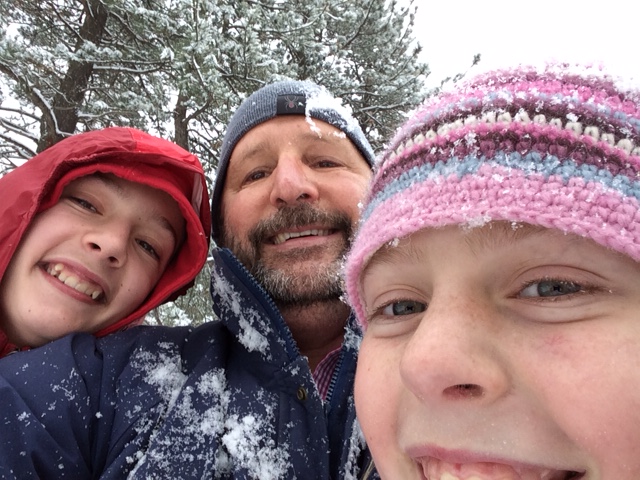
But when you live in Southern California your love for snow is still greater. I’m lucky to live an hour’s drive from mountains that are more than a mile high, where you can enter that world of winter. Nicholas and Sophie love it best of all.

Snowselfie

They complain about living in a place where they see snow so little. Maybe they’ll one day live in a place where it gets down 15 below zero and we’ll see how well they like it. But on New Year’s Eve of 2014 there was no whining and no “you don’t know how good you have” its. We just played in the snow like all the others who came to Laguna Mountain, some shoveling snow into their truck beds so they could bring it into town to show their friends.

The next winter rain we’ll head for higher ground again.

Goodbye Alfa Romeo. Goodbye to my Youth.

December 21, 2014

Alfa

The Alfa was a dream of my wife, who saw them in dealerships in Switzerland when she lived there for a year in high school. We bought our car about ten years after that, in Minneapolis in 1995.

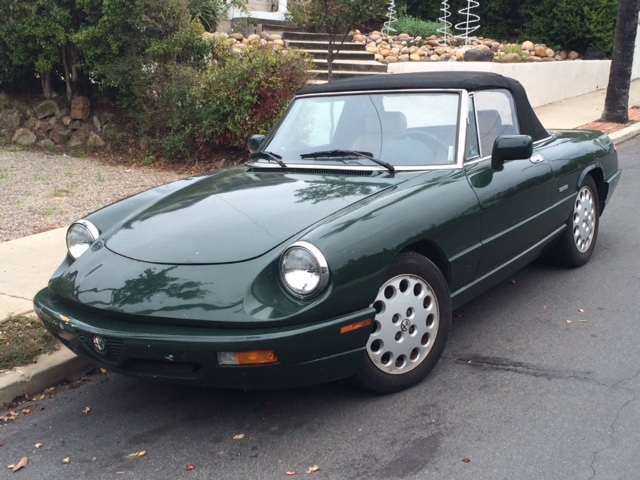
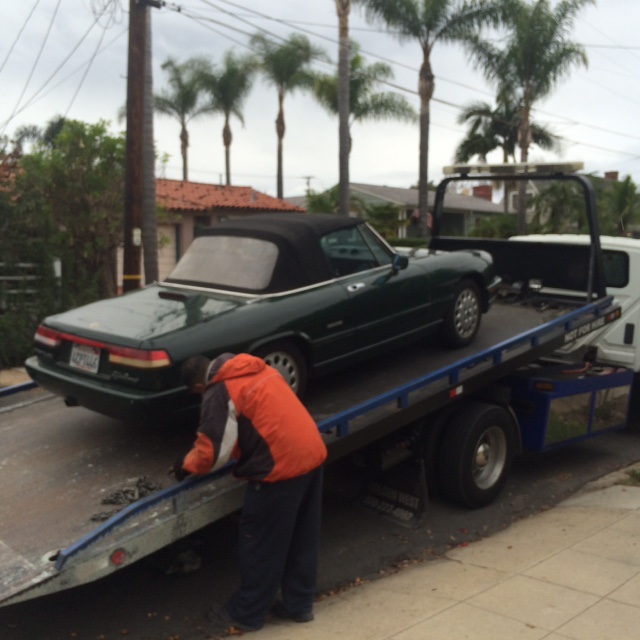
It was a 1992 Alfa Romeo Spider Veloce. Still is. But now it’s bound for a future that we can only imagine. After years of malfunctions, failing to pass the California smog test, and some mysterious electrical problem that prevented the car from holding a charge, we gave up. We donated the Alfa this month by calling KPBS-CAR, which comes to retrieve any junker you care to get rid of.

I work at KPBS and I once asked, “Who buys these beaters?”

“Anyone who buys cars,” was the answer.

The Alfa Spider was beautiful. Like a true sports car it was built low, with a wedge in front to cut the wind and a streamlined body that ended perfectly in back. The headlights looked like bedroom eyes and when the convertible top was down the windshield added a graceful geometry that turned auto into art.

Some sports cars look flashy and whorish. Even today, I think the Alfa Spider’s Pininfarina design is peerless for its classy shape.

When we lived in Minnesota I would pamper my prima donna by storing it in a barn at the Minnesota State Fair grounds during the five months of freezing winter temperatures that made it impractical to drive an Italian convertible. After we moved to California driving it year ’round was no sweat, but soon after that the car began its mechanical downward spiral.

To my wife and me, the Alfa has become a metaphor for our youth. It was cool and sexy and buying it was a pure act of emotion. Though I wasn’t a kid when we got it I was still young enough to take it on the freeway and floor it, to see how fast it would go.

Alfa Tow

Since then the Alfa has gotten old and so have we, enduring the routines and responsibilities of middle age, raising kids and holding jobs we feel like we’ve worked at too long. I needed a fanciful love to keep that car going. I looked inside myself and simply couldn’t see it.

“Anyone who buys cars.”

I assume our Alfa will be sold and I’ll get a document with the sale price that I can write off my 2014 taxes. I can hope that it is sold to someone who has that love for a car that I ultimately lacked. I owned the Alfa for 19 years. At least my wife and I will be able to look back on those years of our youth that were wrapped up in an Alfa Romeo Spider Veloce.


Pets and Death

December 1, 2014
Maya & Mickey.

Maya & Mickey.

Pets are a part of the family and they are a source of many memories. Our cat, Mickey, was a birthday gift for my son Nicholas when he was seven or eight. Nicholas got up in the morning on his birthday, not knowing that my wife and I had gone out and gotten him the gift. Before he saw Mickey he heard him meow. Nicholas thought it was Sophie and he scolded his little sister for pretending to be a cat.

We once had three cats. But Molly disappeared one night and never came back. About two weeks ago Mickey also went out and didn’t come back. So now we’re down to one cat, Maya. Was Mickey killed by a coyote? Maybe, but you can never be sure.

Here’s another memory of Mickey. When we got him we wanted a kitten for our son but didn’t realize it wasn’t “kitten season.” Apparently, female cats all go into heat at the same time of year and give birth around the same time. So Karen and I traveled all over the metro area looking for a kitten and we finally found a black one named “Ben” at a shelter in Rancho Santa Fe. The problem was… the shelter wouldn’t let us take him home because we told them we would let him go outside.

After that, I asked my parents to go get him. They gave the shelter staff all the right answers (We’ll never let him out. Of course not!) They took Ben away, gave him to us and we renamed him.

The shelter didn’t want us to adopt Mickey for the very reason we saw this month. When cats are let outside they can be killed by predators, hit by cars or succumb to a deadly virus they wouldn’t have gotten, confined to the house.

Mickey lived a good seven years. Would he have preferred living twice as long and dying in a vet’s office after being injected with deadly chemicals? Would he have been perfectly happy not chasing mice and butterflies or exploring the canyon with Maya during his lifetime? I don’t know because I can’t read a cat’s mind. Humans can only guess what kind of lives our animals want to lead.

But I have never known a cat that didn’t seem to want to explore the out-of-doors. And once they have been outdoors they never seem to be satisfied being indoor cats. Maya was a Kansas farm cat who was born outside the house and spent her first several weeks out in the environment. When we brought her to San Diego she lived outdoors most of the time. She became pregnant and gave birth to five kittens. We know she’s a grandmother now, if not a great-grandmother.

The value we put on life — and what we consider to be a meaningful life — always leads to controversy. Do people, who are kept alive for decades on life support with no ability to reason or even react, live meaningful lives that should be protected as long as we have the technology to do it? Let’s say protecting animal life and extending it was all that mattered. Then cats should be kept inside and wild animals should be kept in zoos.

I have been fond of cats ever since I was a kid. I grew up in a family that had two dogs over the course of my childhood. One was a high-strung terrier that would bite me good and hard, the other was a Dachshund that growled whenever I approached him. But then we got Floyd, a part-Siamese cat. I finally had a pet who seemed to like being held and petted by me and who like to play games with me.

Today, our remaining cat Maya is a lot like Floyd, friendly and affectionate. Her only bites are gentle ones used during play or maybe to send a subtle message. She also loves being outdoors, where she sometimes hunts mice and rats. In fact she typically only wants to come indoors to be fed. Should I start to keep her inside to make sure she doesn’t meet the same fate as Mickey? For that, I just haven’t got the heart.


.

Fall Festival

November 21, 2014

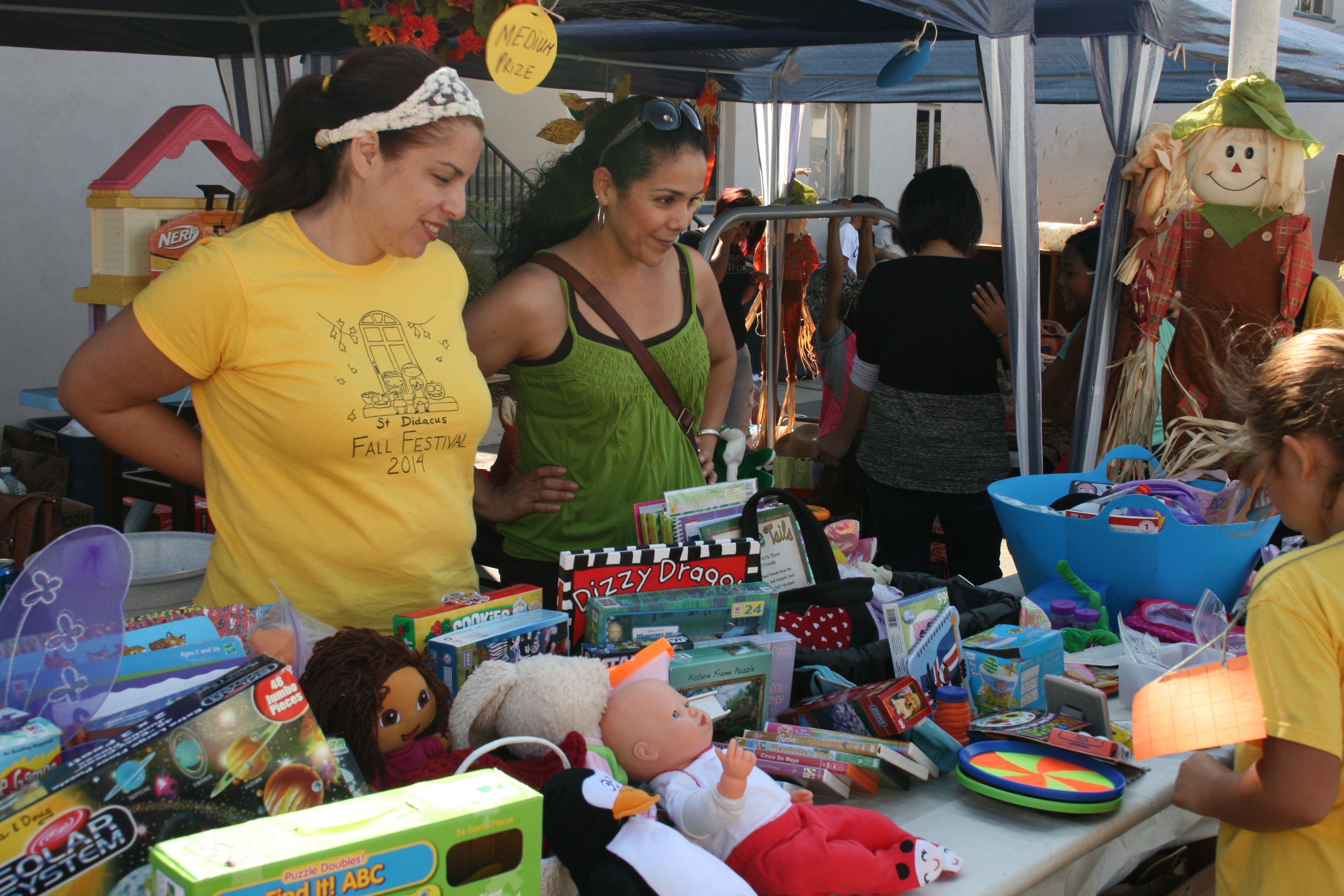
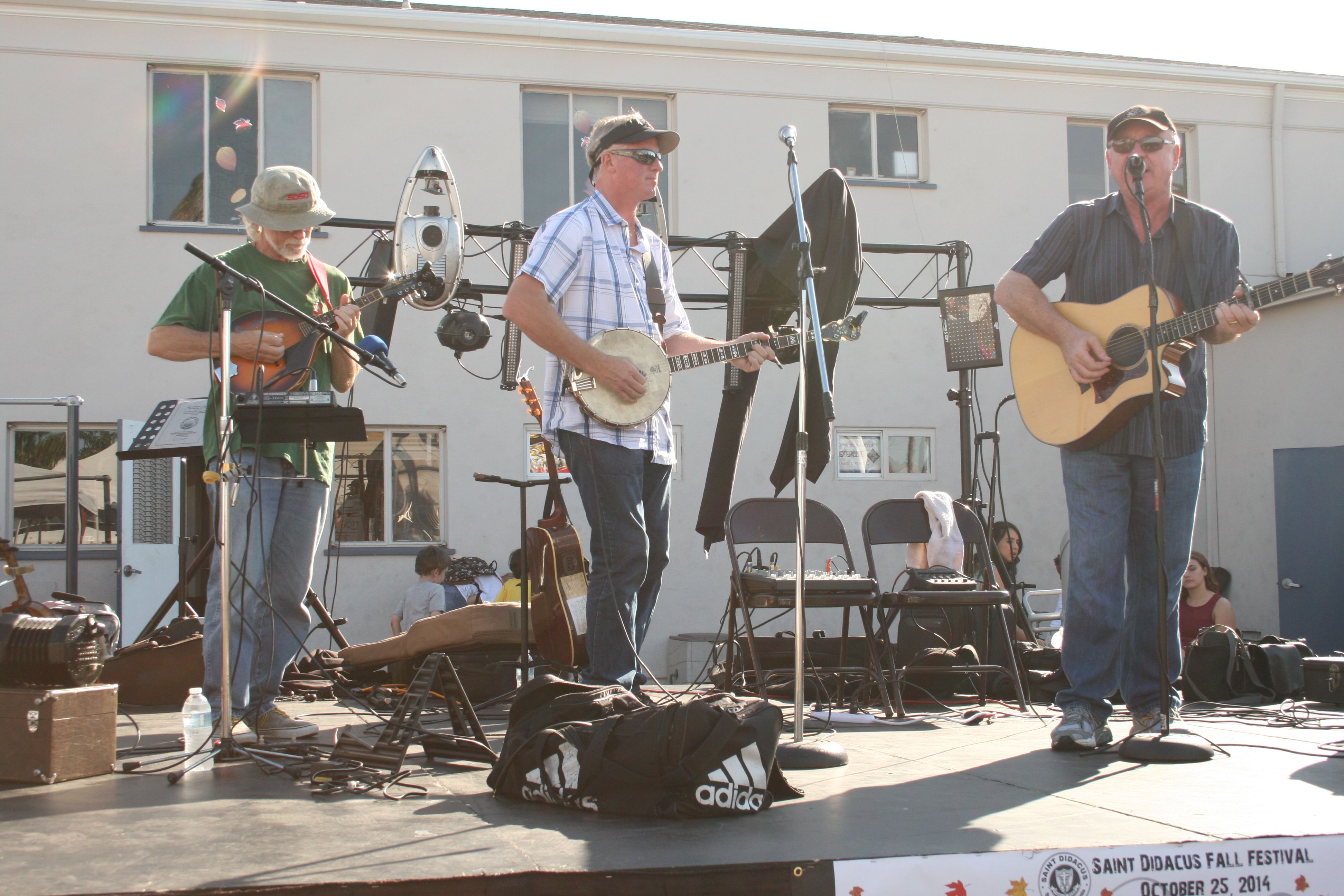
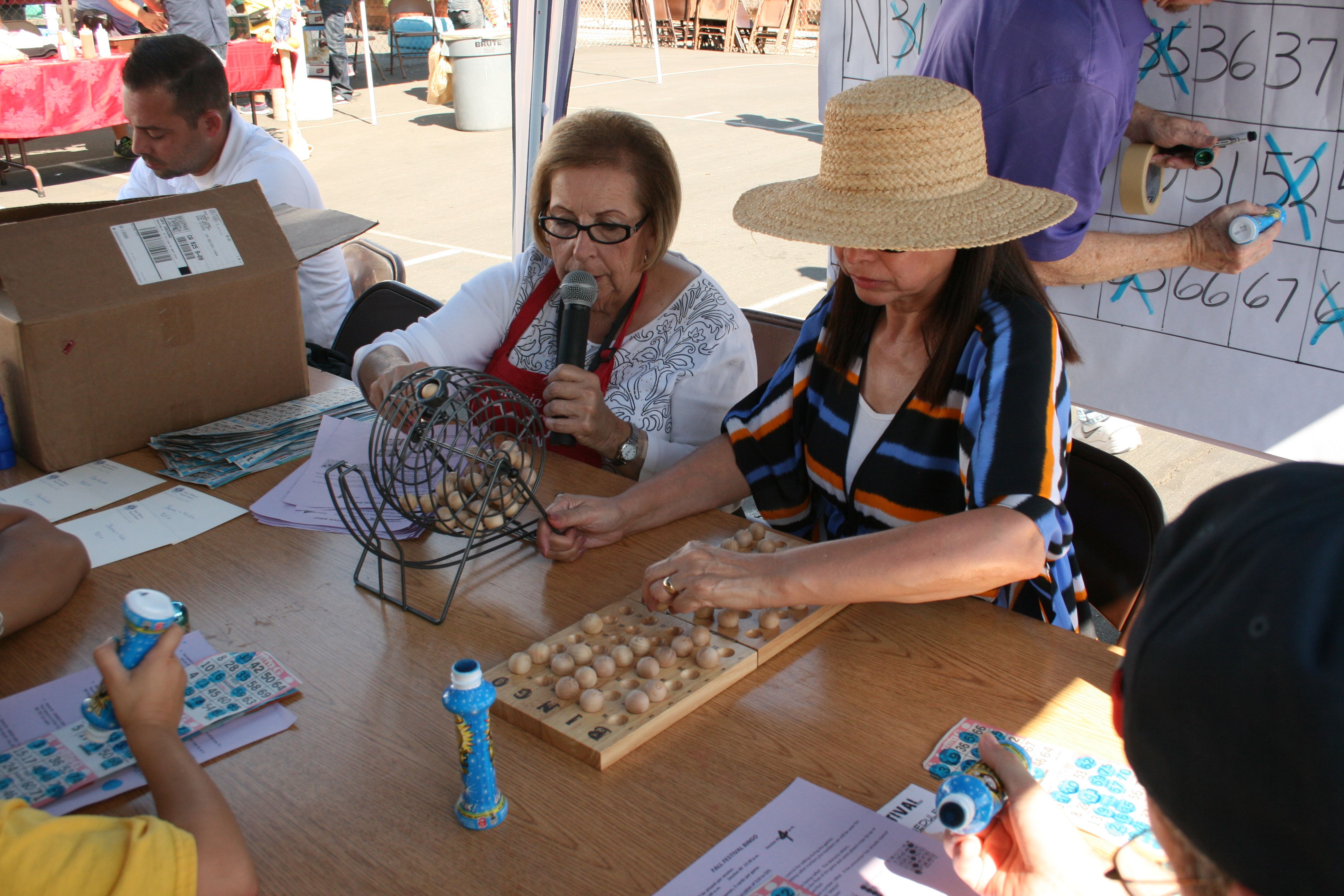
It happens every autumn and it makes sweet memories for students who attend St. Didacus Parish School. Kids come to win prizes in the game shacks, fire a paintball gun and eat Mrs. Tollefson’s meatball sandwiches.

Girls spray-paint their hair and you see some kids you were pretty sure graduated a couple of years ago. Parents set up the stage, the tables and tarps, knowing they’ll just have to take them down on Sunday. The kids run around with snow cones while dads walk into that fenced-off place where you can get a beer.

You hope people spend a lot of money so the school can make a lot of money. If you missed the Baja Bugs playing Beatles tunes they’ll probably be back next year. Fall Festival doesn’t change much and but that’s OK.

FFestival 1

FFestival 2


FFestival 3

FFestival 4

FFestival 5

A Place I Remember

October 17, 2014

I walk the length of the diving board. I jump onto the end, the board flexes and throws me into the air. I do a somersault and then try to stab the water quick and silent with my fingertips.

I’m in high school and I’m a diver on the swim team. I wasn’t gifted but I was good enough that my dives took me straight to the bottom of the pool.

Diving Board

It was there I had the feeling. It was the deepest part of the pool, cement painted blue with a black drain in the center. I waited for a moment before I pushed off the floor then burst out of the water and into the sound of the swimming hall.

I thought about that moment until it was my turn to dive again. I jumped, I left the board, touched the water and went to the bottom. My breath was held in and I listened to the quiet. I didn’t want to emerge back into that clamorous room and see the marks they’d give me for my dive.

I dove twice more and each time I’d linger longer below the surface. A teammate told me they began to wonder if I was okay and if someone should jump in to fish me out. But I stayed down there because I liked it.

My mind was still. I didn’t have to move. I didn’t even have to breath. I was held steady in the water’s soft grasp. I knew I would have to come back to the world again, but for a while my mind and body were in perfect peace. Even now, almost 40 years later, when life gets in my way, I think about being at the bottom of the pool.


Repeating Car Talk

October 14, 2014

I don’t just work in public radio, I listen to it. Maybe that makes me an ultra-nerd, but there is one show with a good-hearted comic spirit that has made it a welcome exception to other NPR fare that can be way too serious. That show is Car Talk.

Tom:Ray

The tappet brothers. Ray on the left and Tom on the right.

If you follow public radio you know by now that that Car Talk is running on fumes. By fumes I mean reruns. This began two years ago. But the reruns, like the hundreds of new shows they did, are so brilliantly produced and edited that I am only now beginning to notice that the mechanical mishaps described by callers are sounding pretty familiar.

Of course, the show didn’t just have great production values. It had Tom and Ray Magliozzi. It was like I’d turn on the radio every Saturday morning and be able to spend an hour with my two favorite Boston uncles.

Somehow Tom and Ray managed to always be funny, never be mean and to always leave you with some sound advice, like a good uncle should. You might wish they didn’t laugh so much, for instance. But if you did, it brought on an affectionate roll of the eyes, never an irritated scowl that made you turn off the radio.

In fact, it’s that thing about giving good advice that was the show’s saving grace.

I say this because I can’t think of one entertainment show on TV or radio that I haven’t gotten tired of. Sometimes it takes a while. I probably listened to a Prairie Home Companion Show for 20 years before I finally decided I’d heard enough news from Lake Wobegon. But Car Talk has never lost its freshness or appeal.

How did they do it? Lemme answer that by posing another question. If you stripped Car Talk of every laugh and every joke; if Tom and Ray stopped fooling around and did the show dead serious, what would you be left with? You’d be left with a show where you still learned a hell of a lot about cars.

Car Talk mined the depths of an incredibly rich topic, that miracle of modern engineering called the automobile. And Tom and Ray seemed like they knew it all. I don’t think I ever came away from a show without knowing something new about cars. Maybe I learned what was causing that rattling sound that typically comes from the driver’s side front wheel. Or maybe I found out how a car’s computer software could be reprogrammed to change the fuel injection and boost performance.

The show had myriad opportunities to delve into the affections we have for our cars, and the fights we get into with some no-good relative who sold us his beater. But it was the hard info about cars that kept me around. The charms of the tappet brothers were great but eventually I’d get tired, even of them.

In a strange way, Car Talk was the quintessential public radio show. It ultimately succeeded because people always learned something when they heard it. Public radio fans (and employees) like the medium because it makes you feel like you’re still going to college. Tom and Ray taught us classes about mechanics, engineering and computer science, just by talking about cars. And they did it in a way that made you laugh.

As time goes on, the reruns will start sounding more like reruns. Car Talk will have to come to an end, assuming the tappet brothers have no plans to come out of retirement. We get tired of hearing the same stories over and over, even when we’re hearing them from our favorite uncles.


Update, November 3, 2014: Rest in Peace, Tom Magliozzi.


Hope for the Human Race

October 13, 2014

Not long ago I wrote on this blog about nature’s gift of violence and the absurdity of trying to eliminate violence in a society that still sanctions and even celebrates it in places like the military and the National Football League. But here’s the good news: Just give us a few tens of thousand of years of evolution and we’ll probably get more peaceful.

That seemed to be the conclusion of a KPBS talk show interview I did, in which two guys talked about a coming symposium on human domestication. You know about our domestication of dogs, cats and farm animals. Well, according to the hypothesis of people in the field, we’ve done essentially the same thing to ourselves over the life of the human species.

Social skills and social organization have caused us to value peaceful collaboration above strength and aggression. So human evolution has selected individuals for social skills, not the angry stuff. Highly aggressive people and people who can’t get along with others have been banished, executed or imprisoned by societies. Think about it. Their isolation or disappearance means they can’t have progeny and pass along their traits to offspring.

This process, over thousands of years, has even had an effect on our physical aspect. We now have smaller teeth and more fragile bones than did our forebears 100,000 years ago.

Listen to the interview to get the indepth version of the story. But here’s what one of my guests, Harvard Prof Richard Wrangham, said about the possibility that we will become yet more peaceful and domesticated in the distant future:

The happy thing here is if you look at the historical and prehistorical evidence, humans have been getting more peaceful in detectable time, and it seems likely that is going to continue. Whether or not it’s due to evolution, social institutions, or changing morals, that’s uncertain. But the nice optimistic news is that, in general, we are becoming less violent.

If only I could live to see the evolving reality.


Reusable Bags are so White

October 5, 2014

The State of California just passed the first statewide ban on giving disposable plastic bags away at grocery store checkout counters. The American Progressive Bag Alliance (I LOVE their name) wants to get the law overturned in a referendum, but they’re just a bunch of plastic bag makers who want to keep making money.

I think it’s a fine law and I’m OK with bringing my reusable bags to Safeway. But — please — reusable bags are so white.

BagsI know this from going to the City Heights farmers market. It’s the closest farmers market to where I live and that’s why I frequent it. As a white man I’m definitely a racial minority there. Not complaining, just saying. The food stands are operated by a mix of Africans, Mexicans and Vietnamese who sell a lot of greens I don’t recognize. They sell raw peanuts. What do you do with raw peanuts?

There was a time when I brought reusable bags to put stuff in, but it was embarrassing. By the time I bought the fruit, or whatever it was, from the cashier she had already plucked a plastic bag from the role and put the stuff in it.

“Excuse me, but I brought my own bag.”

They would look at me, fish the fruit out of the plastic bag and give it to me to drop in my ecologically friendly tote.

Pious jerk! No, they probably weren’t thinking that. But they probably did think I was a well-heeled white man who was so sated and comfortable that he actually had time to think about what kind of bag he should bring to the farmers’ market.

Everyone at this market was carrying around food in disposable plastic bags except for the middle-aged liberals who condescend to shop there and carry their reusable bags; well-worn of course because insisting on having shiny new bags would exhibit a lifestyle that was unsustainable.

Reusable bags are way too white here, so I chose to respect the local custom. Do we need to get rid of disposable plastic bags? We don’t need to but we should, if only to prevent our planet from being covered in the damn things, which are carried by the wind like kites.

My point is that worrying about reducing the number of plastic bags in the world is a privilege of wealth. And that’s why poor immigrants who go to the City Heights farmers market aren’t concerned about it. They got bigger fish to fry.


Nature’s Gift of Violence

September 30, 2014

It was a typical conversion in a 21st-century newsroom. The morning news meeting was taking place and a person brought up the subject of sexual assault among members of the military, of which there had been some stories lately. The person said, in disapproving tones, the military brass aren’t even trying to stop it. There were sounds of agreement, then a sarcastic comment. “Yea. Next thing you know they’ll be killing people.”

It was cheap shot but it wasn’t wrong. How do you tell people whose job it is to kill people that they shouldn’t commit rape?

Let’s change the subject a little  bit. What about players in the National Football League? The three televisions I see in my newsroom all day at work are tuned to CNN, MSNBC and Fox News. I saw virtually non-stop coverage of the Baltimore Ravens’ Ray Rice incident in which he punched his wife, seen in a grainy security video, and then she lay unconscious on the floor of an elevator.

We saw the video over and over. And I saw endless commentary from talking heads on the subject. We always keep the sound turned down so we can continue to work so I didn’t know exactly what they were saying. But I’m sure my guess was good enough.

The NFL is irresponsible for letting a man like this play! He should be kicked out of the league! Hey… he’s already been sanctioned so why should he be punished again just because the video went viral?!!

They go on and on saying the same stuff.

The problem with the NFL is the same as in the military. Here’s a game that celebrates violence and the strength to withstand it. A sportswriter put it well when he said, “The problem with football is football.”

Historically, there have been customs meant to keep the violence of war to a minimum and channel it toward soldiers, not civilians… at armed men, not women and children. Those customs have been imperfect at best as the violence of war has always spilled over.

A book about the American-English war, the War of 1812, shows a fascinating contrast between the old customs and the new kind of war that was on it’s way. Called “Through the Perilous Fight,” the book describes the siege and destruction of Washington D.C. and the unsuccessful attack by the British on Baltimore, all of which happen precisely 200 years ago.

The officers with the British Army considered themselves gentlemen. They treated POW’s kindly, especially the ones they also considered to be gentlemen. And, according to this account, the mistreatment of women and children was uncommon. But the assault on Chesapeake Bay by Admiral George Cockburn showed glimpses of total war. Villages were burned and sacked in order to terrorize the local population and show them any resistance or aid to the enemy would lead to pain and punishment.

Not long after that, Civil War Union General Sherman would destroy everything in his path in his march to the sea and, not long after that, World War II would bring us the brutality of death camps, enslavement and murder of civilians and bombing campaigns that killed tens of thousands of men, women and children.

Now we know that war is no gentleman’s affair. Yet we want modern soldiers and marines to behave like gentlemen to the women who are now part of the military. Yet we want linemen and running backs in the NFL to be gentlemen in the way they treat their wives and girlfriends.

No, that’s not too much to ask. But I wonder if there is anything we can do about the violent urges that are part of our DNA. Can we create a life that’s so safe, fair and prosperous that violence becomes irrelevant and we can uproot it from our very souls?

I keep chickens on my property in San Diego, and a couple of weeks ago I bought a couple of 3-month-old pullets to add to my flock of hens. One day I came home and saw that the backside of one of the pullets was covered in blood. The grown hens had cornered her in the run and attacked her. Even the other white pullet, which had been her partner and likely her sibling, was pecking her bloody ass.

I don’t know why the chickens attacked her. Maybe she seemed different in some way. Maybe she seemed weak. Maybe they saw blood and piled on like sharks. Do six stupid birds even need a reason? Then it occurred to me the only reason they needed was the fact that violence is part of their nature. It was handed down to them over the ages by evolution. I don’t know if we humans are much different.