Archive for the ‘Uncategorized’ category

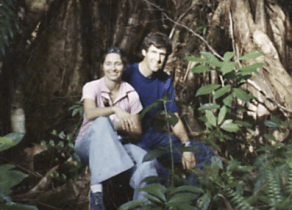
Aaron and Shelby

March 29, 2016

My street is narrow and the houses on my block are close together. They’ve gotten familiar to me in the six years I’ve lived here with my family. They’re all single-family type homes. There are the rentals with a revolving cast of residents.

One of them had a vicious dog that attacked our dog Marbles, and after that we threatened to sue the owner if he didn’t pay our vet bills and he came over to meet us, paid our vet bill and apologized in a way that sounded like like he attended AA meetings.

There are just a handful of kids on our block. They’re mostly adults. Some gay. And then there’s the house three doors down from us where the scuba divers live. It’s a couple in their thirties and I see their scuba gear hanging up in the backyard as I pass behind in the canyon.

There have been the odd encounters. Once I noticed a water pipe burst in front of their house and I knocked on the door to tell them about the water rolling onto their sidewalk and down the street. She rushed to a neighbor’s house where they had a curb key to shut the water off.

Today I saw Aaron, the man who lived in that house who had just told me that was his name. He was sitting in front with two dogs. A bird dog and a small mutt. He told me he had spent a lot of time rejiggering the front yard from a lawn to low-water shrubs so he wanted to spend a little extra time there to appreciate it.

I told him I was wondering if he still lived there because I thought I saw a big U-Haul truck moving somebody out of that house not long ago.

“Well,” he said, “there were some other guys living here. They were guys that had helped me out so I helped them out. Pretty soon the place was full of lost souls and it wasn’t the greatest living situation.”

So he was doing some missionary work that had to come to an end and he sent those lost souls packing.

I ask him where his girlfriend was and he told me she was named Shelby. Was it Shelby? I’ll have to ask again. He said she was in Peru working on a documentary project. So she produces documentary films?

“Well,” he said, “it isn’t exactly that. She likes to go on adventures, mostly having to do with scuba diving. Now she’s on an adventure in the jungles of Peru working on this documentary.”

It didn’t sound to me like that had much to do with scuba diving, and he admitted that was actually the case with a lot of her adventures. Point was that she was going to be gone for a couple of months.

Aaron was covered with that laid-back California thing and he seemed pretty care free. I wondered if I could have been like that, instead of having two kids and a regular job. What if I could have just taken off to work on a documentary that didn’t have much to do with what I actually did. But I was just there having the adventure.

That was the day I finally got to know the neighbors, three doors down, who lived on my block and got me thinking.


The Lost Belly Dance Picture

February 17, 2016

I was weeding through my parents’ old photos after their move to an old folks home and I threw away one I should have kept. It was one of me dancing with a belly dancer. You know how it is. You’re at a party. Someone hired a belly dancer and as a gag they tell the dancer to make me come up and dance with her.

In the photo the dancer is in the background and there I am in a suit and tie doing some stupid move.

I first thought, ‘Who would want to see that besides me?’ But there was a story behind it, and I don’t think my kids ever saw me doing anything like that so they might get a kick out of it. So I went out to the trash bin and dug through the many photo albums I’d thrown away to try to find that one picture. The party was in Minnesota so I thought I was getting warm when I found some other pictures from that time. But no luck.

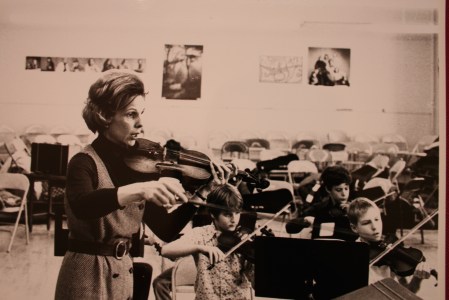
Of course something else happened and this happens a lot in life. When you’re pursuing something you think you want, you end up finding something better. At the bottom of the trash bin, once I’d pulled out all the photo albums, there was a photo that has fallen out of one of them. It was my mom when she was running the orchestra program for the schools in my home town, Grinnell, Iowa. That belly dancing picture is only in my memory. But that’s okay because I’ve got this.

Orch Program


New Chicken Eggs

February 10, 2016

It’s February and the sun has started taking a longer path through the sky. Longer days means chickens laying more eggs. For a while they were laying one a day or less. The green eggs laid by the Ameraucanas were the most dependable, still coming in the dark December solstice. Eggs are cool. Especially when they don’t all look the same.

Eggs 2


Shedding Memories

February 8, 2016

Prents Wedding

As you get old you downsize from the house to the condo to the apartment in the old folks home. All the old pans and plates, tools you don’t use, the old clothes that have lain in closets, basements and garages… they get tossed, sold or donated.

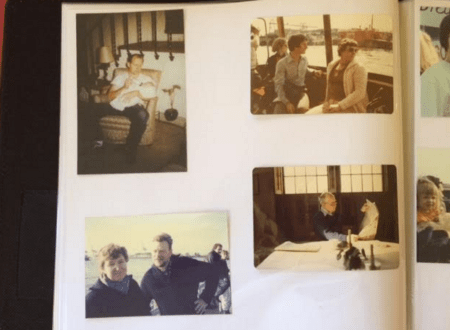
My parents just made the last move of their lives. I ended up with some of their stuff, including 40 photo albums. I was told to keep the pictures I wanted and get rid of the rest.

There were endless snapshots of vacations and events they considered important, friends of theirs I never knew and didn’t recognize. My father took most of the photographs and he was a terrible photographer. If there was a way to make a handsome person look bad he found it. He seemed to take pictures of everything, including maids and cooks at hotels where he stayed.

The things we have, including our keepsakes, are destined for the landfill just as we will be rendered unto dust. The same was true of these photos. Most of them ended up in the trash.  No loss.

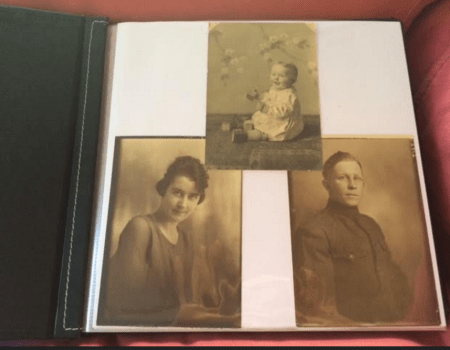
I kept the photos that told the story of my family’s past. I also kept photos I just happened to like. Like I said, with my dad taking most of the pictures there were not a lot of those but they did crop up. As for my family’s past… There were snapshots of my mother’s farm family in depression-era Kansas. Girls in dresses made from flour sacks and boys in overalls.

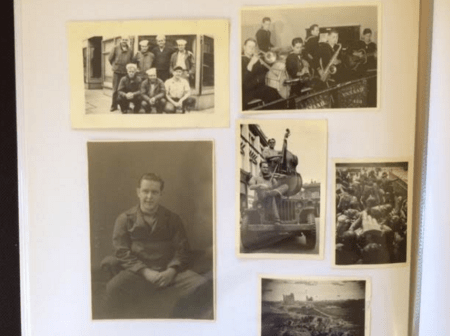
There were the shots of my dad during WWII. Staged pictures of him in his blue navy uniform, and one with two buddies on a New York sidewalk right before they shipped out. There were two shots of the dance band he played in and the one of him smiling in a shop door in Southhampton, England, where he was stationed.

There were pictures of mom and dad in college and the pictures of their wedding, like the one above. Slowly the black-and-white photos turned to color, though they were colors that faded with the years.

When I threw away all of those old photos I was shedding memories but you don’t remember everything, and it seems like most of the photos we take are good to keep for a year or two. I think of this when I delete old photos I’ve kept on my iPhone. There comes a point when you’ve looked at a photo long enough and it no longer warrants the divot in your soul.

Now, those 40 photo albums have been reduced to two-and-a-half. I think it’s all we need.

Here’s a few more that I kept:

My Grandparents

War photos

Mom's old pics


More recent photos

Mockingbird

January 18, 2016

In the morning I get out of bed, make coffee and walk outside to let the chickens our of their coop. Sometimes I hear the Mockingbird. I don’t know if they sing more in the morning or in late afternoon but morning is when I notice them.

When I first heard one I didn’t know what it was. But compared the homely sounds of the common birds it sounded like a pop star in a third-grade talent show.

too-too-TEE. too-too-TEE. trrrr-IH. dih-dih-dih-dih-dih. brrrrrrr. to-WIT to-WIT to-WIT.

MockingbirdI was stunned by the music of this bird. Lately I’ve become accustomed to hearing it but I still cannot anticipate where her song will go next.  The more astounding thing for me was learning what the bird actually looked like. I expected awesome colors. Maybe not an artsy mosaic but at least a brilliant red or blue.

The bird I finally spotted in the tree was not what I expected. I thought I must be seeing the wrong bird, not the one that was really making those sounds. But a computer search of images confirmed it. The Mockingbird looked as plain as her song was glorious. Grey with some black and white spots.

The name Mockingbird suggests it is just mimicking the sound of other birds. But I don’t hear those songs from anything else. Maybe it is trying to imitate the others. It’s just not a very good impressionist. Maybe in struggling to hear and imitate the rest of the world the Mockingbird is creating a rare beauty it never could have achieved if that had been its goal. Mockingbirds come and go from my neighborhood. I’ll smile when I hear it again.

Thinking about Trees

January 11, 2016

If you see a tree in San Diego it doesn’t belong here. Aside from the riparian oaks along the San Diego River and the pines high in the mountains, our trees are transplants from other places. Urbanization, paradoxically, has given San Diego a forest. And nowhere is our man-made forest more wonderfully contrived than in Balboa Park.

Different people have different ideas of what a park is supposed to be. Some think it’s a piece of nature in the middle of the city. Go to Mission Trails Park (not really in the middle of the city, but close) and that’s what you’ll find. But most parks are better described as green spaces where we find recreation and contemplation.

Balboa Park is San Diego’s most prized possession and there’s nothing natural or native about it. That’s true of its displays of Spanish renaissance architecture and its conglomeration of exotic fauna (at the Zoo) and flora. Mike Marika told me they have about 500 species of trees in the park.

Mike is a city arborist who takes care of the trees. He’s got a sunburned complexion and an absent-minded way of speaking that makes him fit right in with the park’s casual air. Still, when you’re waiting to meet a park official he’s not the person you expect will show up.

We met in the park’s desert garden on Park Boulevard and we spoke as Mike wandered around turning on water spigots. I asked him to stop calling the plants by their Latin names. This was a problem because many of the plants in Balboa Park are so rare they don’t have common names.

He pointed out a jumping cactus. There was a palm, which looked pretty ordinary to me, that he said was grown from seeds found in the tombs of the Egyptian Pharaohs. He told me about the park’s aloe bainesii that Ted Geisel (Dr. Suess) would sketch during his many visits. Look at enough of Geisel’s cartoons and you’ll eventually see it.

I asked him what was the horticultural mission of Balboa Park. Mike said he knew the park had one but he couldn’t remember what it was, though it had something to do with introducing new varieties of trees.

“If there’s something out there, somebody has probably tried it here,” said Marika.

As we stood on the edge of Florida canyon, Mike stopped talking mid-sentence to point out a tarantula hawk wasp as it wandered along the ground in search of prey. A large black bug that’s brilliant orange along the top, it captures tarantulas and lays eggs in them.

“So there are tarantulas in Balboa Park?” I asked.

“Apparently so,” he said.

The desert garden pretty much takes care of itself and it’s emblematic of a shift in focus toward drought-tolerant plants. The water expenditure to maintain Balboa Park is great. And some of the non-native trees are victims of deadly pests. Eucalyptus trees are under constant assault by the lurp psyllid. Predatory insects have been introduced to kill the lurp psyllids, but Mike said they can be slow to catch up.

I asked Mike Marika what was his favorite tree in the park. He said, not surprisingly, it was the almost 100-year-old ficus macrophylla, A.K.A. Moreton Bay Fig, that sits near the front entrance of the Natural History Museum.

The park has put up a fence around the tree to prevent compaction of soil and, Mike said, to prevent kids from carving their initials in it. I told him I loved the ficus trees near the San Diego Historical Society whose roots reach like fingers down a nearby hill.

The urban forest has many charms. It’s our erratic skyline and our shield to the sun.

Editor’s Note: This visit with Mike Marika was first published in 2011.

Is that a Quote, a Bite or a SOT?

December 21, 2015

I’m a journalist and I work in a newsroom that isn’t print or broadcast. It’s both. In fact it’s all three. Every reporter, who does a story, is expected to produce it for television and radio, and they have to write a print version for the station’s website. If this sounds crazy you may have a point and reporting on three platforms has its challenges.

Here’s one. Cultures are different from one medium to the next. So is the lingo.

A verbatim quotation from a source you’ve interviewed is called a “quote,” but only in print. On radio, that quote is reproduced in audio and it’s called a “bite,” as in soundbite. But in TV it’s called a SOT. A what? SOT is an acronym that stands for Sound On Tape, even though nobody uses tape anymore (all modern technology is digital) and on TV it’s not just sound, it’s video too.

So what do you call a quotation from a source? Where I work it depends who you’re talking to.

After we started producing our daily evening television show I learned another piece of TV jargon. Pop. This refers to a piece of environmental sound you use to lend a story information or atmosphere. In radio we called it ambience. A normal human would call it… well, I guess they’d just call it sound.

There are other differences in jargon that are even more back-office. A short, produced broadcast story is called a package or a “mini” among the TV people. Radio people a superspot, not to be confused with a mere spot. By the way, if a radio story (spot news or otherwise) doesn’t have any ambient sound it’s just acts and tracks. Acts means actualities (soundbites in other words) and tracks are the reporter’s recorded voice tracks.

A “pinwheel” is a collection of stories by different reporters that are linked in a single broadcast. One reporter does her SOQ (Standard Outcue) then the next reporter states his name and launches the next story.

A similarly connected collection of voices of interviewees (on radio) is called a VOXPOP, and of course you can’t do your VOXPOP until you do you gather your MOS. Those are Man On the Street interviews, in case you wondered.

The former newspaper reporters in our newsroom are typically old dogs who think journalism is going to hell and their jargon is the most exotic. We give them puzzled looks when they ask why your story doesn’t have a nut graph. You can prewrite most stories, they say, just assemble the A-matter and fill in the news at the top when it arrives.

Okay, a nut graph is the paragraph in a feature story that tells what the story is about, and it typically follows the anecdote or scene-setter that opens the piece. A-matter is background information on a subject that remains the same whether the subject is current or past, alive or dead.

Obits are assemblies of prewritten A-matter that are just waiting for someone to die. Was it cancer or heart disease? That’s the news you fill in at the top of the piece. Did I explain what a piece is? You know what I mean.

The language that we call jargon serves a purpose. It’s conversational shorthand, of course. But it also tells us who’s in and who’s out. If you know the jargon you’re a member of the club. And the inability to agree on what you call a quote means you’ve got a workplace with social schisms.

Will the TV, radio and newspaper people at KPBS ever forge a common language? I dunno.

Let me say one more thing. There’s one old newspaper expression I’ve always loved. The highest compliment you can pay a reporter’s writing is to tell them their copy sings. Hearing that would be music to my ears! But that’s a cliche. Shit.


My Father is Lost

December 17, 2015

You want to trust what your brain tells you. But my father is delusional. That’s what his doctor said.

He has reached his 90th birthday but not with everything intact. I look at a photo of him and my mother, taken three years ago when my daughter had her first communion. And I remember that as a time when he was still himself. He looks a long way away in that picture.

Now he doesn’t recognize my mother most of the time. I didn’t know this until about a month ago when he called me at home.

“Is mom there?” he asked me. I told him she wasn’t and asked why he wondered. Wasn’t she at home in their condo?

“I haven’t seen her for several days,” he said. She was in the next room. I know because I called a few minutes later and she picked up the phone.

A long time ago he joked that if he became senile one day, “Just give me a sandbox to play in.” It would be easy if we could just humor him. Sure dad. There are three other women who say they’re my mom. That’s okay. Sure dad. You got on a plane this morning and ended up in a strange place even though it looks just like your bedroom. But don’t worry.

It isn’t an old man re-entering the sweet innocence of childhood. It’s a former adult insisting what he thinks is true. He argues about it and my mother is getting tired of the arguments. I’m getting tired of the arguments.

He doesn’t have far to go in this life and I want him to be in a peaceful place while it lasts. Jim Fudge isn’t himself anymore. And I don’t know what to do about it.

Dad & Mom

Update Feb. 2016: This story has had a happy ending. Some trial and error in the use of medication has made my dad better. He recognizes my mom now, and seems to be his old self; his old old self at least. Though when you talk about happy endings you’ve got to remember Yogi Berra said it ain’t over ’til it’s over. That’s true of baseball games and of life.


Biking Without a Helmet

November 19, 2015

I ride my bike all the time. Most days I bike to work, which is only about a mile away. I bike to the grocery as long as the stuff on the shopping list will fit in my backpack. And I don’t wear a helmet.

Everyone who knows me thinks this is crazy. I was hit by a car in 2007, suffered brain trauma and took three months to recover. I was wearing a helmet that day, so why don’t I do it now?

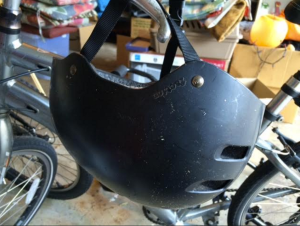
Helmet

I don’t wear a helmet now because I don’t like doing it. Also, I’ve decided helmets give a false sense of security and distract you from something much more important, and that is staying off of streets that are unsafe.

Montezuma Road was the place I was hit and it’s one of those four-lane thoroughfares for which San Diego is unfortunately well-known. Cars on Montezuma go a mile a minute. I was hit while driving uphill and I must have seemed like I was standing still, given the speed differential between my bike and the car traffic. Unless they have protected bike lanes, streets like Montezuma are unsafe for bikes. Period.

These days I only ride my bike on safe, slow neighborhood streets. If my destination forces me onto a fast-moving multilane road, I bike on the sidewalk.

A guy I know who wears a helmet on his bike asked me, “What if the car jumps the curb?” I wonder if he is suggesting that pedestrians should wear helmets when they walk on the sidewalk. Yes, we’d all be safer if we never left the house without wearing a helmet but there’s a point where safety precautions get ridiculous.

A couple of years after I was struck on Montezuma Road, Charles Gilbreth was cycling on the same road and he was killed after being hit by a car. He was wearing a helmet.

Grant Peterson, in his entertaining and very sensible book Just Ride, says helmets provide added protection but only if you take no more road risk, wearing one, than you do when you’re not wearing a helmet. Can you wear a helmet and pretend you’re not wearing one? That would be the safest way to go, but I think it’s more easily said than done.

Was Eddie Ever in Vietnam?

November 11, 2015

I used to work with a guy named Eddie. He retired this year but for about 40 years prior he worked in the mail room at KPBS. I still work there. He was very quiet and a little bit odd. He was bent over by arthritis and had a face that showed not much aside from his thick glasses, long hair and an unruly white beard. Eddie always wore a hat.

I was told that he served in Vietnam, and I saw a photo that supposedly showed him in the field. The picture was gripping. It showed a black soldier at the center who looked unsteady on his feet, his head bandaged in a bloody white cloth. To his right was a white soldier wearing a helmet and an anxious look who appeared to be reaching for the bloodied soldier.

The white soldier was Eddie, an Army medic when he first got there in 1965. Or so I was told.

As Veterans Day approached an editor suggested we record an interview with Eddie for the occasion and air it on November 11th. I did a pre-interview of him in which he told me he came from a military family and he was in the high school ROTC. He enlisted in Vietnam and was sent to Da Nang, where he carried out search and destroy missions in the countryside.

He said he came face-to-face with the enemy and there was hand-to-hand combat. He served in the Tet Offensive as a gunnery sergeant. I asked him if he killed men, and he said he killed 200. It was amazing to think that quiet, gentle Eddie had killed so many men. He also told me he received the Bronze Star, the Silver Star and the Distinguished Service Cross during his time in-country.

A week later we recorded the interview and the conversation went pretty much the same, except this time he told me he killed 300 men. Afterward I started to ask him to show me some of the evidence of his honors. I told him it would be cool to get a photo, for our website, of his hands, holding the metals.

But he told me that the metals were packed in a box somewhere in the house and he probably couldn’t find them. Actually, he said, the metals were at an uncle’s home “back east” along with other family keepsakes, and they would be hard to get any time soon. I was starting to get nervous about airing this story.

I called him again and asked if he could show me something that could prove that he was in Vietnam. Were there any photos of him taken by news media that had his name in the caption? Could he show me his dog-tags or his discharge papers? Did he have any memorabilia or any snapshots that were taken of him in Vietnam?

His name wasn’t in any caption. The dog-tags and discharge papers were lost. A family member had destroyed any snapshots or memorabilia he had kept. I did some online research to try to verify his service and his receipt of metals but it came up blank. Interestingly, I did spot the name of filmmaker Oliver Stone in a list of recipients of the the Distinguished Service Cross because the spelling of his last name was close to that of Eddie’s.

I told Eddie we couldn’t air the interview unless we had some verification of his service in Vietnam. This was all too bad because, I said, “I believe you.”

Did I lie to help him save face? Maybe. Years gone by and the experience of war can change people and they say you can’t judge a book by its cover. But the cover of Eddie’s book is so unlike anything you’d expect from a battle-hardened veteran that it seems unlikely he ever set foot in Southeast Asia.

I’ll be glad to find out one day that his story was not just some fantasy. Maybe someday I will see a photo of his hands holding those metals. But this Veterans Day we’re going to have to salute someone else.