Archive for the ‘Uncategorized’ category

Beggar’s Camp

July 10, 2016

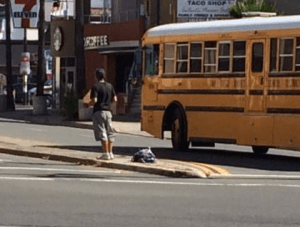
The median strip at a traffic light is the favorite place for panhandlers. It’s an island in the road where cars have to stop until the light changes. I was at College and Montezuma about a mile from my home where I saw two median islands and each had been claimed.

They set up little campsites with their backpacks and bottles of water and they hold their signs, explaining that they’re short on luck. Some claim to be homeless vets. Some say they’ll work for food, though I doubt that work or food is really what they want. I think they want a cash handout.

Beggars camp

College & Montezuma

My wife is a library manager and that has given her a great knowledge of the homeless and people who panhandle. She was in Pacific Beach a couple of days ago and went to a liquor store to buy a bottle of Tanqueray.

All the big bottles were locked up in cabinets behind the cash register. But right out in front of the register were open bins that were full of small vodka bottles, the kind you get if you order a drink on an airplane. To her practiced eye the message was clear: Go out and panhandle for a couple of hours until you get five bucks then come in here and buy a couple of small ones.

Panhandle is a funny work. I guess it came from a day when beggars would ask for money and hold out a pan, hoping you’d put something in there. But I’ve never seen anyone hold out a pan when they wanted money so I wonder why we say it. Maybe beggar is too impolite.


California Girls

June 19, 2016

The stereotype of California being a blond state is enduring. My daughter’s consumption of pop culture caused her to wonder why people think the typical California girl is a blond, when in reality that didn’t seem to be the case.

I explained as best I could, saying that during the 1930’s and 40’s lots of people from the Midwest migrated to California to flee bad times on the farm or to look for jobs in wartime factories. A lot of them came from German and Scandinavian backgrounds and they had lots of blond kids, so in the ’50s and ’60s I guess California must have looked like a very blond state.

Latinas

Since then there’s been a new migration, which maybe wasn’t a migration at all because it was people from the Pacific rim retaking a place that used to be theirs. A guy I knew called it the Reconquista because a lot of those moving back were Latinos, but there were also East Asians and Filipinos… more and more of them as the blonds got fewer and fewer.

California seems destined to be a brown state and while the California girl is still an icon we need a different picture of her. Here’s one I like.

Dizzy’s Jazz Club

June 16, 2016

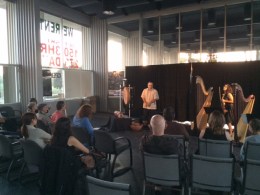
I’d never been to Dizzy’s, a jazz club in San Diego. And when I finally went it wasn’t what I expected. I went Sunday to hear a concert. Do they perform concerts in jazz clubs? Maybe not. But it featured a percussionist and a harpist who happened to be Tasha.

Dizzy's in San Diego

Dizzy’s in San Diego

I thought jazz clubs were dark places on a first floor or a basement, with a bandstand at the front, a bar on the side, round tables and chairs in the middle. But when I looked up Dizzy’s on the web it looked like a car dealership on Mission Bay. I thought, ‘This can’t be right.’ I basically refused to believe it until I got there.

It was not a car dealership. It was, by day, a U-haul dealer and a place that rented jet skis. It had floor-to-ceiling windows with a parking lot out front, with big letters painted on the windows that advertised the aquatic motor toys. Tasha later told me she also spotted a Donald Trump sign in front of the business.

A Donald Trump sign!? Jazz clubs are supposed to be places for the hip. The cognoscenti. They were supposed to be the ultimate anti-Donald Trump kind of place.

I knew that Dizzy’s never used to be a jazz club in the sense that I knew because it didn’t have a bar and didn’t serve alcohol. It was an all-ages place, maybe harkening back to the New York coffee clubs of beatnik times. Dizzy’s used to have a nice performing space in downtown San Diego but lost its lease and ended up in jet-ski land.

But I attended the club, paid the cover charge and my daughter Sophie and I enjoyed the music, which was harp and percussion music drawn from indigenous cultures of the Americas. I know that sounds a little too CalArts but it was actually good music. The acoustics were good, I was comfortable and eventually the strange setting and jet-ski ads fell away and I thought, ‘Why not?’ Art happens wherever there’s a space for it.

As we drove home, Sophie (who’s 11) told me she wanted to start a jazz club and we talked about what to call it. She might go into business with her friend Stella so we thought it could be the Stella Star or Stella’s Spot. Then we thought it could be in Kensington because that neighborhood had lots of potential for coming up with cool names.

In the meantime, I hope Dizzy’s can find a different place. Truthfully, we hipsters can only put up with it for so long.


My old Mittenwald Cello

June 5, 2016

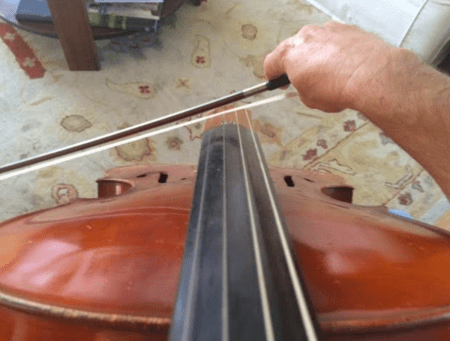
Cello


My childhood is a faraway place I know through memories that become smaller as time moves on. I thought of this as my parents moved out of their condo and into an old folks home, and I got some of the things that had followed them but they no longer could keep. Like their photos. And the cello I played as a kid.

I hadn’t played it for 35 years. Nearly that entire time the cello lay on its side under their piano in a soft case that was slowly disintegrating. The bow hadn’t been re-haired since it had last been used and the strings were old and stiff. The instrument was still fine though. So far as I can tell it’s in as good shape as it was when I was 20. More than I can say for myself.

My cello was built in Mittenwald, Germany. I named it Herman when I was a kid because kids give names to things that mean something to them, though I’m not sure I liked my cello since it represented the hard work of practicing, which I dreaded every day. But when my wife suggested we sell Herman, along with a guitar I stopped playing years ago, I said no. Selling the guitar was fine but the cello touched something in my past that was bigger.

The thought of losing Herman made me take a greater interest in it. I asked Tasha, my daughter’s harp teacher, to refer me to a shop in San Diego that sold instruments and repaired them, and she sent me to the Violin Shop, which was run by a family that had known Tasha since she was a little girl.

You might expect a stringed instrument shop to be downtown or on some old neighborhood main street, sort of like the place in Chicago where my family bought the cello more than 40 years ago. But the Violin Shop was in Sorrento Valley, a small-scale Silicon Valley where San Diego’s high-tech and life-science industries are wedged into big glass buildings on a suburban landscape.

I had to make two passes at the building that contained the shop until I knew what my GPS was pointing at, and I managed to spot the store’s name on a sign along the four-lane road.

Once inside, I left my bow with a man named Carlos and made an appointment with the proprietors to buy new strings the following week. I felt like an ass when I asked questions because the cello had become so unfamiliar to me with the passing years. I was like a man who was struggling with some subject he always left to his wife.

“Are bows still strung with horse hair?” I asked.

“I use raccoon hair,” said Carlos.

It was a joke. I left with the impression that yes, they still use horse hair. I dropped Tasha’s name to Mr. Smith who runs the place and he smiled because that’s what people do when they think about Tasha.

Prior to all this, I’d ordered some sheet music; Bach’s six unaccompanied cello suites. In there I found a minuet I once performed. And when I got my cello set to go — new strings, rehaired and rosined bow — I sat down to play.

My hands remembered. Pressing the strings against the fingerboard stung a bit because I’d lost my calluses and I had to reach farther for notes than I recall. But the feeling was still there.  Regaining the muscle tone I used to have seemed within reach. The bow found the strings and pulling it over them brought that wonderful tone.

So now what do I do?

My body has a memory that had become smaller but not by much. Do I practice and get better? I am still a middle-aged man with a life full of stuff I need to do. I never dreamed of being an outstanding cello player and I never will be. But being able to do it at all seems like a gift. It’s a little like a poem you were forced to memorize in high school that you remember decades later and you finally understand.

My parents will not live much longer. I’ll practice that minuet until I get good at it again and I’ll play if for them. That’s the least I can do.


Point Loma

May 21, 2016

Tuna fishing brought them to San Diego. Portuguese immigrant families caught tuna in the ocean and made homes on a peninsula called Point Loma that dangles south into the Pacific like an elephant’s trunk.

The Point is hard to get to by land, requiring lots of motoring on streets that run at strange angles as you work your way south, and I did that last weekend to pick up my daughter Sophie at a friend’s house after a sleepover. It was a two-story modern-style house with a view of the ocean. Pretty cool to tell the truth.

Point Loma, San Diego.

Point Loma, San Diego.

The mom of my daughter’s friend is a Portuguese-American woman called Jessica. She grew up within blocks of where she now lives. Her dad was the captain of a tuna boat and her world was filled with family. She had forty first cousins who could visit on foot or by bike. They were always around.

Her daughter Stella is a classmate of Sophie, and on a Friday they all went to the Festa do Espirito Sancto, an annual Catholic festival and march that wends its way to the Portuguese church, St. Agnes. Sophie told me she and Stella won the cakewalk, and there was a endless stream of friends and relatives coming up to Stella to say hello and ask her stuff.

When I grew up my family was my mom, my dad and my brother. Aside from pets, that was it. I had an extended family, of course, but it was at least two states and hundreds of miles away. Maybe being surrounded by family has its drawbacks. Everyone in the family knows your business. And what if half your family are fools and deadbeats?

I have been reading books by Richard Russo, most recently Nobody’s Fool. The author grew up in a dying industrial town called Gloversville, New York that sounds a lot like the Upstate New York city my father grew up in.

Russo left Gloversville. I hear he now lives on the coast of Maine. But he writes about the people who stayed. The people in his books stayed near their families and the people they went to high school with, even if that meant working a crummy job and everyone knowing your business.

I was like Russo. I left the small town in Iowa where I grew up. In fact, I couldn’t wait to get out. But even if I had stayed I wouldn’t have been surrounded by family because my dad was an itinerant academic (Grinnell, Iowa is a college town) who went where the job was, not where family was. Maybe chasing jobs in strange places runs in my family.

I can’t see a San Diego Portuguese like Jessica doing that. Jessica has black hair and a pretty face that seems to always smile. I see that as she talks to me in front of her house with the flat span of the Pacific in the distance, and I can’t picture her anywhere else.

Jessica talks about her eldest daughter and her three grandchildren living in Goshen, Indiana like it’s something she still can’t wrap her head around. It’s such a small town, she says, and the weather is so cold.

I’m not surrounded by cousins but my niece lives here now, I’m raising my kids in San Diego and my parents have lived here nearly as long as I have. For me, I guess that’s enough to make it feel like home.

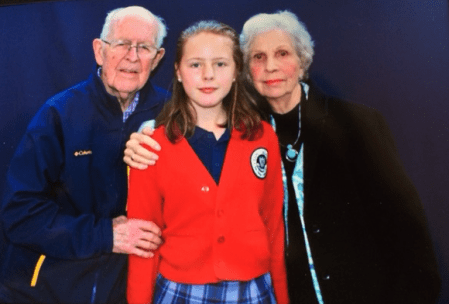
Sophie and Grandparents

May 8, 2016

Sophie

The Hiding Place of my Pain

April 18, 2016

Chronic pain has been a constant companion ever since I was hit by a car nine years ago. And it’s funny that something I know so well has been so good at concealing itself. I knew where the pain was. I just didn’t know where it was coming from.

The traffic accident injured my brain and required months of recovery. The thing I never got over, though, was the chronic pain in my feet, legs and backside. Since the accident in 2007 I have taken oxycodone every day. Sometimes as many as four Norco or Vicodin pills daily. As to why this pain wouldn’t go away, my rehab doctor… well, he basically didn’t know. Though he theorized the nerve damage in my head was causing my brain to send the wrong messages, telling me I had pain in places where there was no actual injury.

Maybe you’ve heard stories about phantom pain, in which a man feels great pain in his left hand even though his left arm has been amputated. The hand doesn’t exist. How can it hurt?

I was referred to a story by Atul Gawandi that gave examples of how pain or discomfort were not the nervous system responding to the reality of an injury but it was something perceived in the brain that seems to make no sense. But that didn’t matter because the brain is calling the shots when it come to all sensations.

But my experience and my pain theory took a turn when I started visiting a chiropractor, eventually started seeing a chiropractor named Richard.

The first few times I went to a chiropractor in my neighborhood. I had gone through two acupuncturists with no effect. But chiropractic actually seemed to make a difference. It reduced the pain and the relief actually stuck around for a while.

But the effects weren’t dramatic and, following treatment, I’d be back to where I started once a couple of months went by. I was still convinced that I’d have to live with the pain for the rest of my life. Then I got wind of Richard from my wife. Richard gave monthly presentations at the library branch she managed to educate people about alternative medical options. Sounded more like marketing than education, but what the hell.

Richard is a short Jewish man with a round belly and half glasses. He speaks in an even tone that sounds pedantic and a little long-suffering. Once he heard my story from my wife, he insisted that he could make me better.

The first time I went to his practice, Richard insisted I read a half-dozen brochures about chiropractic treatment. I told him after years of no improvement to my condition he had to expect me to be skeptical, regardless of what his brochures said. Part of the problem was that his claims sounded unrealistic. Part or the problem was my health plan didn’t cover his services, so if I hired him it would be out-of-pocket.

After the introductory visit, months went by before I finally called him and said I would give it a try. How could I not, after nothing else had worked? If it ended up being a couple thousand bucks down the drain I could live with that.

The theory of chiropractic holds that my problem is the result of subluxation, the misalignment of vertebrae that causes constriction of blood flow and nerve passages. But if you get everything lined up right, they say, you’re good. Instead of my brain being messed up and sending the wrong signals, telling healthy body parts they hurt, the problem was my spine, which was doing a poor job of relaying the proper signals because it was being pinched by the bones that surround it.

You can argue with theory but it’s harder to argue with results. And since I’ve been visiting this chiropractor my pain has improved dramatically. I’ve gone from 3-4 Norco a day to just one a day. The pain… I really can’t call it pain anymore. The discomfort is still there but it doesn’t run as deep. It’s always been most severe in the feet. Now it surrounds my feet but doesn’t penetrate them.

I remain doubtful that I will ever feel like I did before the accident. Taking the edge off the pain? I’ve gotten there. But making it disappear? That’s more than I can allow myself to expect. I’ve lived with the pain for so long it feels like it’s part of the aging process. So getting rid of it seems as unlikely as restoring my youth.

We’ve found the hiding place of my pain. I may not expect but I do hope that means we’ll be able catch it and kill it.

The Week I got to be Sophie’s Friend

April 10, 2016

I had a week off from work in April. I took the vacation time because my daughter would otherwise be alone at home with one more week of Spring break, and she’s only 11.

So with just Sophie and me in the house – her brother back in school, her mom at work – I wasn’t sure how things would go. I love Sophie as any normal father would. We’re front and center in each others lives but I didn’t know if we were close.

Sophie is a girl who likes girl things. She’s always identified closely with her sex, and I think that’s why she’s identified more easily with her mother than with me. When she confides in one of us, it’s Karen. When she wants advice she asks her mom.

I wonder if she sees me as the man in the house who makes her practice harp. I do that, she’s right, and you can’t expect small kids to be appreciative or sentimental about what a father means to them. Daddy? He’s the one who makes me practice harp.

There would be some of that this week but on Monday I decided to get her to do something else. As she lay on the family-room couch looking at something on her iPhone I said, Let’s go for a bike ride. Without looking away from the phone she pulled a frown and said that would be too… something. Difficult? Time consuming? There was no good place to go? I can’t remember.

But she agreed in the end so we drove to the next neighborhood, Talmadge, which is broad and flat with plenty of nice homes to look at. The streets were quiet so we rode side by side, talking about families from her school who lived there, though we weren’t sure where their houses were. In a gentrified slice of the neighborhood there was a tiny park surrounded by the circle of a street. A roundabout I suppose. We got off our bikes and Sophie walked through the tidy plantings in the middle, letting her thoughts wander as I sat nearby.

There was a day when Sophie pulled my old box of comics out of a closet. I have about two dozen Marvel comics from 1967 that I collected as a kid. They may be worth a few bucks since some are in the great condition. Sophie has become a fan of Marvel movies starring Thor, Captain America, the Black Widow and so forth. So she paged through my old comics, maybe thinking I was a little bit cool for having them.

One night I made a fire outside on the deck, and she joined me there and read aloud the “Epic-Length 22-page Battle!” between Submariner and the Incredible Hulk from beginning to end. I stared at the fire and the sparks rose and disappeared into the air as she read every cornball line spoken by the two superheroes, and by the evil guy who had managed to control the Hulk’s mind and force him to attack. She read to me every SNOK! THOOM! And BTAM! to describe the super blows delivered in the story.

That night Sophie and I shared something that was just between us; something that was fun and funny and that I’m sure will be unforgettable, at least for me. Later that week she also read me a list of cities in San Diego she found on her phone that were ranked by rates of obesity. National City was number one. She showed me the new phone case she got during a trip to the mall with her friend Vicky. She and I took another bike ride and we went down to her grandparents’ condo to install a new lamp.

I finally took the time to take a close look at who she was, and some of it looked familiar. Like the way she’d wander into the canyon behind our house. It’s like the way I used to cross the street when I was a kid and walk through a big patch of half-empty fields, looking for some adventure maybe even if it was only something that happened in my mind.

On Friday, I was in the house when I saw something out of the corner of my eye. For a split second I saw a woman dressed for work. I thought it was Karen. But it was Sophie, wearing her mom’s clothes. She wore a light brown skirt, a white blouse and a brown jacket and carried a matching handbag. She was wearing Karen’s pumps on her feet and they fit.

My daughter is big for her age and she acts older than she is. Now – even though she was playing dress-up – it was a clear picture of who she soon would be, if God treated us kindly. You see your children pull further away from you as they become adults. You just hope they don’t stray too far and they remain your friends.

But for at least a week, I got to see Sophie be funny, to see her wander in silence and try to think of stuff to talk about as we were just hanging out. I got to be Sophie’s friend.


Birthday Lounger

March 31, 2016

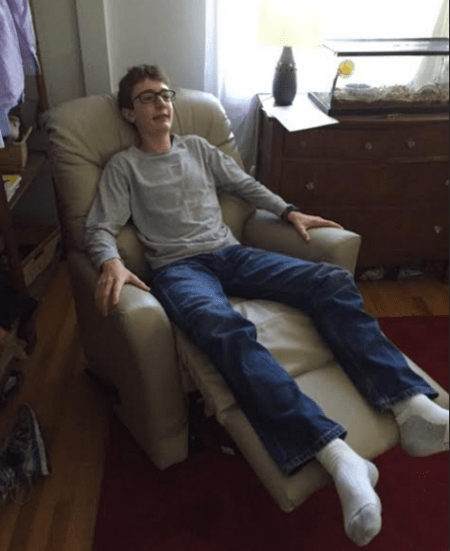
When my son turned sixteen, which happened today, he got his dream chair. It’s a reclining lounger from Jerome’s. The old chair in his room was shedding flakes of fake leather and that couldn’t be tolerated.

ChairNick

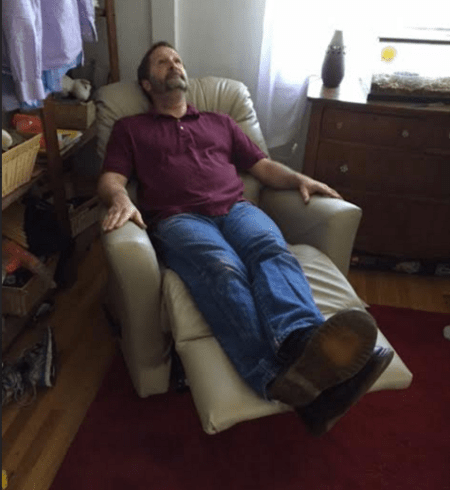
I tried it out, thinking that the lounger really should belong to dad. I sat down and immediately wondered where was the TV and where was my beer.

ChairMe


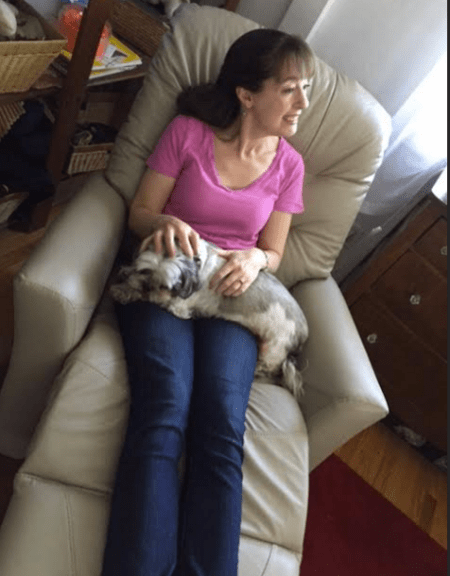
The chair from Jerome’s was delivered by two guys who also took away the old shedding chair that I’m sure is bound for the landfill. Although the chair, the delivery and the removal of the shedding chair cost a lot of money, Karen still insisted on tipping each delivery guy $20.

ChairKaren

The chair came in a big box. And I would have been happy to see the guys take it and reuse it for some other Jerome’s furnishing. But Sophie said she wanted to keep it. She’s 11 years old and still wants to play in big boxes, or at least she imagines she does. So the big box is now in the middle of the family room.

ChairSophie


So that was Nicholas’s birthday. I suppose most kids want a driver’s license when they’re 16 but Nicholas got a lounger and Karen is now the world’s greatest mom for shopping for it and buying it.

Orchid Growers Cultivate Passion And Memories

March 31, 2016
Debby Halliday

Debby Halliday

A few dozen adults crowd around tables in a large conference room at the Scottish Rite Center in Mission Valley. At the front of the room a grey-haired woman shouts a greeting.

“Good morning, everybody! We’re going to have a great show. We have beautiful flowers. So I’d like to start by going through some of the rules.”

That’s Pam Peters, the chairwoman of judging at the 70th annual spring show of the San Diego County Orchid Society. For 70 years the orchid society has been a gathering of people who love the flowers and love telling stories about them.

“I got my first orchid when I was an adult to find a bouquet for my girlfriend for Valentine’s Day,” said Ron Kaufmann, chairman of the orchid society’s conservation committee and, like Peters, a life member.

“And the flower shop I went to had some pots of orchids sitting outside. So I thought, ‘That’s a little different.’ It’s something nice and not just a dozen red roses. And it was actually one of these,” he added, pointing to one of the thousands of flowers on the floor of the convention hall.

Funny judges

There are about 30,000 species of orchids in the wild. Add to that the 100,000 hybrids created by orchid fanciers and you can imagine the floral riot of shapes and colors at the orchid society show. Kaufmann is an oceanography professor at the University of San Diego and he says evolution has made the orchid an astounding plant.

“The infinite variety is just because they are designed to attract an infinite variety of pollinators. The pollen in orchids doesn’t get blown from place to place by the wind. All of that variety is designed to attract different kinds of pollinators to the flowers to accomplish pollination,” he said. “And that variety also tends to attract people, who have an interest in this wide variety.”

Who are the orchid people? One of them is a young man with a long red beard who’s a post-doctoral scholar in neurology at UCSD. His name is Kevin Rynearson.

“So, when I was a kid, after my grandmother passed away, we went to help my grandfather clean out his house and I went into his backyard, where I was never allowed to go as a little kid,” Rynearson explained. “It was actually a greenhouse that he had up in the Bay Area that was full of cymbidium orchids.”

There was some space left after they packed up the U-Haul so they crammed as many orchids as they could into it. For Rynearson and orchids the rest is history.

Most people may think of orchids as the fancy flowers you see on sale at Trader Joe’s. But the orchid society members who live throughout San Diego County see them as much more. One of those members lives in a big house on a quiet lane on Point Loma.

One of the many orchid species at the spring show of the San Diego County Orchid Society.

Betty Kelepecz

Betty Kelepecz

Betty Kelepecz is tall and confidant, the reflection of a career spent in law enforcement. She worked her way up to the rank of commander for the LAPD and retired as the chief of the San Diego Harbor Police. In her backyard greenhouse she shows me her “Darwin orchid,” which has a star-shaped flower and a 12-inch-long nectar spur.

Charles Darwin theorized the flower must have evolved with a moth that had an elongated proboscis in order to reach all the way down the spur to get the nectar and pollinate the flower. In the 1960s, a hundred years later, naturalists saw a moth do just that and proved Darwin right.

Kelepecz pointed out another flower in the shade of a pergola next to the greenhouse.

“Remember I was talking about that orchid from Peru that I fell in love with? … Well here it is! It’s called masdevallia veitchiana and it grows on Machu Picchu.”

She said the bright orange flower was given a name by local Indians that refers to the story of a princess who lost her lover and cried with heartbreak. The flower is called “tears of the princess.”

Kelepecz, of course, had a story about how she first became aware of orchids. When she was living in Long Beach her husband found a disheveled, discarded plant in an alley and brought it home. He said it was an orchid and Betty told him it was not. Her husband was right and the plant bloomed for 30 years.

Kelepecz said working for decades as a cop made growing orchids a place where she could find some peace.

“My background was one of a lot of stress. And so orchid growing for me was a place to go and to become calm… It makes me joyful. I’m a joyful person anyway but the joy in growing an orchid is to me the perfect joy.”

Pretty Orchid

 The fact that an orchid can grow at 8,000 feet in the Peruvian Andes is a pretty good indication that they can grow just about everywhere. Some live in the tropics but plenty can survive a hard freeze. A story repeated to me by nearly every member of the orchid society was that the flowers grow on every continent except Antarctica.

They say that San Diego’s mild climate is a great place to grow a wide variety of orchids. Rancho Santa Fe is where orchid society member Debby Halliday lives. Her property is expansive and well kept. Naturally, she has a place where she keeps here orchids.

“So here we are,” Halliday tells me after she opens the glass door. “This is my lovely greenhouse where I spend a lot of time.”

Halliday and her husband spent their lives in business, at one point selling cactus and succulent plants to supermarkets. But she says she’s only done orchids for love, not money.

“In 1970, I had just gotten married. We lived in Brooklyn and my husband was very interested in orchids,” she said. “So we together joined the New York Orchid Society. We built a little lean-to greenhouse in the backyard… We had the bottom two floors of a brownstone. And members of the New York Orchid Society gave us our first collection.”

Debby Halliday and her husband, Donald.

Debby Halliday and her husband, Donald.

Today, Halliday is a member of the San Diego County Orchid Society. She is a judge at orchid shows and teaches culture classes for the society. That’s horticulture. Like so many orchid people, the flowers are a bank of memories and emotions, maybe especially for Halliday, who has named her variety of a hybrid plant — the Lc. Mini Song ‘Donald Halliday’ — after her late husband.

“My husband got ill and he wasn’t able to stay around and enjoy it. But for me, it’s a great reason to get up in the morning.”

It’s the perfect joy.

(This story was also published by KPBS.org)