Archive for the ‘Uncategorized’ category

Christmas Diary: 2011

December 29, 2011

Christmas Day in San Diego was sunny and 75 degrees. This winter weather is strange to me and disheartening to my kids, who dream of living in a place with snow.

But the people on my block of Collier Avenue don’t let the weather stop them from amping up the holiday spirit with a great display of lights.

My Christmas Tree

One house decorates its roofline with fake icicles that appear to be melting as electric light drips off their manufactured ends. There’s an inflatable Santa in a hot-air balloon. There are glittery reindeer with bobbing heads and an elfin rock band wearing dark glasses.

A week ago I rented A Charlie Brown Christmas, in which the main character decries Christmas commercialism. The cartoon tells us the season is meant to be somber and pious. What crap! Christmas is pagan, gaudy and spendthrift and that’s the way it should be.

The day before Christmas I got my bike stolen. Maybe I, like Charlie Brown, should blame it on the materialist corruption of the holiday. But I think it happened because I left the bike outside the grocery store unlocked.

This was the bike I once celebrated as a renewal of my desire to get back on two wheels, after suffering a serious bike accident four years ago. But I never much liked the bike. It was uncomfortable to ride due to lower body pain that resulted from my cycling mishap, and on Christmas Eve one of its pedals started to come loose.

I actually left it unlocked, hoping someone might take it off my hands. The plan worked better than I expected. I asked the Salvation Army volunteer, out front of the store, if he saw anyone take it. This is the guy who never rang his bell and didn’t thank you when you pushed a folded dollar into his coin slot.

“No. Didn’t notice,” he told me as he took a cigarette break.

Christmas Morning

I guess the free bike will be my act of Christmas charity, even though the receiver didn’t deserve it.

Twenty years ago I married into a family, in which compulsive shopping was widespread. So my children don’t have much chance of seeing the spiritual side of the holiday. It’s entirely hidden by presents.

This year my Midwestern in-laws were in town for a visit. Grandpa Pete is happy to spend nearly the whole day sitting on the couch, reading the newspaper. That means he’s a pretty low-maintenance guest. He’ll sometimes doze off between articles. His sleep is not disturbed, even when he’s surrounded by people having animated conversation.

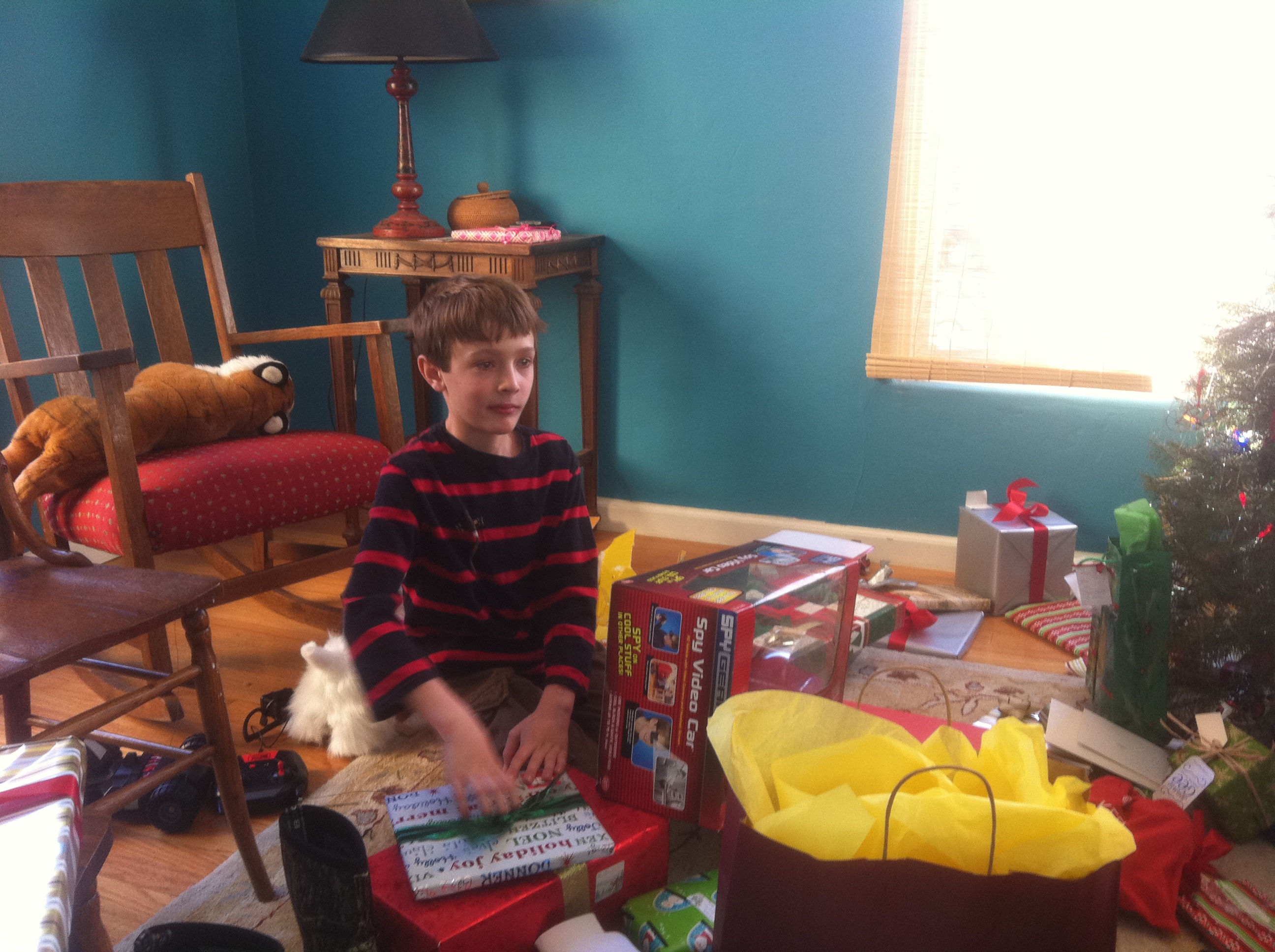
My kids spent Christmas day focusing on their favorite presents… robotic things that moved along the floor and made sounds. Go-Go My Walking Pup barks and whimpers as she wags her tail and walks at the end of an adjustable leash that’s held by my daughter. The gift-wrapped box that she came in barked when you shook it.

My son got a “spy car.” It’s about the size of a roller skate with oversized wheels and a tiny camera in the front that allows a remote operator to drive it around household obstacles. All day, Nicholas wore an eyepiece so he could see the spy car’s ground-level horizon, making him look like a cyborg from “Star Trek: The Next Generation.”

Snow on Mt. Laguna

But now the Christmas tree is turning dry and the return to school/work marches ever closer. Our SeaWorld annual passes are about to expire, and winter still has three months to go.

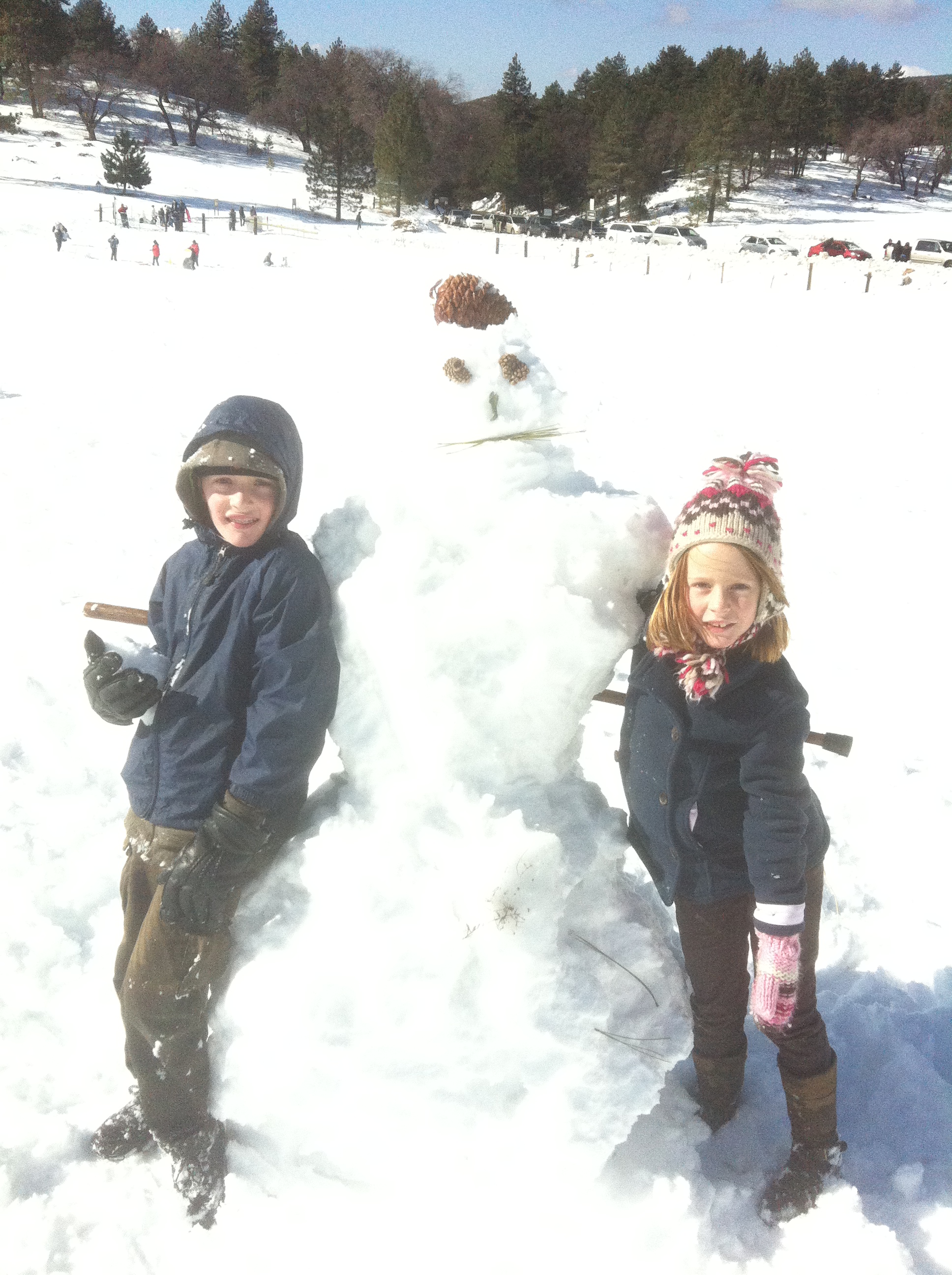
The good news is this is winter in San Diego. Don’t forget 75 and sunny. Meanwhile my children, whose love of fun trumps their love of comfort, will dream of the next snowfall on Mt. Laguna… only a 50-minute drive.

Slowing Down the Streets

December 22, 2011

I don’t live in a war zone. Street crime has gone way down. I feel pretty safe in the city. But I am afraid of cars.

I remember being in accidents when a flying hunk of steel on wheels seemed to come out of nowhere, rammed my car broadside sent it into a skidding twirl. Car crashes unleash a power you think is under control, until it’s not.

I was once hit by a car while I rode my bike. I don’t remember it because my head struck the windshield so hard that my brain shed blood and memory failed to process. All I remember are the weeks in the hospital and the lingering nerve pain that still forces me to take Vicodin every day.

Wide roads that encourage faster and faster traffic have created an epidemic of death and injury we don’t seem to notice. But it’s out there, and it’s a daily threat. I don’t worry much about pedophiles living on my street. But I’m always worried about my small kids walking in front of speeding cars.

I read a story in Salon.com about the movement to slow traffic. Read it yourself. Is it wishful thinking by liberals who like bikes? Convenience and mobility have become American entitlements, and requiring the patience to ride a streetcar or walk to the grocery store seems out-of-place here.

Reducing speed limits means challenging the car’s supremacy, and that would force us to see the world as a bigger place. It could mean you can’t go shopping at the mall that’s 30 miles away. You’ll have to settle for the place around the corner. You’ll have to compromise.

Consumer capitalism hates compromise because it means we don’t spend money as freely and we don’t think we can have it all. But having it all means living with violence on the roads and cars that come flying out of nowhere. When that happens, you just have to hope the car you’re in is the only thing that gets broken.

Memories Cast in Silver

December 19, 2011

We have the Christmas tree up at my house and this year we did tinsel. Tinsel has been a controversy in my immediate  family, but this year my kids insisted on tinsel and we gave in.

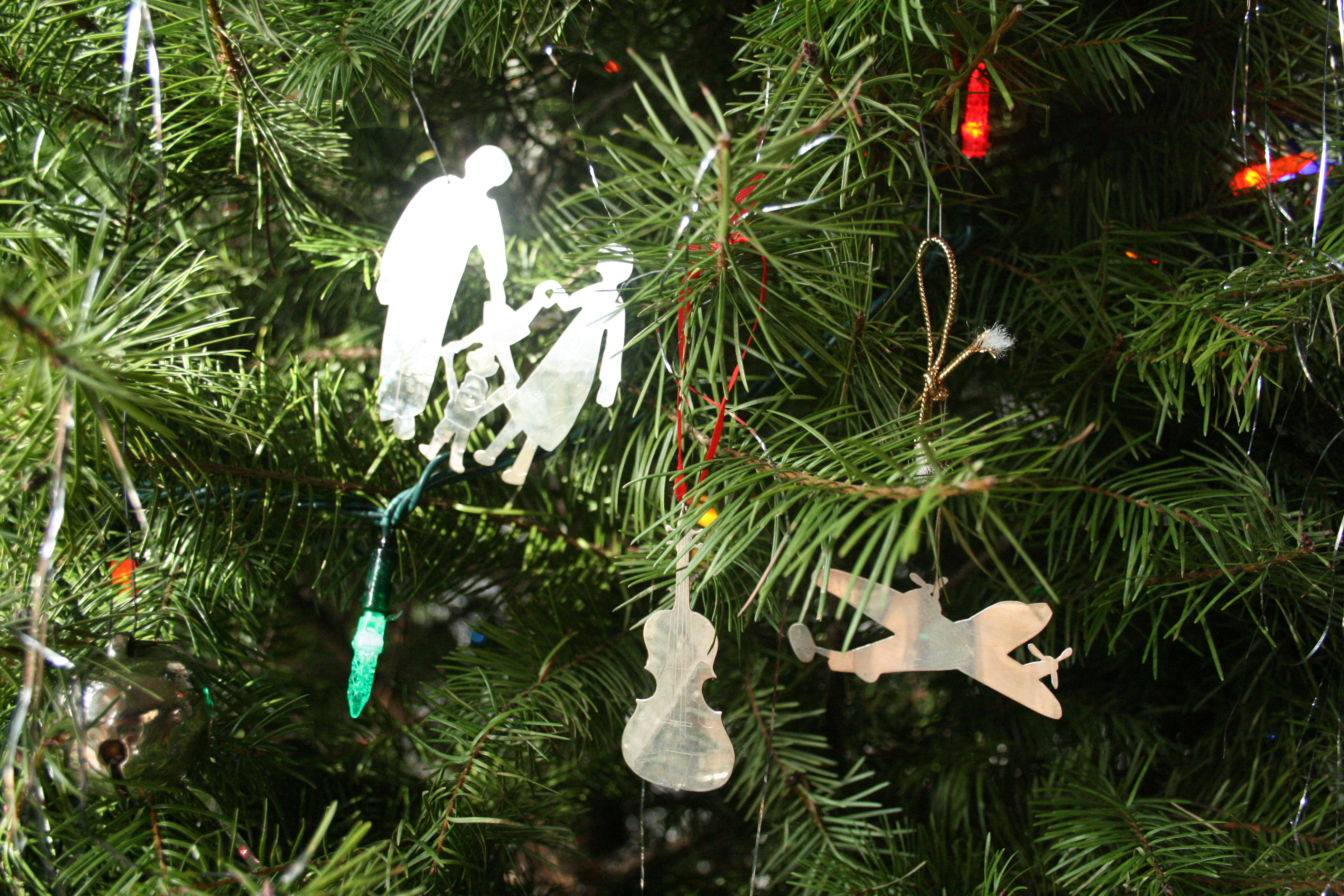
We also decided to use all of a certain class of our many Christmas ornaments: Silver hand-made ornaments that my wife has received, each year, since she was a child. Each one connotes a memory from that year.

The three you see in the photo represent, in one case, the violin classes Karen took when she was 13. The airplane ornament recalls a WWII-era bomber plane that was restored by her uncle Tom. The family of four ornament arrived the Christmas after our daughter Sophie (who made us  four) was born.

Memories can be fuzzy, even when they are marked by an ornament. One shows a handsaw with several bends in it. Did we get that after we upgraded the attic in our old house in Minneapolis? Did Karen attend a concert that featured a musical saw? Not sure.

Some years were uneventful and Karen’s stepmom Rae, who commissions the silver ornaments, has had to get creative to think of a seminal event. One year Karen got an ornament in the shape of a tent because she and I went camping for a couple of days in the late 1980s.

In fact, that one has become significant because it embodies a family joke. Karen hates camping and has done it only once more in the past 20-plus years, and she only did that because our friends got a campsite on a coastal bluff in San Diego with urban amenities just across the highway. 

Some ornamental occasions were pretty simple. The year we got a dog, we got a dog ornament. When Karen graduated Phi Beta Kappa she got a silver Phi Beta Kappa key. She got a kitchen whisk the year she imagined becoming a professional chef (she never followed though on that one).

We’d  buy a house one year, and on Christmas Day we’d open a package with a silver ornament that looked just like the house.

The artist who makes them is a friend of Rae who will retire someday, so it’s hard to know how long the tradition will continue. But for decades it has commemorated events both big and small, serious and fleeting.

These are memories that would either fade or blend together. But the small pieces of metal that emerge from a box on the holidays remind you how important one thing was, a little while ago.

Keeping Reporter Opinions under Wraps

December 16, 2011

I’ve worked my entire career among journalists. By and large, they are fun and interesting people with active curiosities and intellects. They are of a certain type, as are members of any other self-selected group, and they share certain values and biases.

Politically, journalists have a strong tendency to be liberal. This is shown in opinion surveys and in any frank conversation you’re likely to have with a reporter.

Characterizing the politics of any other profession would be no big deal. It wouldn’t scandalize the military to say that most servicemen and women are politically conservative. But journalists don’t like to talk about their political opinions because they aren’t supposed to have any. They are supposed to be fair and objective.

In fact, reporters are so loath to be seen as biased that they go to great lengths to conceal their political views. Take, for instance, National Public Radio’s code of ethics. Scroll down to the section called politics, community and outside activities.

There is says, “Since contributions to candidates are part of the public record, NPR journalists may not contribute to political campaigns, as doing so would call into question a journalist’s impartiality.”

Voting, on the other hand, is not part of the public record, thanks to the secret ballot. So NPR journalists are allowed to vote. Or are they?

When I first starting working in public radio, I worked for a small station in Iowa City, Iowa. I began there in 1988, the year of a presidential election and the Iowa Caucuses.

Here’s how the Iowa Caucuses work.

You go to some school gymnasium with other members of your party. At some point, a person says, “Everybody supporting Michael Dukakis stand under the basketball hoop. Everybody supporting Jesse Jackson stand under the scoreboard.” And you do it… right there in front of everyone else with your bare face hanging out.

The public not only knows which party you support, they know who is your favorite candidate. It’s not very private and, I assume, off-limits to anyone who works for NPR news.

I have two problems with the approach of NPR, which, by the way, is the network my public radio station is a member of. First, it denies its employees the right to be citizens who are fully involved in American democracy. Giving money to candidates and causes is as important to the process — maybe MORE important — than casting a vote.

Secondly, the NPR policy does nothing to guarantee that a reporter is free from bias. It only tries to pretend that reporters are unbiased by concealing their political views.

Clearly, news organizations need to enforce some standards when it comes to their journalists’ public image. You can’t be a vocal, high-profile member of a controversial cause, and then expect it won’t get noticed and won’t bring into question your ability to cover the issue.

My voter registration status has always been “decline to state,” when asked to name my party. Common sense demands that you keep a low profile when you work in this business.

But to say the only democratic activities you can be involved in are those that are fully shrouded in secrecy;  I think that goes too far. I also find it amusing that a profession, which is dedicated to promoting openness and transparency, is so devoted to secrecy when it comes to its own political views.

You can have political opinions and remain dedicated to your craft. And being a professional journalist means you get all sides of the story and allow your readers to reach their own conclusions.

But reporters do have values, they do have opinions and they do make judgments. At the very least, we have to decide what constitutes a good story or a legitimate point of view, which is worthy of our coverage.

Let me just say that every profession has a political culture, and the journalistic culture is liberal. That may be good or bad or indifferent, but it’s the way it is. And I don’t see the point of trying to deny it.

Two Books I Like

December 2, 2011

Faithful Place by Tana French
What Alice Forgot
by Liane Moriarty

I don’t shop for books and I don’t read reviews in search of suggestions. But my wife is a librarian who reads quickly with every free minute, and she brings books home. I look over the titles and typically pick them up and read less than one chapter before I decide it’s not for me.

The novels are almost always by women. Is this due to my wife’s tastes or the fact that most novelists are female? I don’t know. But two of these books have stood out for their high quality. Yes, I did read them through. They are the ones below.

Faithful Place

This is a mystery that is set in a poor (and fictional) Dublin neighborhood called Faithful Place. At its center, are the Mackeys. The Mackeys are smart and tough and some have done well in life, moving beyond the bounds of the old neighborhood. But they are not a happy family. The father was, and remains, an abusive alcoholic, and his grown children are estranged from him and each other.

In fact, one of author Tana French’s best qualities in this book is her refusal to cast any sentimental light on the Mackeys. This may not be remarkable to Irish readers. But to Americans, who have been raised on clichés of a drunk but lovable Irish working class, her approach is very refreshing.

The book begins with a flashback to 1985, when Frank Mackey, at the age of 19, waits on a dark street corner for his girlfriend, Rosie Daly, so they can run away to London. Rosie never shows up and is never seen again by Frank, who assumes she stood him up and left for London on her own. But she lingers in his mind as an idyllic specter, even after Frank grows up, becomes a police detective, has a young daughter and breaks up with his wife.

As you can imagine, what Frank thinks has happened to Rosie is not correct. What happened to her, and the revelations that follow, teach us more about the secrets of the Mackeys and their relationship to Faithful Place.

In one sense, this is a standard crime mystery. Frank Mackey, the main character, is a cop and he talks like a cop. But Tana French is an author with a gift for graphic prose who brings Faithful Place to life as a neighborhood with a strange mix of spirit and hopelessness, where people distrust authority yet have their own strict rules of conduct and hierarchy. In a way, French writes like a man.

And though I’m no expert, her command of Dublin dialect is deep and engaging. I particularly love the Dubliners’ use of the expression “grand,” when asked how they’re doing. The American translation would be “fine,” and in Faithful Place being grand usually means you’re just getting by.

Incidentally, Tana French is a writer with a mixed record. After reading Faithful Place, I picked up her first novel, In the Woods, also a mystery. It was a drawn-out, confused story that was full of people I didn’t care about. By the time you get to the end of it you’re sorry you bothered. My wife, however, recommends The Likeness, also by French.

What Alice Forgot

The first thing to tell you about What Alice Forgot might make you think it must be stupid. It’s about a woman who gets amnesia. Oh, that great old disease, from which so many people in books and movies suffer!

Actually, I once interviewed a man who had suffered amnesia. He told me he regained his memory in great rushes, as if someone was opening a door in his brain.

“What did it feel like?” I asked him.

“Have you ever done a line of cocaine?” he responded.

But getting back to “Alice”… one day she finds herself collapsed and surrounded by concerned people in a gym where she has been taking a “spin class,” riding a stationary bike. Doing an organized health club activity with lots of leotard-wearing, wealthy moms strikes her as incredibly absurd. But Alice is no longer the person she thought she was.

She thinks she’s 29, in love with her new husband, and expecting her first baby. It turns out she’s 39, a mother of three and in the process of divorcing her husband. That’s what amnesia will do to you!

What Alice Forgot takes place in Sydney, Australia. In a way, this book is very unlike Faithful Place. It’s amusing and glib, where Faithful Place is tragic and hard-edged. But they are similar in the way they animate a place. In the case of “Alice,” the place is high-tone Sydney suburbs where women drive their kids to soccer practice, have affairs, go to spin class and bake the world’s largest lemon meringue pie. (Read the book)

I can forgive the convenient literary crutch of giving Alice amnesia because it allows the book to explore the question of who we become with the passing of time. In the case of Alice, she’s become a person she doesn’t like. Ten years have made Alice demanding, a stickler for schedules and making good impressions. The years have also made her unhappy.

At one point, during one of the “new” Alice’s organized events, one of her cohorts calls her a bull terrier, meaning it as a compliment.

“How had I changed so much in ten years?” Alice wonders to herself. “I was more like a Labrador. Anxious to please and overexcited.”

Throughout the book, we wonder whether Alice will regain her memory. If she does, will she go back to being the person she’d become? Throughout the story, Liane Moriarty’s writing is witty and dead-on, when it comes to describing the many characters that populate Alice’s world. I recommend you read it. Just know that there’s a waiting list of 15 people, who want to check it out from the San Diego Public Library.

How to Build an Icon

November 28, 2011

The icons of San Diego include the beach, the bay and Balboa Park. But there is no structure in the center of the place that people know about and recognize. There’s no Empire State Building. No St. Louis arch. No Sydney Opera House.

The Hotel Del Coronado, seen in the classic film comedy “Some Like it Hot,” comes close. But it’s not actually in San Diego and its image isn’t easily lodged in the mind. When I first knew I might move here, I had seen and remembered a few  photos of the downtown convention center. But I thought it was a silly-looking thing that resembled an enormous tent. Not an icon.

Now, a group of local denizens has come up with an idea for an icon, and they have a rich philanthropist who’s agreed to pay for the thing. It would be a huge two-part sculpture located on Navy Pier and would be called Wings of Freedom. (Oh barf!)

But let’s set that aside the ridiculous, pseudo-patriotic name and take a look at what it would be: A 500-foot pair of sculptures that look like aircraft wings. It would sit on the end of the pier where the retired aircraft carrier, the Midway, is now docked.

Wings of Freedom

Typical of big proposals like this, it’s gotten a wide range of emotional reactions. Some think the theme is too militaristic. Some think it’s just great. Some say it’s bad art. But one thing is clear: The price is right. Denny Sanford, a Midwestern credit-card tycoon who lives half the year in San Diego, has pledged $35 million to build the freedom wings.

Do you build a huge sculpture right on the bayfront just because you have $35 million to do it? No. Nor does it mean you don’t build it. So far, I think most of the reaction to this proposal has been, well, reactionary. It deserves more serious thought.

Aviation has been a great part of the history of San Diego. Charles Lindbergh’s Spirit of St. Louis was built here. San Diego factories turned out bombers for World War II. The Navy and the Marines have based their air divisions here for many years. So the theme of the sculpture is unassailable.

But how good is the artwork? That’s a matter of opinion, and I haven’t formed a strong personal opinion. I think you have to imagine seeing the sculpture from the ground and the air from a lot of different angles. What will it look like as you sail past it on the bay and see the shape slowly change? How will the sun play off the sculpture as the day changes from dawn to sunset?

The hardest question is whether the shape and image of the piece are strong, singular and beautiful. You don’t spend $35 million of anyone’s money, or give a huge sculpture the city’s front and center stage, if it doesn’t have all of that.

So far, the model has attracted a lot of snooty comments. It’s been called bunny ears. It’s been called a hood ornament, children’s water wings, etc. But it’s easy to come up with sarcastic put downs, and they’re not helpful. I can imagine someone today looking at a model for the St. Louis arch, prior to it being built. “What is this? A goddamn McDonald’s?”

The idea for Wings o’ Freedom (I really dislike that name) comes from a real artist named Malcolm Leland. But he had something very different in mind.

Leland imagined an amphitheater on San Diego bay in the shape of a ship, where the sails would close over the auditorium during inclement weather. Leland’s “sails” morphed into “wings” as others fastened onto it.

Leland told arts reporter Angela Carone he lays no claim to the current proposal, and he wishes the city would build his original model. Sadly there’s not much chance of that. The estimated cost of Leland’s amphitheater would be nearly four times the cost of the freedom wings.

Public art mavens and academics have said the city should just hire a great artist with a vision, and do what he says. But does a big-name artist guarantee  a memorable, iconic structure? I doubt it. Creating an iconic structure takes heart, vision and a great idea that can gather enough momentum to survive the tough, nasty process it takes to win over the city fathers.

So far, we’re a long way from concluding that will be found in the Wings of Freedom.

Blair Witch Chicken Project (working title)

November 27, 2011


Remember Kevin Keegan?

November 21, 2011

The memory is a big storehouse whose dusty odds and ends occasionally turn up by chance or strange coincidence. Why else would I have thought about Kevin Keegan last week?

I was hosting a live radio program when I interviewed a reporter named Keegan Kyle. It’s a strange name, which seems to have the first and last names turned around. So it was no surprise, as I was back-announcing his name after the interview, that I muffed it. I called him Kevin Keegan.

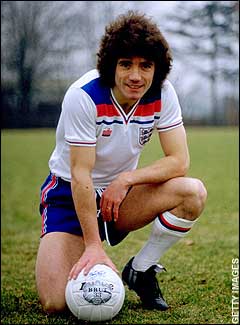
Kevin Keegan in his prime.

But who is Kevin Keegan and why did I give the name to Keegan Kyle? The answer soon came to me. Kevin Keegan was a British soccer star who played for Hamburg, Germany’s pro team in 1978 when I lived there as a high-school exchange student.

Kevin Keegan has not come to my mind for — literally — decades. But while groping for a reporter’s odd name he emerged from my subconscious and leapt effortlessly from my lips.

Kevin Keegan played for Hamburger Sport Verein (HSV) in the late seventies after being a star for Liverpool earlier in the decade. When he played for Hamburg he had a big fluffy perm (it WAS the 70s) and many Hamburg teenage girls fell in love with him.

Another strange coincidence comes from this story. A colleague who also works at KPBS in San Diego heard my interview flub on the air, and it triggered a series of memories for her as well. She grew up in England and says Keegan visited her school when she was a kid.

Afterward, she got her picture taken with him. He put his arm around her for the photo and she thought it was creepy. She claims she still have the photo somewhere.

Gardening is my Hobby

November 21, 2011

I was at the Anderson Nursery a week ago with a cart filled with seedlings I planned to plant in my garden. An old guy looked and me and said, “You’ve got a lot of work ahead of you.”

“Everyone needs a hobby,” I said.

“Yup,” he said. “I tell my wife it keeps me out of the bars and the whorehouses!”

It’s funny that I tell people gardening is my hobby, but I don’t know what else to say. I used to train in traditional karate, but I ran out of time for that after having my second child. Now if someone asks me what’s my hobby, I say “gardening.”

I remember a story told by a friend who was soon to graduate from law school and was applying for a job. The boss of the law firm asked her several questions relevant to the law but then asked her what was her hobby. She thought for a few seconds then said she was going to school full-time, working part-time and she had a baby boy at home. So she really didn’t have time for a hobby.

But the managing partner pressed her, thinking there must be something she liked to do on the side. Unable to think of anything else, she said, “I shop!”

I decided a few years ago that “gardening” would be my fallback position in situations like that, because I have become interested in it. And it all started when I moved to Southern California.

When I lived in the Midwest, plants were simply part of the landscape. I would have been hard-pressed to identify and name even the most common trees and flowering plants. But then I moved to San Diego where nearly everything grows, provided you water it. Suddenly plants were strange and exotic.

After I had kids, I also noticed that gardening was very compatible with child care. It was something you could focus on while also entertaining a little kid by giving him a job of pulling weeds or digging holes. Gardening allowed room for talking, interacting and playing.

Hobbies are better-suited for early life and old age. Midlife is too filled with work and kids. But in case anyone asks, I have a ready answer for what’s my hobby that isn’t too far off the mark.

El Cerrito Halloween Parade

November 13, 2011

This blog post comes a little late, but it’s worth it. My neighborhood holds a Halloween parade every year, and this is the 2011 event. Kids and parents wander through the neighborhood and try to create a spectacle.

My son, by the way, is the grim reaper.