Archive for the ‘Uncategorized’ category

Italians: Come Home

October 22, 2012

The animated sounds of Italian and American English rose and fell as I walked around the Italian Cultural Center in San Diego’s “Little Italy.” The mood was festive. We were waiting for the Italian General Consul of Southern California to show up. He was late of course.

The Americans, at least, were here to apply for passports. Italian passports. They had spent time digging through vital statistics and immigration records to prove their Italian heritage. That’s what it takes to convince a willing Italian government that you should be made a citizen of that country.
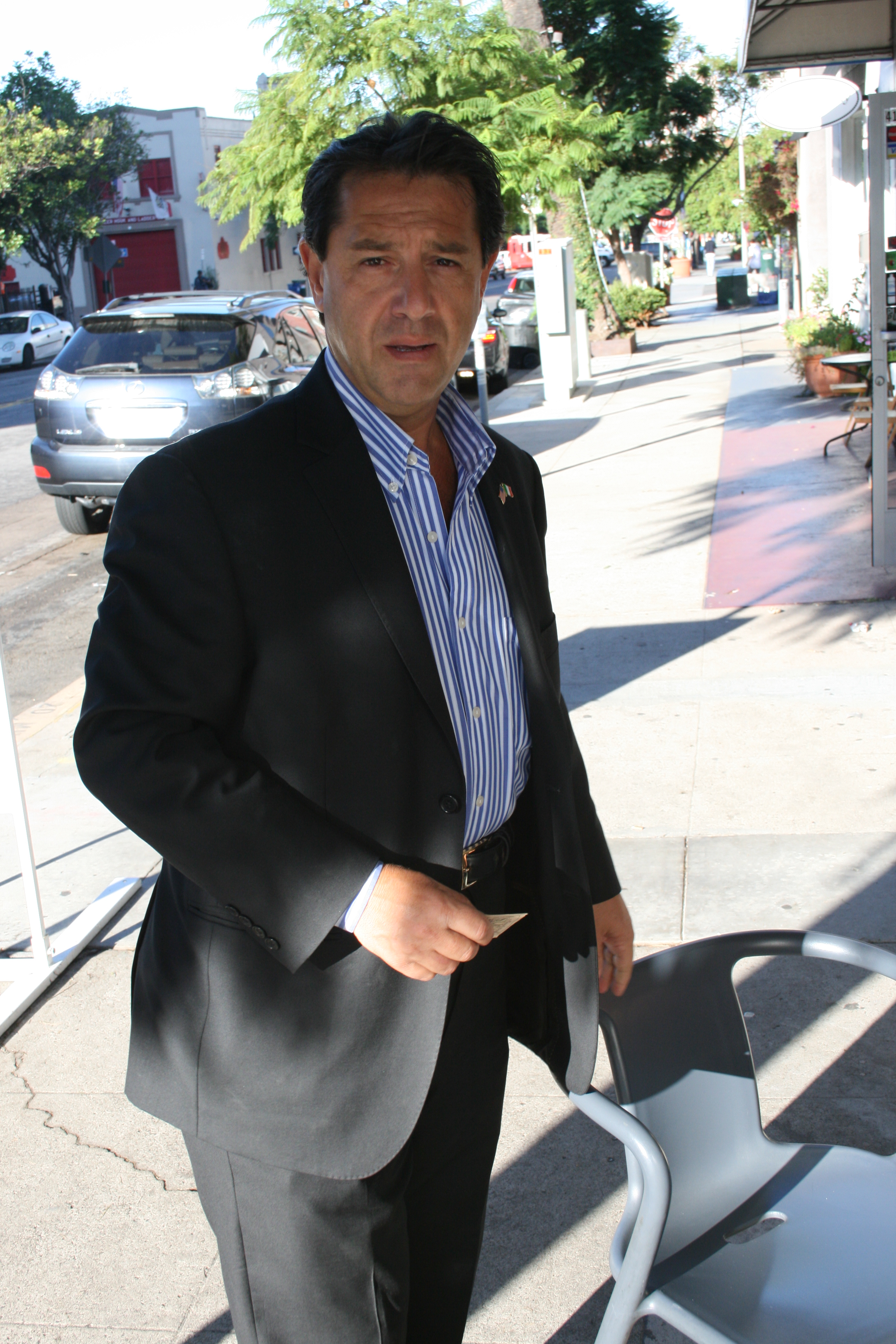
Roberto Ruocco

It was a sample of what’s going on with European countries, of dwindling populations, who are looking to the lost souls of their diaspora to beef up the nation with that good old native blood.

The man at the hub of the scene at the cultural center was a charming Neapolitan and former Italian air force colonel named Roberto Ruocco. He cheerfully passed out numbers to applicants to indicate their turn with the consular official.

Ruocco is a great salesman when it comes to encouraging Americans to apply for Italian citizenship. Upon learning my wife’s great grandparents came from Naples, he quickly emailed me a form that Karen could fill out to get the process started.

From the American standpoint, why not become an Italian citizen? It applies to you and your offspring. It means you (and they) can work there, study there, buy property, vote and travel freely. And not only that. As an Italian citizen you’re free to seek employment throughout the EU.

To the nation of Italy, according to Roberto, it’s a chance to reclaim families who left generations ago, who went on to become educated professionals in the U.S. It’s also a chance to enhance the population of a country with a dangerously low birthrate. Whether that scheme will actually work is another question.

It’s amazing to watch the dilemma of the developed world, in just about every country outside the U.S., as they struggle for their future in a place where couples, on average, are having not much more than one child each. The same dilemma is seen in Spain, Germany, Italy, Japan and South Korea.

Their birthrate is a recipe for extinction. But opening the gates to unbridled immigration is not a solution… at least not for Europe or East Asia. Their identity and citizenship is bound to the ethnic blood. If Italy were flooded with immigrants from North Africa, they wouldn’t know what to do with them because, well, they’re just not Italian! Much better, they think, to beckon the right kind of foreigners with familiar-sounding surnames.

I spoke about this with an academic named John Skrentny, whose UC San Diego office had a view of the Pacific Ocean. Skrentny studies immigration policy, and he thought that trying solve Italy’s huge demographic challenge by encouraging ethnic Italians to move “back home” seemed a little desperate.

They may be named Rossi and LaRuccia, but Italian Americans enter a foreign land when they go to Italy. My experience talking to Americans who got Italian passports tells me that they found it a fun adventure, and they liked the idea of being able to travel around Europe hassle-free. But none of them saw Italy as their land of opportunity. Thanks, but they already live in that place.

If Italy is going to survive without becoming an immigrant nation, then it needs to start having more babies. But people in modern societies with industrial, knowedge-based economies and generous welfare systems see no real incentive to have kids. Throw in the fact of near-flawless contraception, then super-low birthrates are virtually guaranteed.

You don’t need kids these days to help out on the farm because we don’t live on farms anymore. Child labor is frowned upon. You have to put kids though college, and that’s expensive. And good pension benefits mean you don’t need them to look after you when you get old. God knows you love your kids when you have them, but that’s not enough to convince people to have enough children to sustain the population.

Meanwhile, Italy is scouring the globe in the hopes that people of Italian heritage may actually want to move back the land of Michelangelo.

There was a time when your family looked out for you. You relied not just on your parents, but on your children. Countries still rely on the coming generation to keep the place going and pay our pensions. So maybe people need to see their whole country as one big family.

Good luck with that.

Being a Cool Father

October 20, 2012

It was a Sunday afternoon when I was watching my kids. My wife was out-of-town, and I’d gotten the idea to take them to lunch at the Living Room, a trendy neighborhood coffee shop.

That’s when the arguments began. My kids didn’t want to go. I told them they’d watched enough TV and played enough video games and they needed to get out of the house.

The Living Room

Then I insisted we walk or bicycle to the coffee shop, since it was only a half mile away with no major streets between us and it. They hadn’t gotten any outdoor exercise that day.

My daughter threatened she wouldn’t go unless we took the car. I told her we’d go the way I said we’d go, dammit!

Once we got to the place and got some food things went better. And as we were leaving, a woman seated outside caught my eye then looked at my kids.

“You’ve got such a cool dad!” she said. “He takes you to the Living Room, which is the greatest place.”

My daughter stared ahead as she sat on her bike, taken aback by the woman’s bizarre pronouncements and not knowing what to say in response.

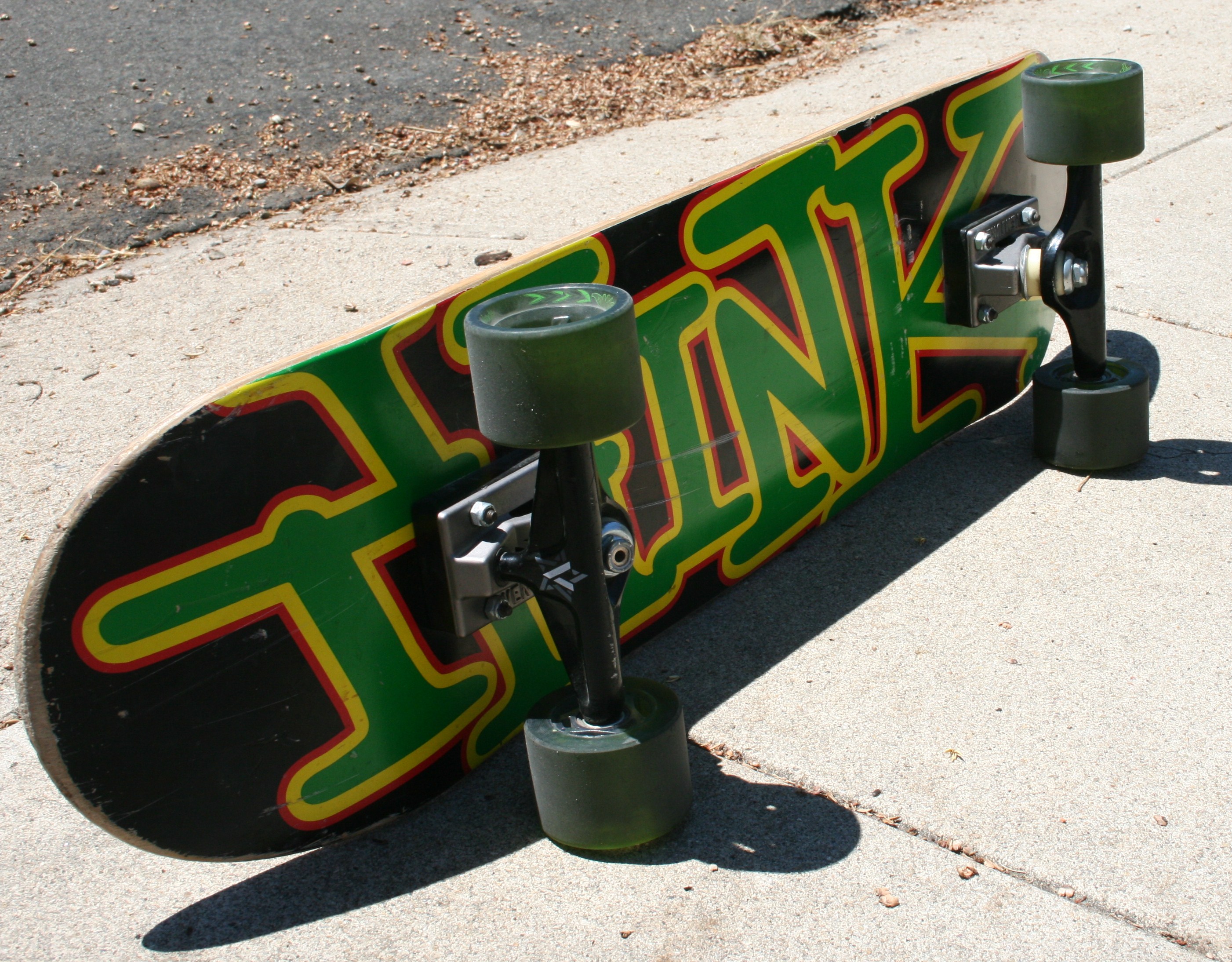
Then the woman looked at what I had under my arm. A skateboard.

“And he rode here with you on his skateboard? What a totally cool dad!! You guys are so lucky!”

I said thanks, a little sheepishly, then started on the way home. My kids lingered behind and may have exchanged a few words with her.

Life continued the rest of the day as usual. And I wondered whether and how my children will remember the day they were told they were lucky to have me as a dad.

Remembering When I was Poor

October 15, 2012

I have to stop and think to remember when I stopped worrying about money. It was about four years after my second child was born, when my wife got a part-time but benefitted job with the San Diego Public Library.

At the time we had a small house and a small mortgage (by San Diego standards). Life was pretty cheap but we still had to think about every purchase. Anything costly — a piece of furniture, a night in a hotel, a modest home improvement — would set us back. We got a home equity credit card to help make ends meet.

But when Karen got her benefitted job, we stopped brooding over every purchase. Suddenly, it didn’t matter how much a gallon of milk cost or what the next utility bill was going to be.

I’ve thought of this after being part of a Marketplace broadcast that examined the reality of being rich and poor in San Diego. I spoke with a woman who lived in her car. A poor family of four told us of the daily task of deciding what they would choose to do without.

Despite the title of this post I’ve never been poor in any meaningful sense. But there have been times when I thought about money a lot, when I knew exactly what it cost every month to pay my phone and utility bills. Any time I saw those prices rise dramatically I’d study the bill, hoping the change was due to some reckoning error. I used to sell my blood plasma to earn a few extra bucks.

But it all came to an end for me. And maybe that’s typical of the young and middle class. The true poor can’t take vacations from being poor, and they can’t see a time when it will stop.

So I try to remember the humiliation of not having enough money. I try to remember the day, in my early 20s, when my parents gave me some cash to help pay my bills and I cried, because I was so ashamed.

Rich people may remember a time when they had less and it was romantic because they were young, but they’ve used their wiles and hard work since then to do better… or so they believe. Being poor is not a romance when it doesn’t go away.

Summer Heat in September

September 29, 2012

I carry an iPhone and it has an app that tells you the weather forecast. Mine gives the San Diego ‘cast, of course. But I also programmed it to show me the weather in places where I have family or where I used to live.

Places like Bloomington, Indiana and Minneapolis, MN have been showing cool temps in the 60’s and 70’s. September is a fall month in the Midwest. But in San Diego it’s the hottest month of the year.

In just two days, for instance, the smart-phone weather app says it will be 94 degrees,* and that’s not even September anymore. There’s a heat wave in store for the first week of October.

All my adult life, I have lived without air conditioning at home. This is because I’ve never moved into a house with central air, and running a noisy window AC in my bedroom makes it too hard to sleep.

But not having AC also appeals to my puritan streak. I hate the idea of burning a zillion watts of energy just so I can feel like chilled lettuce in a fridge. It also appeals to my love of the outdoors.

I can’t go through the summer and never hear a bird sing, and the only song I can hear is the monotone hum of an air conditioner. This was especially true when I lived in Minnesota, where you have to close up the house in winter. The thought of being cooped up inside all year long was unbearable, even during hot, oppressive Midwestern summers.

When the temperature approaches 100 degrees in San Diego, we have a summer routine that works pretty well. It cools down here overnight — thank God! — so we open up the house at night. In the morning we close the windows and blinds to keep out the sun and trap the cool air inside our stucco house. Typically that keeps the temperature inside 10-15 degrees less than it is outside.

You learn to gravitate to cool environs. One 100-degree day we went to a Padres baseball game at night and sat along the third-base line, which was fully shaded when the game started at 530 pm. The ballpark is on the bay where cool breezes act as soothing balm, and as darkness fell the earlier heat of the day became a distant memory.

Living with heat in the summer is something we all used to do. You slowed down in the middle of the day. Architects built houses that were naturally ventilated. In a world without air conditioning I’m sure workers would be less productive. But is all that productivity worth the cost of the electricity and the climate change that comes from producing it? It’s sad to think that making ourselves cool is making the world more hot.

About a year ago, before we replaced our old shingled roof with red tiles, we looked into installing solar panels again. And, again, we learned that our use of energy wasn’t worth the investment.

In fact, the guy from the solar company looked up our energy use and was discouraged to find out how little we used each year compared to other people.

So what do other people do?  Do they never turn off the TV? Do they keep lights blazing 24 hours? Maybe it all goes into the air conditioner.

Right now it’s 4:08 p.m. and the thermometer outside says it’s 88 degrees in the shade. Inside, it’s 78 degrees, a ceiling fan spins and my son does his homework.

I’m glad we don’t need air conditioning. I’ll also be glad when the heat of summer finally goes away.

*A second look at the forecast for inland SD County showed high temperatures will actually be 102 degrees!

Memory becomes History

September 12, 2012

I’m writing this on the 11th anniversary of 911. I remember the summer before it happened when I went to pick up my parents at the airport, and you could still walk up to the gate to meet them.

I went to the airport that day with my 18-month-old son who, though he was alive when 911 happened, will never remember it. It will be history to him, just like the assassination of JFK is no more than history to me.

A funny thing happened today at work. A crowd of visitors came to the KPBS newsroom. Our general manager often gives tours to big donors. But this was a group of German college-age students, who were studying journalism.

I’m situated in the newsroom right next to the elevator, so when visitors arrive I’m the first thing they see. I don’t know if this was done by mistake or design. But it means I regularly schmooze with visitors and sometimes people ask me where the men’s room is.

So I told the German kids I used to live there and I’d just been to Hamburg for a visit. And I talked a little shop, since that’s what their instructor wanted me to do.

The instructor then asked me if there were any other places in San Diego they should visit, and I told them to go to the Mexican border to see our wall. It’s just like the wall they used to have in Germany, dividing east from west, though our wall divides Americans from Mexicans.

In fact, I told them I distinctly remember seeing the Berlin Wall, and I asked if any of them remembered seeing it. The students looked at me for a while before one said that most of them weren’t born yet when the Berlin Wall came down.

Memory to me. History to them.

John Cage Would be 100 if he weren’t Dead

September 3, 2012

John Cage died in 1992.

One hundred years ago on September 5th avant garde composer John Cage was born, and he’d leave a mark on music that we may never remove. Read about him on Wikipedia or take a look at the article they ran in San Diego’s local paper, because I don’t want to go into a long biography.

Just let me say he was the Andy Warhol of music. Warhol once said the most beautiful thing in Florence is MacDonald’s. In much the same way, Cage claimed that any sound is music. There is no noise and there is no silence.

Cage’s most (in)famous piece is called 4’33”. It’s a piano concerto, during which the performer walks to a piano in a concert hall, sits on the bench and doesn’t play a note; in fact does nothing. The hum of the air conditioning system, the coughing of concert hall patrons and inevitable jeers of people who think the piece is a bunch of crap are the only “music.”

In the world of music, John Cage is impossible to ignore. I don’t think it’s because he was a great artist. He was a great intellectual, and his intellect took a definite point of view. Here are a couple of well-known quotes from Cage

“There is no such thing as an empty space or an empty time. There is always something to see, something to hear. In fact, try as we may to make a silence, we cannot.”

That’s true and profound. But is all that non-silence music? Here’s another.

“The highest purpose is to have no purpose at all. This puts one in accord with nature, in her manner of operation.”

I’m guessing Cage was an atheist, though he apparently thought nature was a woman.

Cage was not an anomaly of the 20th century. In fact, he was one part of a movement in the arts that rejected the rules that sought to define art and beauty. Cage was only different because he took the movement to its logical conclusion, telling us that beauty and art don’t really exist. Why? Because we can’t define them. Here’s another quote:

“The first question I ask myself, when something doesn’t seem to be beautiful, is why do I think it’s not beautiful. And very shortly you discover that there is no reason.”

Here’s a story I once heard about art. It might be urban myth, but what the hell.

I was living in Minneapolis when a local museum got a traveling Picasso exhibition to come to town. Two women went to see it, and they were raving to each other about a Picasso art piece that stood before them. It looked like a janitor’s cart. But what amazing attention to detail! What irony! What an artist it took to find beauty in such ordinary things!

As they were speaking, the janitor walked up and pushed his cart to the elevator so he could continue his work.

It’s a story that sums up the John Cage theory of art appreciation. All things are art, just as all sounds are music. We only define things as art because we choose to perceive them in that way. A janitor’s cart may be just a janitor’s cart. But if you want it to be art, that’s cool. Or is it?

The joke in the Picasso story is told on the modern art crowd and on their notion that beauty has no rules. Cage’s quote about not being able to define beauty makes me think of the U.S. Supreme Court justice, who once said he couldn’t define pornography but he knew it when he saw it.

I think we know art when we see it. And ultimately there is some way to measure the success of, for instance, a piece of music. Maybe it’s the number of records sold (pick your favorite pop star) or the length of time a piece remains popular (Bach’s Goldberg Variations).

John Cage’s reasoning makes perfect sense, but only in the purely intellectual realm. Once you leave that world and start to rely on your emotional senses, things become much different.

Even so, let me thank John Cage on his 100th birthday for giving us the freedom to think about music in a different way. Just don’t take everything he said too seriously.

Skatepark City

August 27, 2012

A week ago I put on a dress shirt and a tie and I drove to City Heights to talk about building a skatepark there. It was a community meeting in a tiny gathering hall that was sponsored by my employer and Speak City Heights.

City Heights is a low-income part of San Diego that’s full of immigrants. It’s the kind of place where you need to check whether it’s Ramadan before you invite the locals to a lunch.

But the main thing about City Heights is there’s no place to fuckin’ skate!

I can relate. Since I moved to California I have not joined a new-age cult but I did learn to skateboard. I can ride but I can’t do jumps. I can’t balance my board on a steel stair railing and ride it to the bottom.

I’m too old for that shit, which reminds me I went skating one night with my son (who rode his bike) as we tooled down a neighborhood hill that I’d ridden many times. But it had just seen some street maintenance and I hit a crack that didn’t used to be there and was thrown off my board. I managed to do a decent shoulder roll as my ten-year-old shouted, “Daddy! Are you okay!!”

But the pain in my shoulder took literally months to go away. That’s what happens when you’re in your 50s and land on cement.

But back to the lack of a skatepark in City Heights. About two dozen folks turned out for the discussion, and most of them stuck around until the end, since we told them we’d raffle four Kindle Fires. Skateboarder Nick Ferracone was there to tell us why City Heights should have a place to skate. But he also said something interesting and contradictory.

Skaters are brilliant at using the “built environment.” You know… roads, sidewalks, ramps. So why do they need a skatepark?

I can’t remember what Nick said to that, but I know that skaters aren’t usually supposed to be where they are. Bikes have carved out a niche but nobody seems to want skateboarders on streets or sidewalks. Park engineers fasten metal tabs to hardscape to keep them away. Businesses put up signs that say, “No skateboarding.”

The cool thing about this is it preserves the rebellious nature of the sport. I was thinking about channeling that energy into the setting of a skatepark as I loosened my tie and walked to where I parked my car in City Heights… when I saw something beautiful.

It was a kid with a mop of black hair riding his skateboard across a four-lane road. He hit a break in the traffic just right, sped over two lanes, hopped up onto the median and down onto the opposite lanes before he disappeared into some side street, negotiating every road hazard with quickening grace.

City Heights is a nasty, beat-up built environment, and that kid on a skateboard had taken it over.

Back to Mt. Laguna

August 19, 2012

Mt. Laguna is 6,000 feet and a little over an hour drive from the Pacific Ocean. Compared to urban, coastal California you are in a different world even though you are so close.

By the pile of rocks in the meadow.

You can see the stars at night. The Milky Way looks like dust or clouds though it’s actually a stellar blanket seen in the dark night sky. Is that why they call it the Milky Way? I grew up with a dark night sky but now it’s a brilliant oddity.

The birds in the mountains are different. Red-winged blackbirds sing their colorful songs and stellar jays look like black hipsters wearing flat tops and a blue suit.

A meadow in the middle of the pine forest has a pile of rocks, and my kids like to go there to jump from one to another. It’s been raining here, and there are thousands of tiny frogs they capture and release.

In a tent with three kids I lie, waiting for sleep to come as others in the campground continue their parties, talking, laughing and listening to music. Slowly the sound turns to nothing but the shrill cry of bugs in the trees.

Dodgers Take Over the Padres

August 14, 2012

I have spent my whole life cheering for losing teams. I grew up in Iowa and I never saw the Hawkeyes win the Rose Bowl. I lived 17 years in Minnesota, where the Vikings could get to the Super Bowl but always got thrashed once they arrived.

Now I live in San Diego, a city that’s  never been home of a powerhouse team, collegiate or professional. So what am I to think of the fact that the O’Malley family is about to take over the San Diego Padres?

The son and the grandsons of Walter O’Malley are part of a group that is buying the Padres for $800 million. Walter was the man who owned the Brooklyn Dodgers and made baseball history by moving them to LA.

A joke once told in Brooklyn: You’re in a room with Hitler, Stalin and Walter O’Malley. What do you do when you’ve got a gun with only two bullets? You shoot O’Malley twice to make sure he’s dead.

I don’t remember my father ever saying he hated Walter O’Malley. But he did grow up a fan of the Brooklyn Dodgers because he grew up in upstate New York in a town that was home to a Brooklyn farm team. He worked at a golf club in Elmira as a teenager and once caddied for a group of Dodger players that included the great shortstop Pee Wee Reese.

When the Dodgers left Brooklyn, my dad stopped being a Dodger fan.

In Dodger history, Walter O’Malley was a better villain than a hero. He not only abandoned Brooklyn, he drummed out of the Dodger organization the sainted Branch Rickey, who desegregated major league baseball by signing Jackie Robinson.

Now it looks like Walter’s heirs will be running the San Diego Padres, and they are paying Padres’ owner John Moores a king’s ransom. The sale price is ten times the amount Moores paid for the club in 1994.

Baseball history and my family history make me like the connection to the Dodgers, even though my Dad never cheered for LA. Maybe it was because they were too successful. It was easier, somehow, to root for the Brooklyn Dodgers who typically lost the big game. Maybe backing losers runs in my family.

And maybe the Padres will keep being losers. It might serve the O’Malley family right. But now that they’re in San Diego, they’re on my side. So I’m stuck with wishing them well.

The Paradox of Minecraft

August 7, 2012

Being a parent of school-age kids means you have to curb your desire to force them to only do things that are “good” for them. You know what I mean. You don’t want your kids to A)Watch lots of TV B)Use foul language C) Play violent video games D)Eat unhealthy food E)And so on.

But my whole notion of what’s good for my kids has been turned upsidedown by my son’s introduction to the video game Minecraft.

Minecraft is not a violent video game, even though people do get killed and kill others. Apparantly, there’s a game mode called “survival” in which you are placed in danger and… well, get killed a lot, though there must be some ressurection mode since it never seems to cause Nicholas to stop playing.

Over the course of 2-3 months, his devotion to the game has approached obsession. He’s been a very good reader since he was able to read at all, but Nicholas hasn’t read a book in two months. He likes to play Minecraft on my work computer, which is why he meets me at the door when I return home from work. It’s my computer that gets the warm welcome.

He goes outside less. He gets less exercise and seems to spend each free minute in the a room with a computer. Maybe I should be alarmed. But here’s where it gets complicated.

Minecraft is a game of building things. You create a world for yourself with a home, mountains, rivers and farms. In fact, depending on the number of servers you use, you can create multiple realities. To build things you need to gather materials, and there’s a trick to that, of course. It’s not exactly engineering school, but you can imagine the creativity and learning that comes with this thing.

Minecraft has taught my son more about using a computer than I ever thought he’d know by now. Customizing the game requires installation of certain mods, or modifications. We recently saw him investigating and learning ways to add mods by downloading instructional videos from Youtube… again, something he’d never done.

Above all, this has, in a strange way, made my son more social.

A few years ago, a diagnosis landed Nicholas on the autism spectrum. He’s on the upper end. But he’s socially awkward and has few friends.

Minecraft has given him a common language he can use with his peers. It’s something that he can talk about excitedly. Like lots of video games, Minecraft can be a shared experience that people can play on a computer network. He sees his friends online. They help him build stuff and they admire each-other’s creations.

Maybe I would feel better if he and his friends were building stuff out of junk in the backyard. They’d get some sun and exercise. But how can I complain about a computer game that’s brought him out socially, and put him together with other kids like nothing else has done before.

So there he sits at the computer, sometimes for hours. I eventually tell him he’s got to get out and ride his bike or play in the canyon, even though I know that will soon be over and he’ll be back to turn on the computer and re-enter the world of Minecraft.

A summer with computer games is a reality I never knew as a kid. As a parent, I’ve made a negotiated settlement with it. And I’ll assume my son’s next obsession is one I’m more familiar with.