Archive for the ‘Uncategorized’ category

Paying for Part of a Future in South Sudan

February 14, 2014

It looked like a typical garage sale in Clairemont. The tables were covered with used household goods, and kids were selling hot chocolate for 25 cents following a Saturday morning downpour. The only thing that seemed different here was a white van parked on the street that had “Southern Sudanese Community Center” hand-painted on the side, along with a flag I didn’t recognize.

The garage was attached to a house owned by Molly Wauson, and the sale was raising money to build a school in South Sudan.

Molly Wauson is a St. Didacus Parish School parent who is applying for 501c3 status for a non-profit called “Shaping Bright Futures.” The inspiration arrived last year when her 4th grader Abby wrote an essay about the people called the “lost boys” of Sudan. Soon after that she met a man named Mathew Riek, a former lost boy who ended up living in San Diego.

Onetime lost boy Mathew Riek with Molly Wauson.

Onetime lost boy Mathew Riek with Molly Wauson.

Abby and her mother were riveted by Mathew’s story, and they were inspired by his dream of building a school in his home village in South Sudan. That was when Molly Wauson began fundraising at a variety of places, including St. Didacus.

“The kids at St. Didacus were incredible!” said Wauson. “They raised over $850 by bringing in their jars of pennies.”

Mathew Riek is a small man with a slight build whose ebony face is animated by frequent smiles. His pleasant, peaceful nature seems at odds with the story of violence and desperation that ruled his childhood.

“I dodged bullets. I walked in the desert with lions in the cover of the dark of night. I starved and was thirsty, and was so tired,” he said.

Riek says he was a goat herder as a boy in his native village of Buaw. But Sudan’s internal war sent Riek on the run at the age of 12. After walking for what he said was a thousand miles he found refuge in a camp in Ethiopia. But political warfare in that country drove him out again at gunpoint, and he returned to Sudan by crossing the infamous Gilo River, with its dangerous rapids and man-eating crocodiles.

He lived in a camp in Sudan until the government sent planes to bomb it, and Mathew Riek fled once more, finally ending up in the Kakuma refugee camp in northern Kenya. He survived nine years there, often having to fight with other residents over the slim rations of food and water.

But eventually some American charitable groups arrived with the promise of resettlement. He remembers having to write an essay about his experience, memorize it and then meet with a representative of the Immigration and Naturalization Service (INS).

“You had to tell your story to the INS and try to get it right, because if you don’t tell the story the same way as you wrote it you might not come to America,” he recalls.

Mathew did make it to America after being sponsored by Catholic Charities. Now he’s focused on building his life and partnering with Molly Wauson and others to build a school in his village. Wauson said they are looking at an overall cost of at least $30,000, and their philosophy is to build it one brick at a time, at $3 a brick.

“We are using the people in Mathew’s village who learned in the refugee camp how to make their own bricks,” she said, adding that there will be a considerable expense in providing and transporting materials.

Wauson said children in Mathew Riek’ s village need the walls and the roof of a schoolhouse to make instruction consistent. Now, the kids have their lessons under a tree and they can’t hold classes during the rainy season or when it’s too hot.

Riek adds that education is his first priority for helping the kids of South Sudan, where the official illiteracy rate is 73 percent, though he expects it’s actually much higher. As for his own family, Riek said he’s lost his father and his mother. All that is left of his family are his three sisters.

“My sisters don’t have a home. They don’ t have education. But thank God they’ re alive.”

Note: This is story also appeared in the St. Didacus School newsletter “Future Vision.”


Falling Down

February 10, 2014

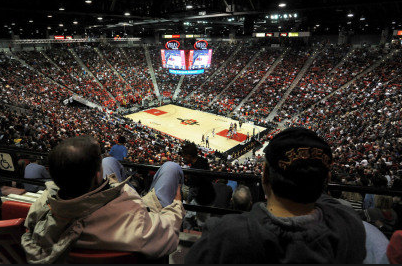
The basketball arena sat in a bowl about 100 feet in front of us and 20 feet below us after we were dropped off on 55th Street by my wife. Viejas Arena was lit up for the San Diego State basketball game and my dad was walking toward it, his eyes straight ahead. Does he see those two steps coming? He knows he has to descend to get to the arena gate so he must know there are steps. Right?

Dad never made it inside Viejas Arena

Dad never made it inside Viejas Arena

He didn’t. And as he was walking with his cane he tripped on the first step, he fell and landed right on his face. I’d seen it happen before. My dad, born in 1925 and who served in D-Day in World War II, can’t catch himself with his hands before his head hits the ground. I don’t know why. I guess when you’re 89 years old you just can’t. He broke his glasses and bled like a faucet. There’s something about cutting the skin on your face that makes you bleed like that.

The arena security detail soon took notice. Before long he was surrounded by cops and paramedics who were continually asking him if he knew where he was and what year it was. They were handing him paper towels to press against his forehead. Then a fire truck arrived. “They know we’re here!” said one member of the emergency crew assigned to the Aztec game. “I don’t know why they still come. ”

One guy asked my dad whether he took any medication. Are you kidding? He’s an old man. He takes tons of medication! No, we don’t have a list.

My wife hadn’t been gone for a minute after dropping us off when my father hit the cement. So I called her and told her to come back. She took him to the Scripps Mercy trauma ward and emergency room once we got him loaded him into the car.

This game was a birthday gift from me to my dad. Three tickets together were tough to get, given how well San Diego State was playing. After my dad headed off, mom and I decided to take in the rest of the game. There was nothing we could do and dad was continually saying he’d ruined it all. OK. We’ll stay for the rest of the game so the evening wasn’t all ruined.

But as the student section of the arena shouted, danced and held signs aloft and while the Aztecs took apart a much lesser foe, the whole time I was thinking: Why didn’t I just tell him he had to hold my arm while we were walking in? Why didn’t I jump in front of him when I saw those steps coming?! My parents have gone to these games before and come out beaming and saying how great it is to be around young people. The closer they come to the end of life the more they love the antics and blundering spirit of college kids.

When the game was done I drove to Scripps Mercy to spell my wife and make sure dad was getting what he needed. He was in a draped-off bay of the E.R. where he lay on a bed, his face a bloody mask and his left eye swelled shut. In the hallway, a man lay on a mobile bed and was wearing a net bag over his head. We later learned it’s to prevent the patient from biting or spitting on docs and nurses. In a neighboring bed a man with twisted, matted grey beard lay silently. He looked like one of the frequent fliers: homeless men who can end up in emergency rooms dozens of times a year.

Scripps Mercy can be a tough place on a Saturday night. Maybe that’s why the majority of nurses there are men. This is where I ended up when I was hit by a car, and my brain injury caused me to be confused and belligerent. I was mentally blanked at the time and I recall none of what was in the official report, and I didn’t realize the nurses who sometimes had to wrestle me back into bed were perfectly able to do it.

On the night my dad fell, a nurse came into the waiting room to tell me my dad was getting up and wanted to leave. I put away my book and went back to tell him he had to wait for his stitches, and the doctors really thought he should stay until morning so a surgeon could look at the eye-socket bone he cracked during the fall. He was rigged up with tubes and sensors. I imagined him trying to talk away and being pulled to the ground by all those attachments.

Big city E.R.’s are sad places where tragedy and need come in the door and can wait forever to be tended to… not that it’s going to do much good in a lot of cases. As for my dad, I guess he’ll keep falling until one day he doesn’t get up. The rest of us are no different. But then there are those kids in Viejas Arena, dancing to the time-out music and making asses of themselves to distract the visiting team as they shoot free throws. Death would be impossible without life. Foolish, sexy, unapologetic life.

4S Ranch is just Another Suburb

February 9, 2014

It was about 15 years ago. A huge housing development called 4S Ranch was in the planning stages in San Diego’s northern reaches, and its developers were lobbying for building permits. It was the typical political drama in which companies want to build and sell houses, and everyone who already had a house did whatever they could to stop them. The opponents gave us the familiar refrain about too much traffic and environmental impacts.

4S Ranch

The response of 4S Ranch was to say this was not another plain-old suburban housing tract. This was going to be like a small town. It’ll have a central business district. It’ll have schools. It’ll have sidewalks. I remember seeing the architects’ vision of the future, shown in attractive drawings.  Smiling neighbors would wave to each other across the street. Parks and sidewalks were populated with people. Residents would stroll to the business district to buy groceries. It was the “old-fashioned small town” meets “new urbanism” story.

But a couple of days ago I drove through 4S Ranch to see what it was really like. Basically 4S Ranch today is a suburb with sidewalks.

Don’t get me wrong. The fact they have actual sidewalks and berms makes the streetscape greener and more pleasant. But nothing about 4S Ranch gave me the impression that people were spending a lot of time rubbing shoulders on the streets or getting around in anything other than their personal car.

The “business district” had a few stores, but it looked a lot more like a mall than a small town center. Curving car lanes carried drivers from nearby streets into its parking lot, giving it the look of a place that did not invite pedestrians. Throughout the entire development, on this particular day, the sidewalks and front yards were empty.

Did the developers of 4S Ranch sell us a bill of goods? If they really did think the concept could work, it was wishful thinking.

Unlike downtown San Diego or, say, Mission Valley, this development was never conceived as a job center. So, for one thing, you’d have to drive elsewhere to get to work. And – by the way – are the people who buy into new suburbs the kind who really want to live in a village? Or are they just looking for a nice house and a good school district? These folks probably think little of driving 15 miles to go shopping.

I have spent a fair amount of time covering urban development and redevelopment as a reporter. And there is a lot of lip service given to smart growth and anti-sprawl development. They sound good, but I haven’t seen much to convince me that is the way people in Southern California want to live. Developers want to make money. They don’t want to change culture. So until gas prices or global warming take us there, places like 4S Ranch won’t be much more than a sales pitch.

A Kid’s Fort

August 30, 2013

Screen shot 2013-08-29 at 9.29.02 PM

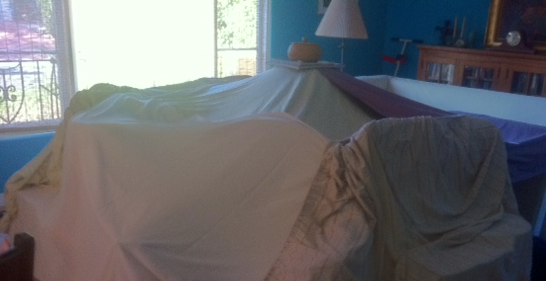
The past two days it’s been close to 100 degrees. The heat has slowed things down as summer comes to a close. But on the week before school starts my kids made a fort. I came home and saw a tent of bed sheets in the living room that occupied its center. My wife saw it from the street when she pulled up at night and she thought someone had covered all the furniture to repaint the room.

But it was the kind of fort kids build so they can go inside and fill it with their imaginations. They went all over the house to get chairs and barstools that would form the edges and the center post. Inside, the floor was padded with sleeping bags and pillows. My daughter dragged my laptop inside one day to watch some TV shows.

The next morning I crawled in it to drink my coffee. My son and daughter were there too, and we passed the time in the fort’s protection. Something like this isn’t going to keep anyone out. But for just a little bit it confines your thoughts in what feels like a safe place, and it lets you think the world outside isn’t there. For a while I imagined I didn’t have to go to work that day. The kids could think that school wouldn’t start next week and summer would just keep going.

Today the fort is gone. It’s been dismantled and the sheets have returned to the linen closet. We’ll have to hope for another time when days are long and empty, and there’s nothing to do but build a fort that will let you get away from those things you don’t want to think about.

Getting my Car Fixed

August 26, 2013

I was sitting at a shaded outdoor table at the Toyota dealership in Mission Valley, waiting for my car to get serviced, when a guy walked up and sat next to me. I mean right next to me at the same table and there were others. I had my laptop and was trying to finish an essay on gay marriage, not really looking for a conversation.

He was about 30 years old, black, handsome with a trimmed beard and short haircut. Dressed casual: T-shirt and jeans, not long or short. He told me something about his car needing to get fixed. But his car wasn’t there.

“I’m looking for the guy who gives rides to where your car is.”

That’s what he said.

But the guy doesn’t really do that; he gives rides home to people who need to leave their car at the dealership overnight for service. Well, I soon found out this guy’s car was his home.

“Do you sleep in your car?” I said, and he said yes.

I can’t remember everything he said after that but it could’ve been called a tirade if he hadn’t said it in such an even-tempered voice. He said he didn’t want to live in a house if it just meant the people who owned the house would get paid for it, and then would tell you what to do and treat you like a child. He thought sleeping in his car was fine.

“Where you take a shower?” I said, noticing his good hygiene.

“Anywhere. San Diego State.”

I pictured him walking past the front desk of the Aztec Recreation Center and getting curious looks from student staffers who wondered if he was really enrolled, and didn’t they see him just a couple of days ago?

As this was happening another guy walked up to me and asked if he could borrow my phone. I did what I usually do. I asked what was the number was, to make sure he’s not trying to call Nicaragua, and dialed it. I handed him the phone and he stood silent for about a minute, handed it back to me and said thanks. No answer I guess.

The homeless guy told me his father was practically rich but didn’t pay him any mind.

“Where are you from?”

“Back East.”

“Does your dad live in San Diego?”

“Maybe.”

My cell phone rang. It was the person who’d just been called by the guy who borrowed my phone. He didn’t speak English too well and I had a hard time understanding him but tried to explain that I didn’t call him, and I didn’t know who called him because the guy just borrowed my phone and he wasn’t around anymore. The man on the other end hung up.

But my phone rang again. The man I just talked to told me to tell the one who borrowed my phone that the car was returned and it was at the airport.

The car was at the airport.

Since my car was still in the shop I said good luck to the homeless man, and decided to cross the street to go buy some paint at Home Depot. As I waited to cross the street a car pulled right in front of me as it took a right turn out of the driveway to the Toyota dealership. I looked inside the blue sedan to see the guy who borrowed my phone.

“The car was returned and it’s at the airport!”

I wish I could have told him that. I may never finish that essay about gay marriage.

Cleveland

July 3, 2013

I’d never known Cleveland by anything but clichés, and most of those weren’t flattering. When I was in college I heard the Randy Newman song that went:

Cleveland, city of light. City of magic!

Cleveland

Italics indicate sarcasm. I don’t know if it was ever clever to mock Cleveland but today it seems petty and predictable. When I visited the city on the lake last month, I saw only two parts: The airport and downtown. Airports look the same no matter where you are, and downtown Cleveland looked… not bad.

That might be faint praise but I hold downtowns to a high standard. San Diego is an example of one central city that’s seen a tremendous amount of redevelopment and it shows. It’s also lucky enough to sit on a beautiful bayfront to which the shores of Lake Erie don’t compare well.

Downtown Cleveland is home to sports stadia and a bustling commercial district. The blocks that surround the civic center look old and elegant. But nobody seems to live in downtown Cleveland, which means it’s mostly deserted at night. The property on the edge of downtown looks ragged and I  saw what looked like a lot of empty office space.

I remember once driving through the outskirts of Cleveland many years earlier on my way to Indiana from Rochester, New York when I was in the men’s room of a restaurant and heard a voice say, “Tom Fudge?” It was a buddy of mine from college, originally from New Jersey but who’d settled in Cleveland. I hadn’t seen him in years. I sat at a table with his family and mine at the suburban chain restaurant and got caught up.

Last month in downtown Cleveland I got up at 430 am (130 PST) to catch a cab from the hotel to the airport. A homeless woman shouted for my attention out on the street while the hotel valet called the police. Cleveland isn’t all Rock ‘n’ Roll Hall of Fame.

Honor Flight: Memorial Day Weekend

May 27, 2013

The buses that took us into Washington D.C. were filled with men no younger than 87. They had loose, weathered skin and clouded eyes. Any tattoos had faded to beyond recognition. They played a video on our bus that told the story of World War II and the building of the war’s memorial on the Washington Mall, which was our destination.

The flight that took these WWII veterans all the way from San Diego was called Honor Flight. It was one version of similar trips that originate all around the country. It was Memorial Day weekend and these vets were celebrated from the time we landed in Baltimore, where they were greeted by sailors in white uniforms and soldiers in camouflage and where travelers waiting at their gates applauded the elderly former warriors.

Dad-honor

Jim Fudge, Navy veteran on Honor Flight, meets appreciative crowds at Lindbergh Field.

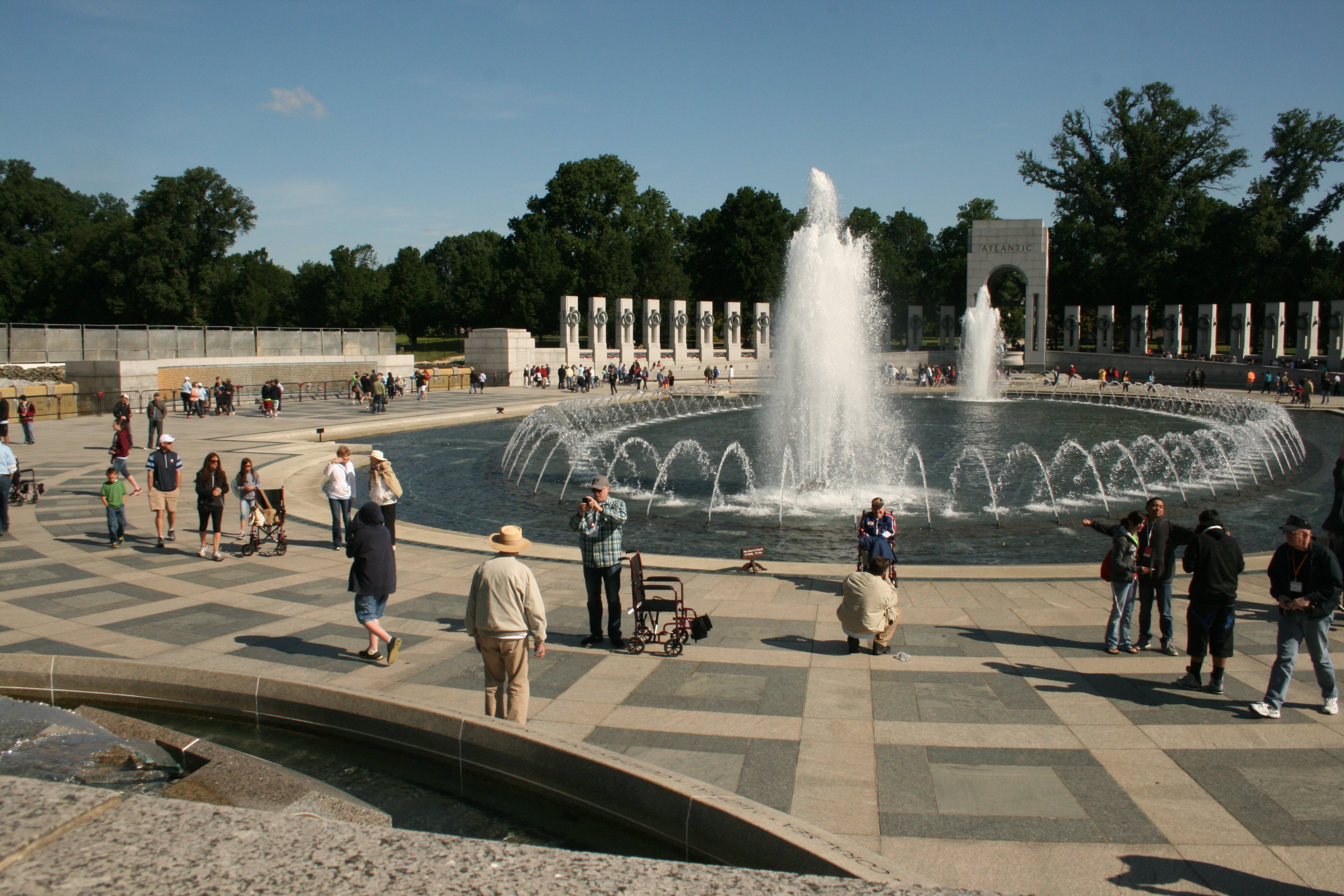
When we visited the WWII Memorial in Washington the vets walked up to a balcony above the floor of the monument where a bunch of high-schoolers applauded as if each of the old guys were the Pope, especially the frail men in wheelchairs who rose to wave to their admirers.

I thought that was impressive until the trip was over and we landed again at Terminal 2 in San Diego, where an even longer line of sailors began of corridor of cheering, patriotic crowds who numbered in the thousands. Boy scouts, school kids and their moms and dads were holding signs that said things like “honor our heroes” as they hooted and clapped by baggage claim. If I had been one of the veterans I’m not sure if I’d have been thrilled or embarrassed.

My role during the trip was that of a guardian, though the person I had to watch (my dad) wasn’t a tough assignment, being that he’s younger (88) and more mobile than most of them. I was sometimes asked by attentive Honor-Flight supervisors, “Where’s your vet?” to which I would say, “He’s around here somewhere.”

I will admit I gladly used a wheelchair to help ply the paths between the Lincoln, Vietnam and Korean War Memorials. The several hundred yards of distances we had to cover went a lot faster with dad seated and us not having to move in time to his halting gait.

Sometimes I wondered about the constant congratulations and the endless wishes of “We thank you for your service.”  But I learned something about this country’s deep love of WWII and its memories. As I rode in from Baltimore on the bus that video told us of the victory of democracy over fascism. I thought… the mythic embodiment of America could not be more perfect than what we saw in that war.

In it, we conquered racism, fascism, dictatorship, not necessarily in that order and not without a lot of help from other countries but we did it. It was the good war that ended in unquestionable victory. The contrast with some of our other wars had occurred to me but never more powerfully, thanks in part of the other war memorials on the Mall.

WWI Memorial

World War II Memorial, Washington D.C.

At the black walls of the Vietnam Memorial we asked a volunteer to climb a ladder so he could reach and trace for us one of the walls’ indented names, “Clifton Cushman…” a man whose father was a friend and colleague of my dad and whose aircraft went down over North Vietnam. The crosshatch next to his name showed that he was never seen again by Americans. He is an MIA.

Even more graphic in its expression of mixed feelings was the Korean War Memorial, which I’d never seen before. Nineteen sculpted soldiers were reflected in its polished wall to symbolize a total of 38, symbolizing the 38th parallel that still separates North and South Korea. The memorial reminded everyone that the Korean War ended in stalemate, not victory.

My family prevents me from seeing WWII as the good war, since my mother’s people were Mennonites and pacifists. The lack of black faces among the Honor Flight vets also showed us the far-from-perfect society they came from. One vet on our flight was black. He served in Korea and I congratulated him for being one of the men who integrated the armed forces. “Yea,” he said, “at least I didn’t have to be a cook when I went over there.”

Our day in D.C. was fun and often inspiring even though I saw one too many war memorials for my attention span. I guess the trip wasn’t really meant for me. Our dinner programs at the airport Hilton were not inspiring, neither from the standpoint of food nor speeches. On Saturday night we heard from a Navy commander who spoke at length about the vets’ willingness to make the ultimate sacrifice. I didn’t disagree with him but I also thought there was a difference between the WWII vets and this career Navy guy, whose passions clearly ran toward military discipline and a devotion to the risking all.

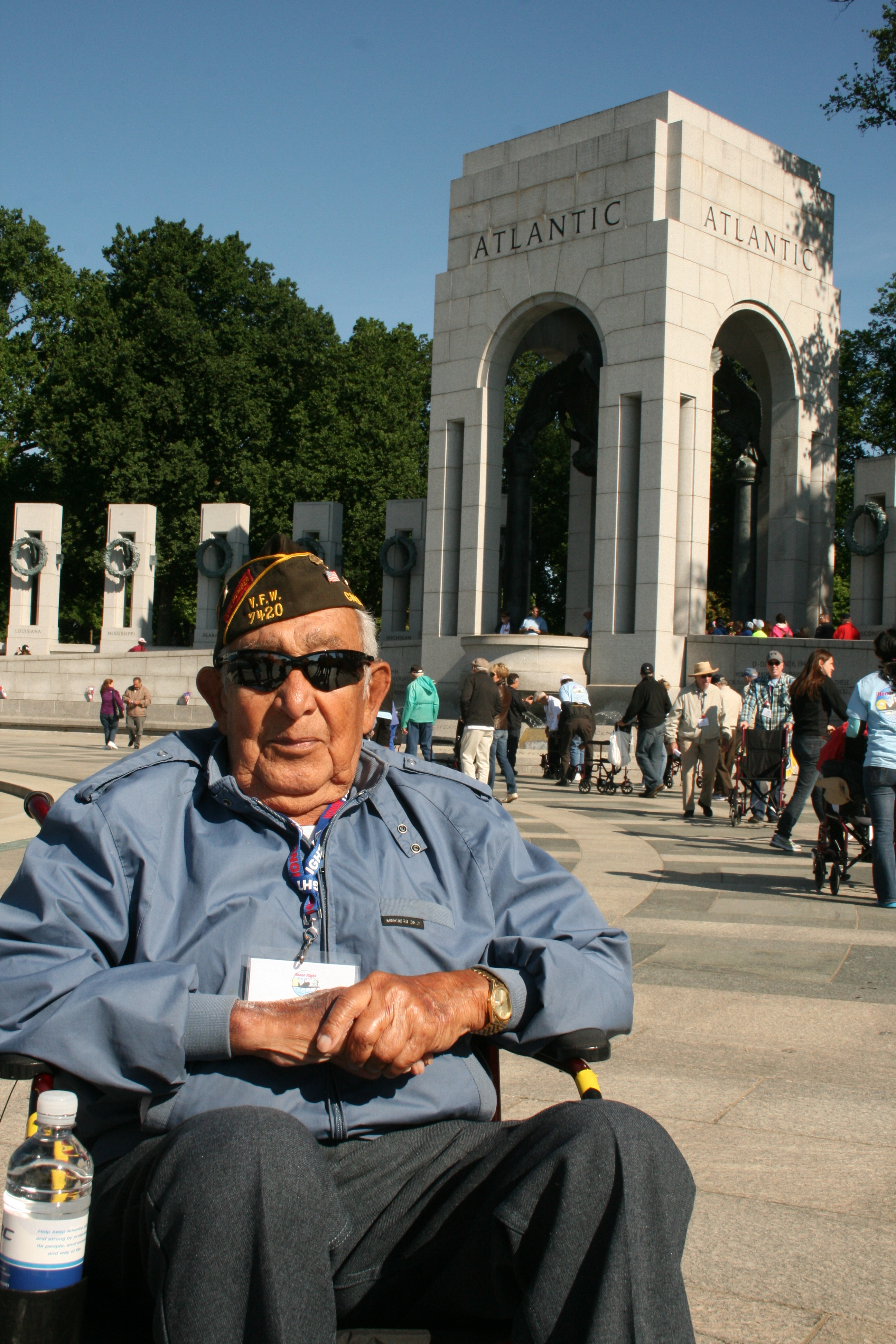
Vet at WWII Memorial

Vet at WWII Memorial

The guys who served in WWII were just guys. They were planning to be farmers, factory workers, teachers, scientists or postmen. They might have burned with a patriotic fire after Pearl Harbor was bombed and they clearly loved their comrades in arms. They may have even enlisted, but a lot of them were drafted. Maybe they wanted to fight but I’m guessing most of them just wanted to find a way out of their dreary hometowns and go somewhere they might meet some beautiful, exotic women. When the war was over they were glad to be back in the states and (I know this because I asked them) they are still glad Truman dropped the bomb so they wouldn’t face the death and danger that would come with the invasion of Japan.

The other thing about these vets is they were so goddamn lucky: Lucky to survive the war and lucky to live to such a ripe-old age. May dad was lucky to have a German torpedo hit the hull of his ship and throw him out of his bunk in the middle of the night, but it ended up being a dud. Erickson, a Swede from Washington State, was lucky when he stood up on a hill his unit was taking in Italy to get shot in the shoulder by a German sniper. The injury sent him home with a purple heart but in one piece.

Mall

Washington D.C. Mall

One native San Diegan who was a Mexican-American – yes, they were allowed to serve in the war alongside whites – told me when you went into battle you thought the man next to you might get killed and it was never going to be you.

I do believe the lesson of that war was not that there are good and just wars, but that technology has made war more terrible than we ever imagined. The holocaust, the slaughter of Russians and Chinese, the aerial bombing of cities – let the list go on – showed that WWII was only good when it was over.

Getting a Shih Tzu

April 7, 2013

It was nearly ten years ago that my Labrador named Cliff crawled under the dining-room table and died. He’d suffered internal bleeding from a tumor. Now he’s finally been replaced, in a manner of speaking.

Marbles is the name my kids gave to the dog we got a week ago. He’s a four-year old Shih Tzu, which is a small furry lapdog of Chinese origin. It’s about as far from a large, energetic hunting dog as you can get.

Marbles gets washed in the sink.

Marbles gets washed in the sink.

This wasn’t my idea. We already had such a zoo at my house that getting a dog too must make us seem a little weird. As I was out on the street walking Marbles I told our neighbor, Bob, that the dog was learning to get along with our two cats, a rabbit and the five chickens we keep outside.

“Just don’t get a snake!” he said, kidding.

“We already have one,” I said, not kidding. I forgot to tell him about the Hognose snake and the Betta Fish.

This said, Marbles is a pretty good dog. He’s housebroken, affectionate, and astoundingly calm. My 8-year-old daughter picks him up and totes him around the house with no complaints from the dog. He has a high-pitched yap but rarely uses it.

He’s also decided I’m his favorite, probably because I’m an adult and I’ve had the week off. He follows me everywhere as I wander around the house or go outside.

People joke about having a dog, as if it’s the cliché culmination of domestic bliss. Now that I have a wife, two kids and a dog I guess I’m also housebroken, though in a different sense.

Right now, Marbles is lying at my feet as I type at a computer, woofing quietly while having a dog dream. I just hope this is it when it comes to buying animals.

Happy St. Patrick’s Day

March 20, 2013
Clan Rince Floate

Clan Rince Float

My wife is Irish-Catholic on both sides: Reilly and Lawrence. Her great grand-uncle was Dave Lawrence, a machine politician who was mayor of Pittsburgh and became Governor of Pennsylvania.

The Lawrence line had some Scotch-Irish members that could have suppressed the faith, though that didn’t prevent my mother-in-law from being baptized while an infant by the Roman church when her Presbyterian mother wasn’t paying close attention. It was a blended family with a mixed history, when it came to the sacraments.

That’s the story leading up to St. Patrick’s Day in San Diego, 2013, in which my daughter Sophie (mother is Karen Reilly) rode on the float of Clan Rince, her Irish dance school. Mind you, in the U.S. the celebration of the patron saint doesn’t have a lot to do with being Catholic. It’s mostly an opportunity to drink and be a fool.

I started the day building the float by stapling a skirt to a long truck trailer and decorating the edges with Styrofoam rocks. All around me, people wore green wigs and T-shirts saying things like “Kiss my Irish ass.” The parade was too long, for one thing. It must have taken an hour and a half for the whole thing to process along 6th Avenue.

Some things were great. Navy brass band? Great! Shriners in their silly little cars? Great! Irish dancers and floats with rock bands? Great! Carlsbad Fire Department, whose fire truck carried five sexy women wearing tartan miniskirts and halter tops? Great!

But you’ve got to put a limit on the number of influence peddlers riding in Corvette convertibles waving to people on the curb who have absolutely no idea who they are. There also needs to be a quota for beauty queens.

The night before I took Sophie to the American Legion Hall in Chula Vista, where she danced in the bar with the other girls from Clan Rince. The place was filled with men and women over 50 who sat at tables in the full light while the bartender served cheap drinks. The room had a small stage. It was filled with good spirit and the people clapped and hooted.

Maybe it was just the music but it seemed Irish. It looked like a center of working-class loyalty and gratitude for ending up in a better place where you can have a drink and know your grandkids are safe and fed and going to school. You’d go to war and risk death to end up somewhere like that.

At the end a waitress passed a hat saying, “Come on. Pony up!” The money was supposed to go to the girls. It was the day before the St. Patrick’s Day so what the hell.

Katie R.I.P.

March 17, 2013

I worry about my parents. I thought of this when I saw my mother drive down my street and sheer the rearview mirror off a parked car. She did it with her own rearview mirror, which stayed in place. I knocked on the door of the house and Jerry told me that rearview had just been replaced and this was the third time someone had torn it off. I gave him my mom’s insurance policy number.

That wasn’t the worst thing that happened that evening.  A hawk attacked one of our chickens in the backyard. It tried to kill it and carry it away, and it left a scattering of feathers on the upper level but didn’t seem able to heft the bird over the fence. We found the hen down below near the chicken coop with its head torn off.

She was named Katie. She was a bantam Cochin chicken meaning she was overly small and that’s why the hawk went after her. She was the most beautiful chicken we had, with honey-brown feathers that were marked with black and white spots. She was the sixth chicken of ours that had died.

Katie was the last one whose name we were sure of. She lived with five other birds that were bigger, three of them we got from a chicken farmer who abandoned them because they weren’t laying at a good enough clip. My kids have learned about death by keeping animals.

Molly the cat went out one night and never came back. Did we hear coyotes howling that night? Sophie and a friend accidentally drowned two baby chicks. She and Nicholas sobbed later that night as we buried them in the garden. Neighbor kids watched as we buried Katie in a deep hole in the canyon. Sophie put a stone next to it. She wrote Katie’s name and age on the rock with a Sharpie.

Maybe they’ve finally learned that the chickens can’t be pets. Don’t give them names. We live in a tough neighborhood for pets.