Archive for May 2012

Long Weekend

May 28, 2012

I walked through my neighborhood yesterday and got a strange feeling. Everyone seemed to be someplace else. It was a long weekend.

Memorial Day and Labor Day bookend the summer, and this Memorial Day weekend everyone in my immediate family actually had three days off. We could spend the whole time being a family. Long weekends are small gifts that allow you to do something special or do nothing.
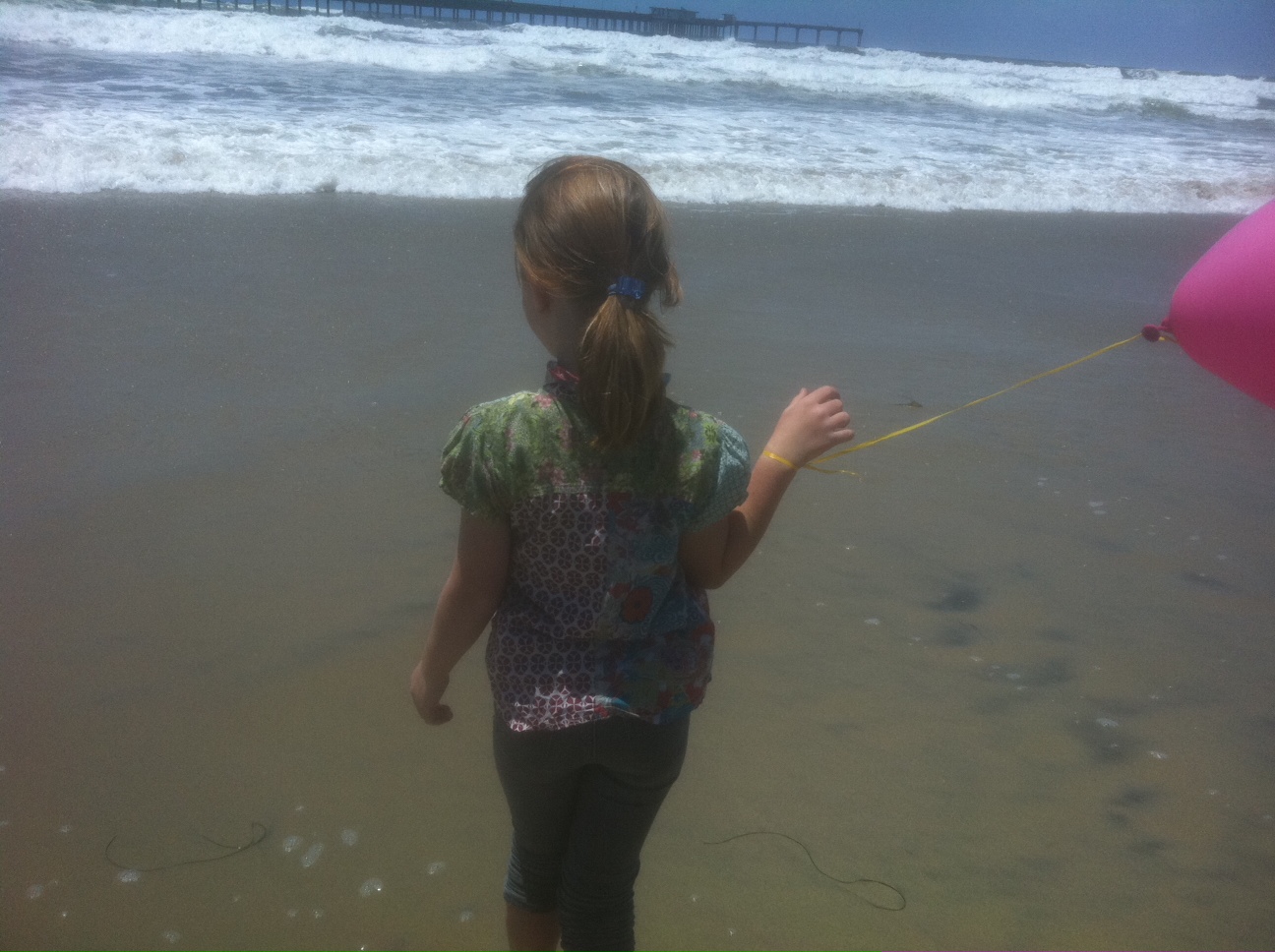
On Saturday I called some family friends to see if their kids (my kids’ age) wanted to join us for lunch at Pizza Port, but this is a family that has a hard time doing nothing. This time it was “Sorry, but we’re just loading to the car to drive up to Big Bear to go camping!”

Other times they were about to fly to Mexico City to visit friends or headed to LA to take part in a special bike ride when they close down the streets.

This long weekend, I’m doing nothing.

The empty streets of a long weekend were a common thing where I used to live. In Minneapolis and St. Paul, MN people who lived in the city had cabins at the lake, and on Memorial Day and 4th of July weekends that’s where they’d be. The city streets and sidewalks were empty. Freeway traffic was intermittent. You didn’t hear TVs blaring as you walked past homes.

The lake. It was place and a state of mind for urban and suburban Minnesotans where they’d go fishing and watch the sun set over the water during long weekends or weeks off in the summer.

It’s also a place to get bitten by mosquitoes and where you have a second home to maintain. Not a great thing for people who like to do nothing. Not being raised in Minnesota, I was also never overcome by the lure of the lake. I never felt the need to give another Minnesota man that knowing look as I told him it was time to go up to the cabin and take in the dock.

San Diego is a place where you can feel like you’re on vacation even if you haven’t left town, so more people tend to stick around town on Memorial Day. The beach and Balboa Park, the weather and the inevitable communion of tourists helps you imagine you’ve made a special trip here to enjoy yourself.

But I think an escape from the midlife grind of going to work and taking kids to and from school can make any place where you live seem exotic. It’s a different place, at least. I take long looks at the street and the canyon out back. There’s no rush to be done with breakfast and there’s no place to go.

The wife reads a book and my daughter puts her dolls to bed and tells me to watch after them. My son sits on a skateboard that rolls slowly along the floor. It’s a long weekend, and we’re doing nothing.

He Says Cities Aren’t Smart, Just Trendy

May 25, 2012

I grew up in a small town so I’ve always been fascinated by big cities, and I almost certainly fall into the category of clueless snobs identified by a I guy I just talked to.

The guy is named Michael Lind and he just wrote an article for Salon that zeroed in on the needs for future infrastructure. Basically, he thinks fossil fuels are going to continue to energize the world for generations and fixed rail transportation will soon be a thing of the past.

Trains, see, are kept going only thanks to sentimentality and because a few people think they’re cool.

I called Lind to draw him out on the subject of robocars, which he sees as being the future of coordinated (though not really mass) transportation. And I decided his ideas are founded on the belief that the only people who like trains, mass transportation and dense cities belong to a small, crabby collection of liberal elites.

He believes that car-dependent, point to point transportation is the only kind of travel people in developed countries will accept. The ability to mine shale gas means we have a virtually endless supply of fossil fuels so we might as well get used to it and forget about the windmills and solar panels. The only “alternative” energy that makes sense to him is nuclear.

He believes building dense communities and giving up cars only makes sense if they free market tells us they make sense, and it doesn’t… according to Lind.

I won’t waste much time saying why I disagree with him, though I WILL say this guy seems to ignore the huge expense in energy, cash, roads and sewer pipes that it takes to build and maintain sprawling suburbs. But he has a point when he says urban liberals turn their lifestyles into a moral issue.

Lots of people on bikes have an attitude which says, “I am riding a bike and you are driving a car, therefore I am morally superior so get out of my way even if I’m running red lights and riding in one lane, three-abreast.” I know this because I used to ride a bike and had a similar attitude.

I once read that Hummer drivers joked that the car I drive should be called the Toyota Pious. Funny.

But even before being whacked by a car, which put an end to my cycling, I think I realized that the microscopic reduction I was making in greenhouse gas emissions was not a worthy motivation for mounting a bike, nor was the mistaken belief that I really was being a better person than you.

So let me say this: I live in what is (locally) considered an urban neighborhood because I like old houses. I walk to work sometimes, and to the grocery store most of the time, because I like the exercise, it’s relaxing to not be in a hurry and it causes me to run into neighbors and ask them what’s going on.

Am I being a snob? At some point you have to stop worrying about that, otherwise you’re just way too self-conscious. But to those who live in the distant ‘burbs, please enjoy it because I believe in freedom. But I also believe, unlike Mr. Lind, that the gravy train we’ve enjoyed thanks to oil and gas will not last forever because it will either run out, or do intolerable damage to our environment.

On the other hand… I could be wrong.

The New Duncan McFetridge

May 22, 2012

The guardian of the wilderness. The marshall in the war against urban sprawl. In San Diego it’s an old guy who lives in the forest named Duncan McFetridge.

An Old Picture of Duncan

He lives in a village in eastern SD County called Descanso, where he is periodically chased out of his home by wildfires but otherwise broods over real estate developers’ rape of the land. I called him last week and we had a talk similar to many past ones. He speaks in a gruff voice that sounded the same 14 years ago. But he says he’s changed.

“Tom… if you saw me today you’d see a different person.”

Duncan calls you by name then follows with a long pause to bring gravity to what he’s saying. This time he’s talking about something truly serious, which was his brush with death. He was bitten by a venomous snake and, soon after, suffered a heart attack that required heart surgery.

Did that change you philosophically? I asked him.

“Philosophically, yes. And spiritually,” said Duncan.

I had called him to ask about the lawsuit his environmental group is bringing against the county planning agency. It claims the agency’s 40-year regional transportation plan goes quick to work improving freeways but ignores public transit until 2030, a year Duncan is unlikely to see.

That brings greater urban sprawl and more greenhouse emissions. He condemned the greed of developers and their political lackeys, but then switched to the subject of his artwork; sculpture.

“Tom… I’ve become more interested in beauty. Ancient civilizations idolized beauty. San Diego used to be a beautiful place, but they’re turning it to shit.”

Duncan’s vision of a perfect San Diego County is a dense urban city surrounded by a greenbelt. He’s sentimental about preserving ranchlands even though cows have not been friends to the western wilderness.

I first knew him when he was leading the campaign for a political initiative that would have created a San Diego greenbelt by dramatically limiting the number of subdivisions you can make out of land in the back-country. People in agriculture, ranchers included, have always disliked Duncan for trying to limit the profits on their land sales.

But just within the past year the County Board of Superevisors passed a general plan that did — basically — what McFetridge wanted to do in 1998. So maybe he was right after all.

Is he right this time? Maybe or maybe not. But he will always be tough back-country loner with a face that looks like the wilderness. I don’t know if we need more like him, but I’m glad there’s at least one McFetridge.

UT Returns to the Bad Old Days

May 13, 2012

Daily newspapers are having troubled times, financially, but a different kind of trouble has also arrived at San Diego’s daily, the Union-Tribune. Excuse me… UT San Diego, it’s now called.

But I don’t care what the new publishers call it. The issue is the integrity of the paper’s content.

When San Diego real estate mogul Doug Manchester bought the paper, a few months ago, he and his partner shocked journalism purists by saying the new UT would be a “cheerleader” for San Diego (not a watchdog or a paper of record).

They said their sports page would portray opponents of a new stadium for the San Diego Chargers as “obstructionists.” To me this all meant that UT journalists would not be objective reporters, but promoters of the publisher’s agenda.

Some of us wished for the best, hoping this was a naïve attitude of someone who had yet to learn the news business. Eventually, we thought, Manchester would understand what is required of journalism and he’d let the newsroom do its job.

But I now believe that was wishful thinking because the footprint of the new publisher has been so clearly seen.

Within the past month, the paper endorsed conservative Republican mayoral candidate Carl DeMaio in a special front-page section. Endorsing a candidate in the primary is unusual; endorsing him with that level of display is practically unheard of.

Not long after that, a news headline described independent mayoral candidate Nathan Fletcher, arguably the person most likely to defeat DeMaio in a general election, as a “panderer.” The day after that, a front-page story about Robert Brom, who’s retiring as bishop of the San Diego Diocese, made no mention of the enormous financial settlement, paid on Brom’s watch, to victims of sexual abuse by priests.

We read this in the paper owned by Manchester, who’s well known as conservative Catholic and a big supporter of Prop 8, which banned same-sex marriage in California.

Don’t get me wrong. I’m Catholic too and I’ve got no problem with Doug Manchester’s views on gay marriage or his history of donating to favored political causes.

I also understand that the opinion page of any newspaper is bound to reflect the publisher’s opinions. For years, the Wall Street Journal combined a right-wing editorial page with great nuanced coverage of major news stories on the front page.

But what’s happened in the UT has gone beyond a simple rejiggering of its editorials. It’s infected the actual coverage of news.

I’m sure the editors at UT San Diego could offer some other explanation of the stories I mentioned. They may say the headline was a mistake, not a malicious effort to smear Fletcher.

But the problem is; I wouldn’t buy those explanations and it doesn’t really matter whether I’m right or wrong. The paper is losing my trust, and if you want to have editorial integrity, you’ve got to have trust of the readers.

I’d say this new development is a sad chapter in a newspaper that’s always been a bastion of fair reporting but that would not be true. In the old days of the UT, back when there was a Union and a Tribune, the publisher’s politics had a huge impact on news coverage.

I’ve spoken with people who’ve told me during the 1970s you simply could not get coverage about Watergate in the San Diego papers. This was thanks to the tight relationship that owner James Copley and editor Herb Klein had with the GOP and the Nixon administration.

So the moves by Manchester & Co. aren’t really a new thing. But they sure look like a return to the bad old days.

And it’s sad. In the past half-dozen years the UT won two Pulitzer Prizes and there are still plenty of talented journalists who work there. But members of the whole Pulitzer team that uncovered the great bribery scandal of Congressman Duke Cunningham have now either left the paper or have been fired.

Meanwhile, there’s talk of the Manchester group buying the Orange County Register as well. I’m still hoping for the best and my trust can be regained. But so far the signs have not been encouraging.

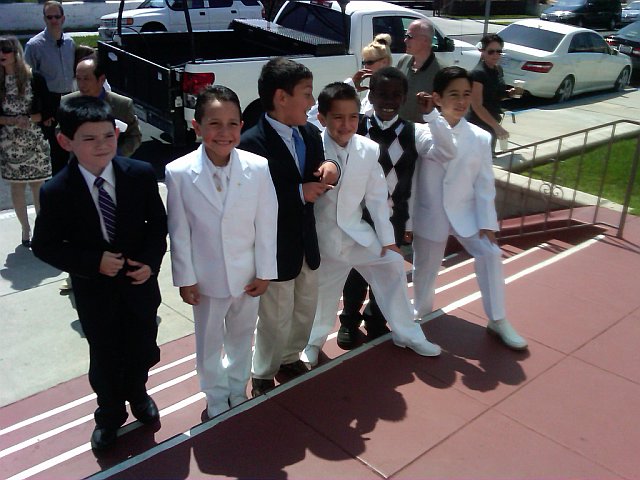
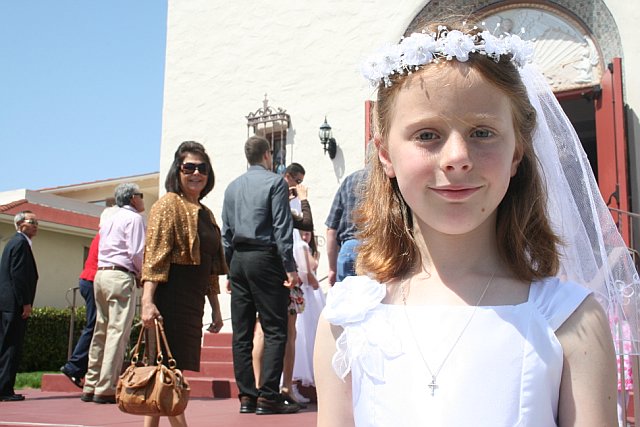
First Communion, St. Didacus. May 5, 2012.

May 10, 2012

Just say “Pradeep Khosla.”

May 7, 2012

Have you ever heard of Pradeep Khosla? No. And that’s my point. Neither had I when I had to write and recite a story for KPBS Radio about the fact he had been appointed the new chancellor of UC San Diego.

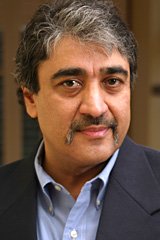
Pradeep Khosla

Khosla is a scientist. He’s a pen-and-calculator-in-the-pocket kind of guy, an electrical engineer who has been the dean of the engineering school at Carnegie Mellon University in Pittsburgh. He’s also Indian, and he has an exotic name that nobody knew how to pronouce… at least nobody I knew in California, including nobody in the UC President’s office in Oakland.

A guy there told me it was PRAH-deep KAHS-luh, so that’s what I called him on the air. But it was supposed to be PRAH-deep KOSE-lah (KOSE rhymes with dose). This might seem like a small thing, and the vast-majority of non-Indian people who heard it didn’t care and didn’t know any better. But I did get it wrong, and I first knew this when I listened to a voice message from Pittsburgh that informed me of the right pronunciation. Unfortunately, I’d already filed my story and it had already been broadcast.

The next day I started hearing from the Indian community. Amita Sharma, who works with me, came up and said, “You know that Indian man you talked about yesterday? And the way you said his name?”

“Yea,” I said. “It’s supposed to be KOSE-lah. I know.”

Then I got a call, forwarded to me from the main switchboard.

“Excuse me. But there was a story on the radio yesterday about a man from India and his named was grossly mispronounced.”

“Yes, I know! His name is KOSE-luh,” I said. “I was told is was KAHS-luh, but the person who told me that was wrong. Sorry!”

She may have also been reacting to the fact that our morning newsreader botched his name even worse, calling him KASS-luh. Don’t ask me why.

I know, from years of working in broadcasting, that you can never be sure of the way someone says their name until you hear it from their lips. But I’ve gotten the impression that the Indians are pretty consistent in the way they pronounce common names. For all I know Khosla is as common a name, in India, as Jones is in the U.S.

We all know foreigners who get tired of forcing Americans to say their names right and finally relent. “Pray-deep Case-la? Sure. Whatever.” We’ll see. It wouldn’t surprise me if Pradeep arrives and actually tells us it’s KAHS-luh, after all. Or maybe he heard about my radio story, and he’s always wanted to pronounce his name KAHS-luh and he decides this is his opportunity to make the change.

If he does, just know you heard it from me first. In the meantime I’ve stopped taking calls from Indians.