Archive for March 2012

The Right Side of the Tracks

March 26, 2012

The longing for status is something we humans share with all social animals, and geography is one of the ways it is expressed. The unseen hand of social hierarchy moves us to places where we think we belong, where we can be separate from people further down the food chain.

High-end folks are pretty open about what they consider the right place to live. I had barely arrived in San Diego when I heard that you shouldn’t live “south of the 8.”

If you’re not from around here, you’ll see the I-8 in my little Cul-de-sac map. It’s the brown east-west line that begin at the “o” in San Diego. North of that line tends to be higher-income and white. South of line tends to be lower-income and black and brown.

And though the gradations are more subtle, San Diego also has an economic dynamic that changes when you travel from west to east. When I was searching for another home a couple of years ago, my realtor made it clear that the further east you go, the more affordable homes become.

In fact, I just spoke to a development executive who said members of the infamous one percent — the really rich people — say you shouldn’t live “east of the 5.” Take another look at the map. Real estate, west of the I-5, is made up of coastal communities like Del Mar and La Jolla; posh fiefdoms filled with million-dollar homes and ocean views.

These admonitions about where members of polite society should live are nothing new or unusual. In small towns they talk about the people who live on the “other” side of the tracks. In my hometown of Grinnell, Iowa the east-west railroad tracks separated the monied part of town (the north) from the poorer part of town (the south).

In San Diego, you can ask people why you shouldn’t live south of the 8 and they will probably say it’s not safe down there. Too much crime. They may say people don’t take care of their homes. Perceptions are hard to contradict because they’re perceptions, not facts. But now that crime has been dropping for nearly two decades, I will say the fear-of-crime factor makes less and less sense.

In fact, I just spoke with a homeowner in Chula Vista — definitely south of the 8 — who was absolutely thrilled to have just bought a new home with more than 2,000 square feet for less than $400K. Trust me. That’s a good price around here!

In San Diego, I have always lived south of the I-8 because I like old houses and integrated neighborhoods. But before you think I’m a white, educated person who is immune to the status trap, know one thing.

Normal Heights, where I lived for 13 years, is cut in half by Adams Avenue. North of Adams was and remains white and educated. South of Adams was low-income. I lived — you guessed it — north of Adams.

So even though I was on the “wrong” side of the tracks, in a citywide sense, I was on the “right” side in the context of my little neighborhood.  I had lots of good reasons for buying the house I bought. But then… so does everyone else who lives on the right side of the tracks.
Being Catholic

March 24, 2012

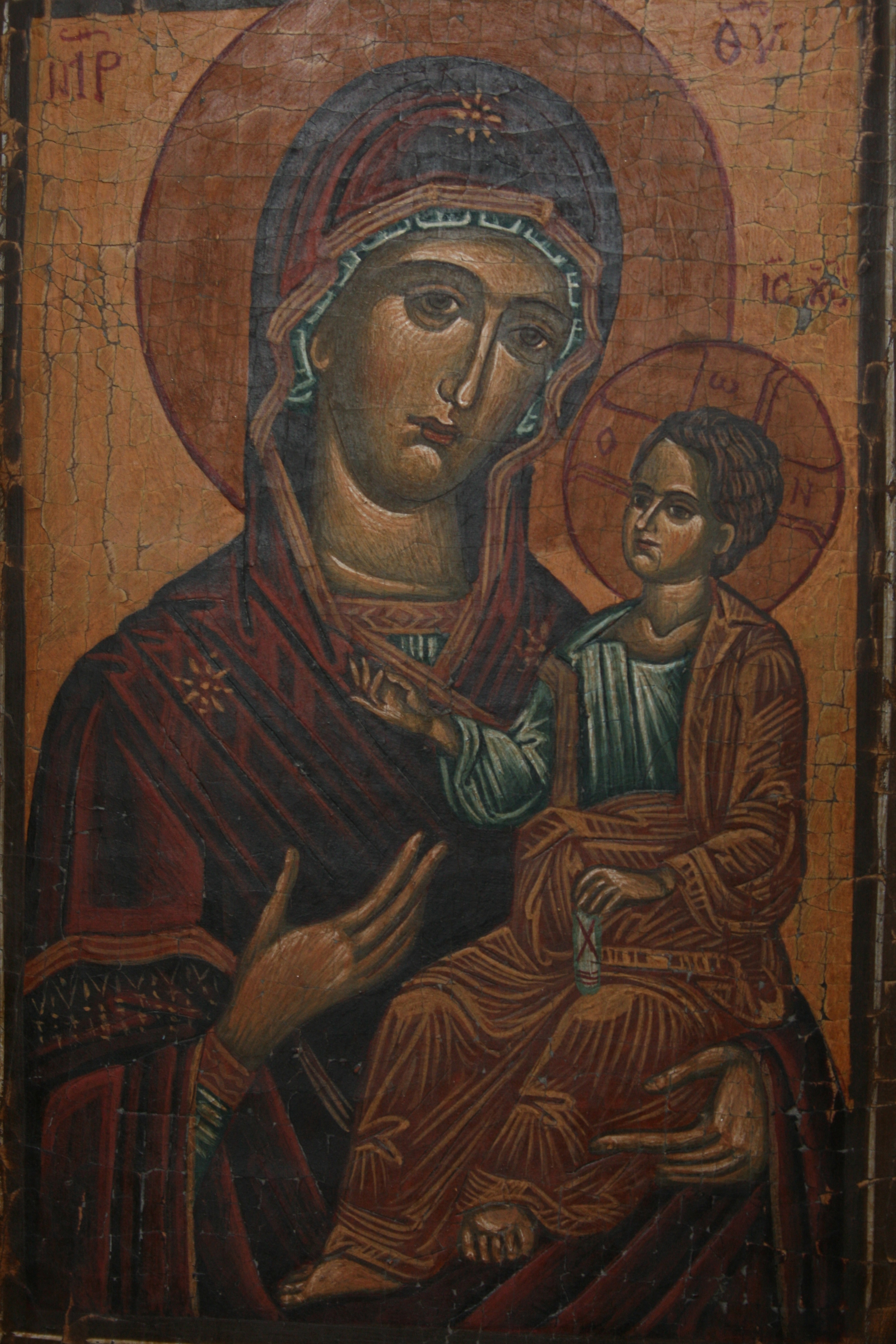
My story of religion is like the photographic negative of most stories I hear. A lot of people I know talk about being a “lapsed Catholic,” not quite as if it’s something to be proud of but at least something that’s natural and fully expected. Most mainline Protestants don’t speak of being lapsed because devotion was never really part of their  picture.

You assume these lapsed persons grew up in strict religious households whose views and practices they abandoned the first chance they got. I grew up in an agnostic household. My family attended church for cultural reasons and to be involved with church music, yet they would get annoyed if the minister spent too much time talking about God.

I have at least one thing in common with the lapsed Catholic community: What I was raised with didn’t stick.

I came to believe in God because I felt God’s presence. I think it also came from being a natural contrarian. It was my reaction against the liberal, academic view — so common among the people I know and the books I’ve read — that holds religion to be little more than a fount of hypocrisy.

So why do I bring this up now? Well, it’s Lent. And once Lent runs its course I will mark one year of being a Catholic. I joined the church last year, giving in to the fact that my wife and children are Catholic so I might as well be too. It was either that or shun the church that wouldn’t allow me to take communion.

I imagined walking my kids up to the church door and refusing to set foot inside, glaring at the priest like a defiant Orangeman. But while I’ve never bought the silly claim that Catholicism is the one true church, nor have I considered it the den of the Antichrist. In the end, becoming Catholic was the most sensible path and it was no big deal.

Still, it’s an interesting time to be a Catholic. Presidential candidate Rick Santorum has assumed the role of Super Catholic. Meanwhile, the Republican Party has vocally opposed laws that force Catholic non-profit businesses to offer birth control along with other health benefits.

The vast majority of Republicans, like the vast majority of Catholic lay people, have no problem with birth control. The GOP just sees it as a handy club with which to beat Obama, though their focus on the subject, along with the crude rabble-rousing of Rush Limbaugh, might come back to haunt them. Politically, if not spiritually.

The church’s prohibition on birth control, in fact, has become a joke. Aside from Rick Santorum, very few Americans it seriously. And I would actually think it funny if it weren’t such a potentially damaging message in places like Christian Africa, where overpopulation can lead to starvation and genocide.

The church’s stand on birth control, along with its insistence that priests must be celibate males, are the two points of Catholic dogma I find ridiculous. I suppose the contradictions in the church should cause me to dislike it. But I have known a kind side of the church. The Catholicism I’ve known holds a message of love. On the anniversary of 911, the homily wasn’t about disliking Muslims. It was about forgiveness, that most difficult of Christian requirements.

The Catholic Church is big tent that covers a lot of people, and I can’t dismiss it because it doesn’t suit me on all points.  I won’t be forced to choose between secular and religious fundamentalism. I reject them both.

So I look forward to my anniversary, come Easter. I’d like to say I’m suffering through Lent, but I’m not really denying myself anything. I tried to stop drinking beer, but a trip to the Pizza Port in Ocean Beach made me fall off the wagon. The flesh is weak.

Stories from my Darkness

March 20, 2012

Last week I had dinner with my wife and my parents and our talk turned to the time, five years ago next month, when I was hit by a car and ended up in the trauma ward of Scripps Mercy Hospital. I was driving my bike to work when a car hit me from behind, and then I joined the fraternity of those who suffer the effects of traumatic brain injury.

The dinner-table chat was the longest one my family has ever had, in my presence, about the kind of person I became immediately following my brain injury.

I call that time a darkness because I don’t remember anything that happened for at least a week following the accident. I don’t remember the accident itself because trauma interrupts your brain’s ability to process memory. Why the rest of the week was a blank, I’m not so sure. Maybe it was the injury. Maybe the drugs, they gave me, induced amnesia.

But the stories I hear about that time sound like they’re told of someone I don’t know. It’s as if I wasn’t even there. An irrational, deluded stranger was trapped in my skin.

I was belligerent. That even made it into the police report about my accident. I would typically wake up in my hospital bed and not know where I was, or why I was in a neck brace and connected to forest of tubes. I would curse and scream as I tried to pull them all off.

For a while, I wasn’t able to swallow food and I couldn’t sit up. Some nurses finally managed to prop me up in bed, and presented this to my wife as a great triumph. Karen thought I looked so pathetic she started to cry.

The cast of characters that surrounded me has slowly taken shape as the stories have been repeated. There was a red-haired nurse with a southern accent and a neurologist from New York. Someone in the trauma ward told my wife it would be years before I’d be able to balance a check book. Another told her I’d be back to normal so fast, I wouldn’t even bother to think about it.

I’m told that once, in the hospital, they showed me photos of my children to see if I could recognize them. I could, and I remembered their names. But when they asked me where I lived, I told them Minnesota. Only one scene from Scripps Mercy stands out in my memory. I remember looking up from a hospital bed as I was paid a visit by Dr. Michael Sise, the director of the trauma ward. He was smiling. In fact, everybody in the room was smiling. I didn’t know why.

My disorientation continued after I was moved from Scripps Mercy to a hospital run by my health plan, Kaiser Permanente.

The docs and nurses at Scripps Mercy were professionals, when it came to dealing with brain-injury patents. But the people at Kaiser didn’t know what to do. I kept telling them I wanted to go home, and they’d call my wife to tell her to come and get me. Didn’t they realize I was still messed up and needed hospital care in spite of what I said? I also kept telling people I’d be back at work in a week. It would be months.

Soon, my long term memory returned. Later, my short-term memory came back and I stopped asking people questions that they had already answered twice.

Soon, I would have been able to balance a check book if that had been something people with online banking still did. But the other guy was also wrong. I remember my accident. It changed my life.

Right after the accident, I couldn’t think straight and I couldn’t take care of myself. But I had someone. My wife took care of me as she would have cared for a child.

It was not until my accident that I learned something so simple I’m embarrassed to say it. Family is what matters. From here on, all I can do is try to return the favor.

The Way of all Art

March 14, 2012

A couple of days ago my wife found three paintings left in the back of one of our closets. I suppose they were left behind by the people who owned this house prior to us. Tonight I threw them in the trash.

I was a little squeamish about chucking three works of art. They weren’t especially good paintings. But someone clearly fretted over them to try to make them beautiful.

But then I realized that all things are ultimately bound for the landfill. That includes all of us. Our passions. Our stories. Our ideas. Ashes to ashes, dust to dust.

Yes, some people today may become the future’s Homer or Shakespeare. But those folks are pretty rare. I once heard someone — I think it was Garrison Keillor — say our offspring are the only tangible thing the vast majority of us can offer the future.

But I thought I’d take a photo of those works of art that lingered in a dark closet though they were destined for the dump. Take a look at them and then forget them. It’s the way of (nearly) all art.

Deutschland

March 3, 2012

German was my mother’s first language, and it’s the only foreign language I have ever properly learned. My relationship with Germany began with stories from my mother’s family. But their relationship with the place was distant. Actually Swiss-German in origin, mom’s ancestors lived in the Ukraine for several generations before moving overseas to farm the American Great Plains.

My link with the actual country began in 1978 when I lived in Hamburg as a foreign exchange student. This summer I’ll renew that connection as I take my family to Hamburg to visit my old host family, the Bestgens.

My memories of Germany are stable and vivid but my impressions of the place seem to be in constant flux. When I lived there, Germany was split in two, occupied by foreign armies. Now, it’s one country again.

When I lived there, history and the cold war made Germans shy away from militarism. On that count, their attitude is not much different today. And yet, there they are… the big uncle smack in the center of Europe. They are rich and powerful, calling the shots as the near-bankrupt nations of the Eurozone pray they’ll be merciful and generous.

I’ve just finished reading a popular book called In the Garden of Beasts, about an American academic named William Dodd who served as ambassador to Germany in the 1930s. Dodd was an unremarkable diplomat who, though highly principled, did not achieve very much. But he and his family witnessed one of history’s most astounding tragedies: A civilized country that was bullied and seduced by an irrational leader into an orgy of violence.

When I lived in Germany, the memory of the war was everywhere. The principal of my high school had served in the Hitler Youth. Vera, the mother of the family I lived with, once had two sisters and a mother. But they were burned to death in the bombing of Hamburg. Vera was then a small girl who was out of the city that night, for reasons I forget.

I have heard that the Japanese avoid the subject of the war and try to forget the atrocities they committed. That was never true in the Germany I knew. The held their Schuld (guilt) very close to them, and they seemed to talk about the Nazi era all the time; at home, at school, in movies and books, and in the communist propaganda leaflets you often saw on the street, back in the days when Germany was still split between east and west.

Ironically, it was the communist east where Schuld was actually held at bay. Party bosses told the East Germans that they had been the vicims of fascism during the Nazi era, therefore they shouldn’t be held fully responsible for the war or the slaughter of Jews and Russians.

I have not visited Hamburg for more than 20 years, and I expect to be dazzled when I see it again. It’s the second-largest city in Germany; a prosperous and cultured place that’s the capital of German shipping and publishing. After being flattened by bomber planes, it was rebuilt in a graceful but sober fashion, typical of the German north.

Will it be just the same as before? I doubt it. I was there at a time when Americans were still held in the highest regard. We were the benevolent occupiers that held off the Russians, who would have happily taken all of Germany into their empire. The people in Hamburg made fun of American kitsch, joking about the multi-colored lights we put up every year on the Christmas tree in front of the American consulate. But the jokes were always good-natured.

Maybe the Germans I’ll meet will be more condescending. Maybe they’ll be more arrogant. Arrogance, after all, has never been in short supply among Germans. They will surely feel less in our debt. On the other hand, I’m guessing they like Obama.

Just a few days ago, I met a young man from Germany. He was visiting the public radio station where I work, on vacation from Westdeutsche Rundfunk in Mannheim. His name was Dirk and he wore thick black-rimmed hipster-doofus glasses. And he told me something interesting.

The regional state-based radio network he worked for was locally funded and staffed. It maintained an independence from the national network that was financially impractical, resulting in the duplication of a lot of services. But, he said, that was the system they created when West Germany was first founded. They imposed a strict federalism, for fear that centralizing power would lead to dictatorship and the nightmares of the past.

Not many Germans alive today even remember Nazism, much less fostered it. But Adolf Hitler and the Nazi Party are still a defining characteristic of Germany. I really believe the war changed Germany forever. It’s the horror that country must always avoid, in all ways and at all costs.

Bees

March 2, 2012

I came home from work early after a punishing night of sleep. The house was empty and the weather outside was still. I sat down in a chair next to an open window and heard a low hum, which came from a blossoming mock-orange tree that was covered with bees.

The large tree shades the west side of my house and it blooms in the winter. The flowers eventually fall like snowflakes to the ground where they gather like a layer of dust. But now the bees visit and exploit them as the white flowers send out a strong, sweet fragrance.

An old political columnist named Dan Walters once told me his newspaper, the Sacramento Bee, was given that name because bees are known for hard work. The Mormons claim the beehive as their symbol because it illustrates harmony and industry, which bring sweet rewards.

Today, industry has only brought me aching muscles and a hope that I may be able to lie down in the daylight and sleep. The bees should shame me into having a better spirit. But I look at them from middle age, when finishing one day and getting up the next can feel like turning a heavy crank.

Life is a gift but we can lose the gift of seeing it that way. I’ll rest and hope for a change in the feelings that brew in my heart. Meanwhile, the flowers will open and fall; the bees will do their work as nature turns its own crank.

It’s February, but here it’s already spring. Praise God for another year because there’s nothing else worth hoping for.