Archive for June 2010

Going back to Kansas

June 30, 2010

Imagine your bare hands and feet digging deep into piles of harvested wheat in the back of a grain truck. The grains caress you with their texture and their weight. That feeling was a touchstone of my childhood when my brother and I visited my mother’s relatives in June, during the Kansas wheat harvest.

This year I took my family there. It’s a place my children had never seen and I had not seen it in a dozen years. My Kansas relatives live in a Mennonite farming community called Moundridge, about 40 miles north of Wichita. There is something about the place that draws people back. My cousins Ann and Kirsten had moved to Los Angeles and Berkeley but soon returned. Ann and her husband Chip moved into the old Zerger homestead, preserving the architectural landscape of the place… the barns, the tool shed, the dairy shack and the hog pens… even though they don’t farm themselves. The very week of my visit, their son and his fiance left Maine and were moving back to Kansas.

One hundred and fifty years ago my mother’s Swiss-German forebears lived in the Ukraine where they saw their religious freedom slowly erode as the Czars lost patience. These Mennonites had agreed to bring their turkey red wheat and their gift of farming to the kingdom of Catherine the Great. In return, they were left alone and they were not forced to serve in the army. 

That deal eventually fell through and the Swiss Mennonites came to the American great plains where they found political freedom but suffered the oppression of a hard life and savage winters. My great-grandmother Anna Kaufmann lost three boys who froze to death in a blizzard that flew into South Dakota. This, after she’d already seen three of her other children die between Europe and America.

Anna Kaufmann endured. She moved to Kansas, had more children and her culture endured as our relatives refused to serve in Vietnam or World War II. That was not an easy thing in the 1940’s when one common Mennonite name was Goering.
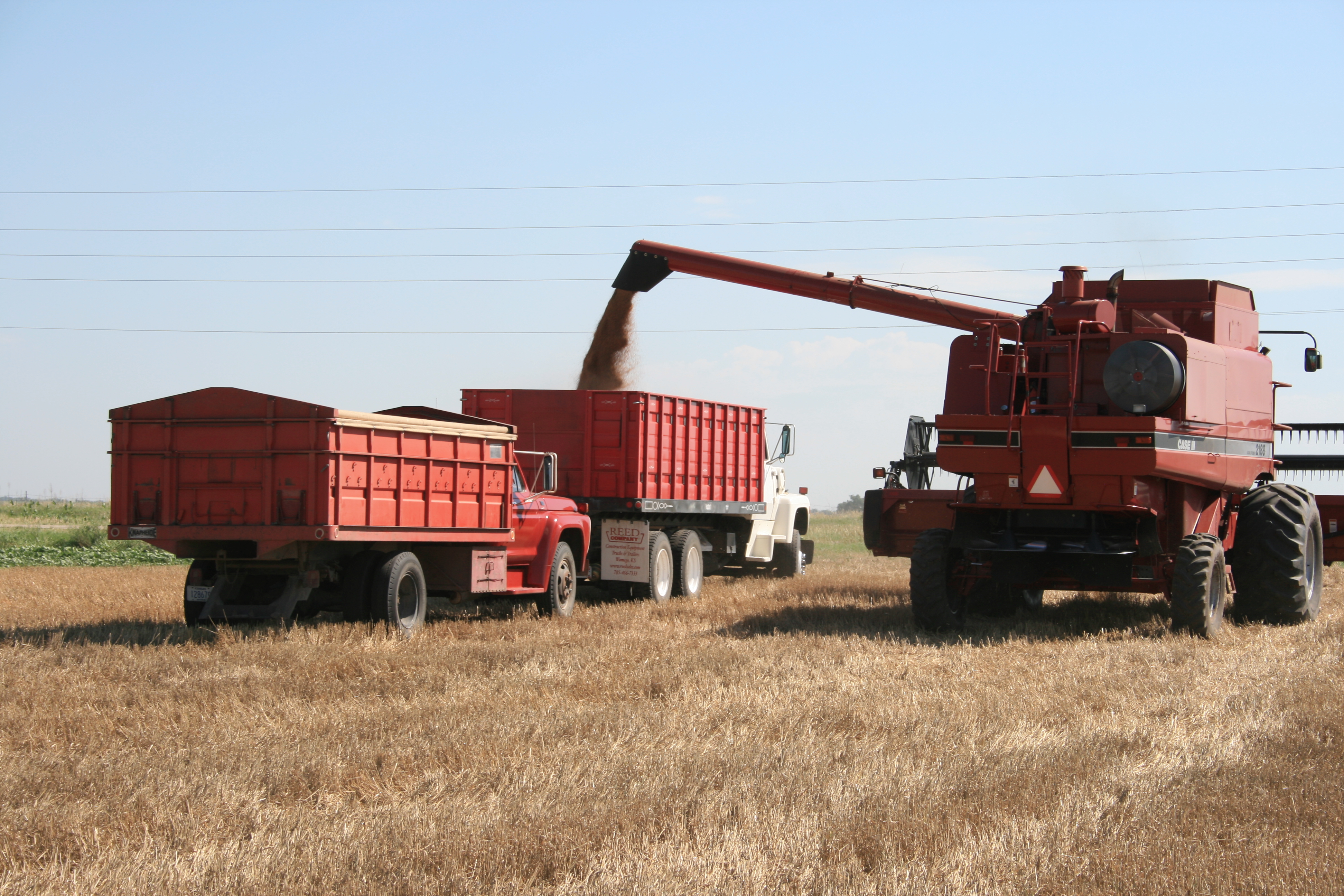
Today, members of my generation typically farm and teach. They live on the flat farmland that’s divided by hedgerows and where temperatures this June, near 100 degrees, were made nearly tolerable by the endless wind. They sleep five hours a night during harvest to get the wheat cut while the dry weather holds. But they stop work all day Sunday even if the crop is about to go to hell. Better the wheat than their everlasting souls.

As my relatives worked in the field my wife Karen fixed dinner to make us useful as my kids Nicholas and Sophie headed out the door to the farmyard where a new litter of kittens, born by a six-toed cat named Cleo, wrestled and played. A path to the pond ran between a metal round top and a cavernous shed where cousin Pat and her husband Bruce store a New Holland tractor, whose GPS system can steer it through a 40-acre field within a three-inch margin of error while planting seeds or spraying weeds.

Before I went back to San Diego, I visited an old folks home in Moundridge where two elderly aunts live. My Aunt Doris suffered a massive stroke and now speaks in occasional sentences which you can’t, most often, understand. I told her stories of my visit, hoping she understood most of it. I gave her a kiss and left the room as I heard her tell me one thing that made perfect sense. “I’m getting better and better,” she said. My other aunt, Elsie, has no trouble talking. She’s vital and active despite being over 90, though I’m not sure she can hear a thing.
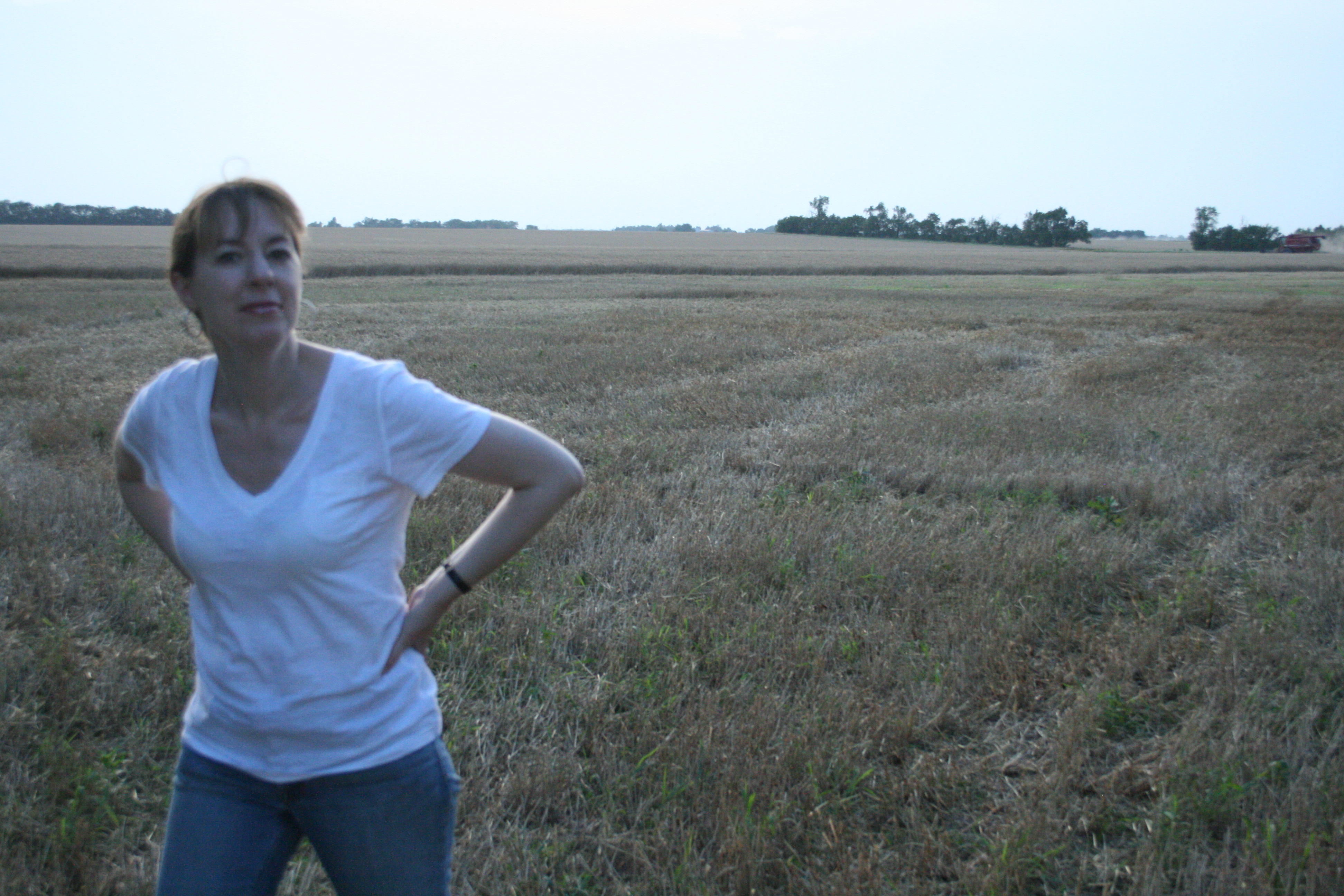
The airplane lifts off from the Wichita airport and the kitten we brought with us mews in a black bag we carried on. Kansas is the one place I have lots of family at a time when all other relatives are spread throughout the country. Like I said, the place has a draw. Maybe one of my kids will go to school at Bethel College.

Seduced by Term Limits

June 13, 2010

The primary election last week in California didn’t excite me much. Jerry Brown was nominated by the Democrats for governor. (Him again. Can’t that guy just retire?) Super-rich businesswoman Meg Whitman got the Republican nomination for governor, and a good thing too! She’d be right to be annoyed if she had not even won the primary after spending $71 million on her campaign. I wonder how much that election cost her per vote. Surely someone’s done the math.

There was one question on the ballot that forced me to look deep inside myself for guidance. It was a local proposition that asked if San Diego County Supervisors should be subject to term limits. Somehow, the local supervisors had evaded those political statutes of limitations… quite a feat in Southern California. I think they dodged term limits for so long because few people knew who they were and nobody was quite sure what a county supervisor did.

But last week, reality caught up with the county supes. Labor unions, who dislike the all-GOP county board, had managed to qualify a ballot question on term limits and voters overwhelmingly passed it. Two terms will now be the maximum for a county supervisor. I too voted for Proposition B.

This is curious because I had always considered myself an opponent of term limits. It didn’t make sense to me to kick people out of their jobs just when they’d gotten good at them. It’s also ironic that voters, who seem to love voting for incumbents, love term limits as well. “Please stop me before I vote for that guy again!!”

Let’s look at the example of the San Diego County Supervisors. Today, they are they same five old duffers who’ve been in office ever since I moved to San Diego in 1998. We must like them if they keep getting elected. Even so, we just don’t trust our lazy, uninspired selves to decide whether they should stay in office. 

So if term limits make me mock and sneer like this, why did I vote for Prop B?  

It’s partly because I’ve been stained by the local political culture. Term limits are how we do things here, so why fight it? But I have also come to believe that incumbency is a force that’s too powerful when political apathy is such a problem. Yes, voters should have the attention span and civic spirit to know who their county supervisor is and whether he/she deserves to be fired. But that’s just not the case. Apathy allows politicians who work below the radar to remain in office by cultivating the right contacts and getting all their buddies to make it to the polls on election day.

The result, in San Diego, is a board of supervisors whose members are all old, white and Republican in a county that’s becoming more and more diverse, racially and politically. That has caused me to buy into the arguments for term limits. Yes, we need fresh blood. Yes, we need to give challengers a better chance to hold office.

I have not entirely transformed my views on the subject. I’ll still vote for any proposition that would extend term limits for local and state offices. Why limit politicians to two four-year terms? Three or four terms make more sense to me. But all things considered, I decided Prop B deserved a yes vote.

Mind you, this proposition will have no real effect on the current stable of San Diego County Supervisors. Prop B is not retroactive, so our county supes won’t be termed out for another 8 years, by which time they’ll be  more concerned about using their Medicare benefits than running for office.

Death of a Short Sale

June 13, 2010

I didn’t used to believe that the short sale was the bane of the housing market. But that was before I tried to buy a house from a guy who was underwater on his mortgage. In February, I made an offer on a house in Kensington (that’s a neighborhood in San Diego). I offered less than the owner paid for the house but I figured something would be better than nothing for him and/or his lender.

But last week, after four months of watching the seller and his money lenders fight over small change, my wife and I gave up. We withdrew our offer to buy the house and moved on.

In the case of this short sale, the homeowner had seen his business go south and he defaulted on two mortgages. The primary lender was trying to get the second one to accept less than 20 percent on a loan that lender #2  foolishly gave the homeowner at the height of the housing boom. Lender #2 was determined to get as much as possible and eventually hired a collection agency to go after the homeowner. Going after him meant going after as much money as they could get out of me as I sought to buy the house.

Eventually, the short sale negotiator (the only person we were dealing with who actually had a name) was fired and there was nobody left to talk to. I assume the next step will be foreclosure. I just wish it had happened before I wasted four months trying to buy the house.

The housing market has had its gyrations and I guess we all hope we can hold onto our homes long enough to see the ups and downs come and go. We also hope there will be more ups than downs. The California housing market has been kind to me. I was lucky enough to move to San Diego and buy in the late 90’s when housing prices were still reasonable and were headed upwards. That’s why I’ve got enough equity to try to buy something bigger.

Had I moved here eight years later I would have been one of those unlucky folks who went underwater.

Home ownership is a peculiarly American thing. I was speaking to a friend about a family she knows in Germany. The family has lived in the same rental apartment for two generations. Why does that seem strange to us? In the U.S., ownership is the thing that gives us a proper relationship with an inanimate object like as a house. Without ownership, your house will belong to somebody else and will therefore be alienated from you and not be a real home… or so we think.

I believe in the American dream because home ownership is a great way of saving money. If you are forced to invest in a house every month eventually you’ll have something to show for it. Someday the house may actually be paid for. But prices don’t go up forever, even in California. If you do become submerged, mortgage-wise, hopefully your house will still be your home and still be a good place to live.

An Irresistible Force

June 2, 2010

I get up out of bed after a sleepless hour because I forgot to take a pill. I reach into the top drawer of my dresser in the dark. I can’t tell by touch which bottle contains the Vicodin but I know it by the sound. The oblong tablets make a heavy, hollow sound when they rattle inside the bottle. I take one and slip back under the covers.

My daily use of painkillers is one of the ways my life has changed since I suffered a serious accident, riding my bike to work more than three years ago.  I thought the effects of my traumatic brain injury would be temporary. It would just be a matter of months before everything would be back to normal. But that day never came and the chronic pain, which came with the nerve damage, may be with me for the rest of my life.

The pain is a reminder of what can happen when you live in idealistic disharmony with the world around you. My ideal was to not be dependent upon a car, even though I was living in southern California.  I would prove to others, or at least myself, that I didn’t have to fully embrace a lifestyle that was physically unhealthy and bad for the environment. My feelings have changed since then.

I remember being at a meeting of transportation planners. A guy from Brazil said that the only people in his city who didn’t drive cars were poor people, who couldn’t afford cars, and “nerds like me.” It makes sense to ride a bike to work if that’s all you’ve got. But I’ve decided it doesn’t make sense if you’ve got the option of being surrounded by a car’s steel envelope. I’ve got that option, and now it’s the one I use.

Today we see pictures of an oil rig in the Gulf of Mexico endlessly pouring its deadly muck into waters that had been full of life. Yet the awesome power of fossil fuels has brought us comfort and convenience we simply will not give up until we’re forced to. The lives we lead, in our energy-rich environment, seem like an irresistible force.

It’s a force that’s given us too much faith in technology. We believe the masters of invention will find a way to turn sunlight or wind into engines that are every bit as powerful, dependable and efficient as coal and petroleum. Maybe we should hope for that, but I wouldn’t bet on it. There’s more than one way to stick your head in the sand, when it comes to the subject of global warming. One is to deny it exists. The other is to deny that our lives must change to stop it from happening.

Someday we will be forced to change our lives but I’ll be driving my car to work in the meantime because, I’ve decided, I can’t change the world by myself. I miss the superior feeling of a having a small carbon footprint, but the pain in my legs makes me think there are more important things.