Archive for February 2010

An Invitation to the Compton Cookout

February 27, 2010

James Baldwin

A week ago news broke about a party attended by some white students from UC San Diego. It was called the Compton Cookout and it was timed to take place during black history month. Male invitees were supposed to dress and talk like Compton homeboys. Women, attending the party, were supposed to act like “ghetto chicks” by talking loudly and wearing cheap clothing.

The party caused a great commotion which culminated, a week later, in somebody hanging a noose in the University library. The noose incident was simultaneously more serious and less serious than the Compton Cookout. It was a true threat and a crime under California law. But it was the act of one or two people, not a group, and one that can’t be written off by anyone as kids just being kids.

When the story of the Compton Cookout hit the newspaper the response of the university administration was predictable and appropriate. Chancellor Marye Anne Fox denounced the party in grave tones as she met for a couple of hours with black students. The black students, also predictably, told her what she did and said weren’t enough.

The Compton Cookout is the kind of event whose meaning is immediately trivialized or aggrandized, depending on who’s reacting to it. To whites it was just a bunch of frat kids acting like morons. To blacks it’s one example a profound racism that runs through society. Both of them are probably half right.

Lots of writers have pondered America’s original sin of racism. One of those writers was James Baldwin who said, “The white man needs the nigger because he can’t tolerate the nigger in himself.” Maybe the white kids who went to the Compton Cookout were longing to express a part of themselves they both admire and despise.

But what does the Compton Cookout mean to the rest of us? I didn’t attend the party so I don’t feel responsible for what happened there. I’m also not convinced that any other students at UCSD should be held responsible. One of the demands black students put to Chancellor Fox was that she require all undergraduates to learn “diversity sensitivity.” I don’t think students should have to attend a series of lectures about racism on account of one incident they had nothing to do with.

But I will say this.

When we poke fun at others, the object of our fun-making can be an issue. I remember when a veteran golfer named Fuzzy Zoeller commented on Tiger Woods’s 1997 Masters tournament victory, which allowed Woods to choose the menu at the Masters Champion Dinner. Fuzzy joked that someone should tell Tiger not to serve fried chicken and collard greens. K-Mart and Dunlop ended their sponsorship of Fuzzy after that.

I’ve wondered what would have happened if Woods had been British and Zoeller had joked that he shouldn’t serve mashed potatoes and kidney pie. Would Dunlop have stopped sponsoring him for that? Of course not. It’s a double standard. But there’s a reason for it.

High status and large numbers are a great salve for the pain of being mocked. Holding black folks up to ridicule in the UCSD community, as they did at the Compton Cookout, is like picking on the small kid in the schoolyard. The same is true of making fun of Indians by turning them into sports mascots who look and act ridiculous.

By contrast, the University of Notre Dame has never been criticized for having a mascot who’s a goofy Irish Leprechaun with his dukes up. In that case, the white Irish Catholics at Notre Dame are making fun of themselves, and that’s okay!

The best ways to avoid the insults and the pain of race and class conflict is pretty simple. Practice love and understanding. Do unto others as you’d have them do unto you. Walk a mile in another one’s shoes. That may sound simplistic, even cliché. But it’s a proven formula that requires neither money nor a new set of curricula.
Unconnected

February 16, 2010

Americans carry on a national conversation that’s driven by the media. You have to be connected to be a part of it. And I am profoundly unconnected when talk turns to popular culture.

I know what makes pop culture news because I spy it in headlines and I overhear conversations about it. But to me it’s white noise. It’s like the low din you hear coming from the freeway that’s five blocks from your house. You know it’s there and you know what it is, but you don’t give it any thought.

In recent weeks I’ve heard that Jay Leno replaced Conan O’Brien as the host of the Tonight Show but O’Brien is still making a lot of money and may be getting another show. I haven’t watched the Tonight Show for years and I’ve never seen Conan O’Brien do his thing. But you can’t help hearing about him.

My daily newspaper arrived about a week ago and I saw a headline that said Beyoncé had just won several Grammy awards. But who is Beyoncé? Her image passes in and out of my field of vision as I walk past newsstands or see TVs turned on in public places. I think she’s a popular singer and I may have even heard a recording of her during one of my many trips through the urban wilderness. But aside from that, I don’t know anything about Beyoncé and I’ve never formed an opinion about her.

This has been my reality for many years. In 1994 someone told me that rock star Kurt Cobain had committed suicide. I asked, “Who’s Kurt Cobain?”

We need famous people because we need people to talk about. They are the characters we cast in our folk tales. They are people to admire or despise.  The problem (for me) is that new communications technology and media competition have forged a celebrity manufacturing machine that generates product at a dizzying rate.

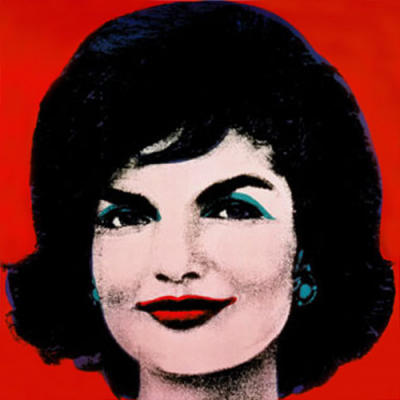
Andy Warhol summed up our obsession with fame by saying that soon everyone would be famous for 15 minutes. That’s only a slight exaggeration in an age when people are endlessly transformed into public figures for their talents, their beauty, their wealth, their misdeeds and their notorious use of fertility drugs.

If a person’s celebrity endures but their distinctions are unclear they are famous for being famous, a fact that is absurd but also logical in light of the gaping content hole the news and entertainment media need to fill every day.

The media are not the message but they do challenge us to decide what is really important for us to know, and making that decision speaks to our values. Celebrity culture values the individual, not the community. In a culture obsessed with stars it’s no wonder that CEOs of major companies make 200 times what the average company worker makes.

Okay… maybe I’m taking this too seriously. Maybe I just find information about the careers and personal lives of famous people to be boring and I’m not a big fan of most things that qualify as popular culture. And I’m not putting down Beyoncé. For all I know she’s the new Ella Fitzgerald.

But whether we’re famous or not, a hundred years from now very little of what we do will be remembered. I remember Garrison Keillor once saying he celebrates his children and grandkids because his family is the only thing he’s created that’s likely to last through the ages. So if you’re looking for celebrity news, watch your daughter’s soccer game and celebrate the joy that came from it. Read good books. And if you have no idea what music kids are listening to today, it doesn’t matter.


Finding a Place to Park

February 6, 2010

39th Street Park

The character of a neighborhood is found in its parks. For more than ten years my family and I have been getting fresh air and exercise at three parks that lie within a mile of our house: 39th Street Park, Kensington Park and Trolley Barn Park. 

 My neighborhood is Normal Heights. It got its name for it’s proximity to San Diego State, which was a teachers’ college or “normal school” back in the old days. Since then San Diego State has moved elsewhere and Normal Heights has become a racially mixed inner-city neighborhood. Its main street is Adams Avenue, which divides the district along economic lines. North of Adams is the better side of the tracks, moneywise.

Thirty-ninth Street Park didn’t exist when we moved here. It was a bare field where road-building crews parked their trucks and bulldozers. Interstate 15 passes less than a half-mile from my house and it stretches from the Canadian to the Mexican border. But somehow it took until 2001 to fill in a two-mile gap in the freeway right in the middle of San Diego. 

When the state finally filled the I-15 gap it agreed to build three parks along the new stretch of freeway. One of them was 39th Street Park. My kids still call it the new park.

Go to 39th Street Park as the sun is going down and you’ll see lots of families of different colors. This is an immigrant park. You’re as likely to hear Spanish there as English. Arabic and Somali are commonly spoken. The blacks play basketball and the Mexicans play soccer. Families rope off the cement tables near the playground when they want to reserve space for a gathering. You can tell the difference between the African families and the African-American ones by the absence of men in the latter group.

Just on the other side of the freeway is Kensington and it’s a different world. The mayor lives there. So do lots of other high-income white folks. Kensington Park is tiny… two patches of green on either side of a small library. One patch has grown a small crop of play equipment. In the late afternoon moms and dads, still well-dressed from work, push their kids in swings and chat with each other. During the day, toddlers go there with their Mexican nannies.

Trolley Barn Park is about a mile west of my house where you cross over into University Heights. This used to be home to an actual trolley barn before the automobile pushed trolleys to the margin of urban American transportation. Today, Trolley Barn Park is a place where lots of people let their dogs off leash (illegally). The park is mostly white and partly gay. It’s popular with the yuppie crowd. During the summer they have concerts there on Friday evenings.

Parks are places where community takes place. They are backyards for people who don’t have their own. You hope they are bustling and safe, and in my neighborhood they are. When my kids are adults and think about where they grew up, I think they’ll see the park.